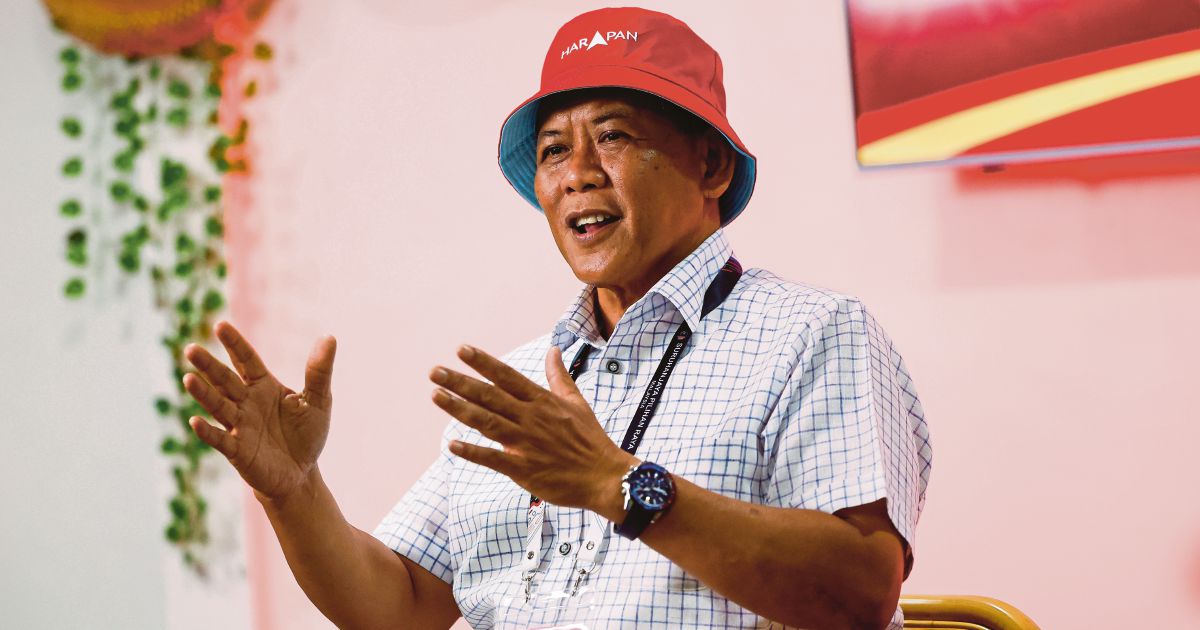
Caretaker Negri Sembilan Menteri Besar Datuk Seri Aminuddin Harun is gambling that the state government's administrative achievements will resonate strongly enough with Linggi voters to secure his return to office when the 16th state election takes place. Speaking ahead of polling day, the veteran politician projected optimism about his electoral prospects, framing the contest as a referendum on the outgoing administration's stewardship over recent years. His strategy reflects a broader pattern observed across Malaysian state elections, where incumbent leaders emphasise tangible developmental benefits rather than sweeping policy pronouncements to justify continued voter support.
The Linggi constituency represents a critical battleground in tomorrow's electoral contest, holding particular significance for Aminuddin's personal political fortunes and the broader configuration of state politics in Negri Sembilan. The politician's confidence stems partly from the administration's efforts to highlight infrastructure improvements, economic initiatives, and social programmes implemented during its tenure. For Malaysian observers tracking state-level politics, this contest offers insight into how voters weigh incumbent performance against opposition promises, especially in constituencies where the competition remains tight. The messaging underscores a fundamental reality in Malaysian electoral politics: local delivery matters enormously to voters at the state level, where results feel more immediate and tangible than national-level governance.
Aminuddin's emphasis on government track record reflects a calculated bet that bread-and-butter issues dominate voter priorities. The Negri Sembilan administration has positioned itself as a competent steward of state resources, implementing initiatives across education, healthcare, and economic development. These efforts aim to demonstrate that the state remains on a positive development trajectory under current leadership. For residents of Linggi, as with voters throughout Negri Sembilan, such claims carry weight when substantiated by visible improvements in their constituencies. Roads, schools, healthcare facilities, and business opportunities represent the concrete measures by which many voters evaluate state governments.
The election arrives at a moment when economic pressures affect household budgets across Malaysia, including Negri Sembilan. The caretaker government has attempted to address cost-of-living concerns through targeted assistance programmes and economic stimulus measures. Whether such initiatives have gained sufficient traction with voters will become apparent when polling closes. Opposition parties have undoubtedly prepared counter-arguments suggesting that government assistance remains inadequate relative to genuine economic hardship facing ordinary families. This represents the fundamental tension in the campaign: opposing visions of state performance and future direction.
Linggi's demographic composition and political history provide additional context for understanding Aminuddin's calculation. The constituency contains urban, suburban, and rural areas, requiring inclusive messaging that addresses diverse community priorities. Voters range from young professionals seeking job opportunities to retirees concerned with healthcare access and cost management. Agricultural communities within the constituency maintain distinct interests from industrial workers. Crafting a campaign narrative that resonates across these disparate groups while remaining anchored to concrete government achievements presents a genuine challenge. Aminuddin's strategy suggests his campaign believes the government's broad portfolio of programmes provides something for each constituency segment.
The question of political momentum also shapes electoral calculations. Incoming elections generate unpredictable dynamics as voters respond to national political developments and local considerations simultaneously. The timing of the Negri Sembilan election within broader Malaysian political cycles potentially influences voter behaviour in ways that campaign messaging alone cannot control. Should national politics create headwinds for the government coalition, even strong local records may prove insufficient to guarantee victory. Conversely, if national sentiment favours the incumbent government, local achievements become amplifying factors rather than the decisive consideration.
Opposition strategies will necessarily counter Aminuddin's track record argument by emphasising alleged shortcomings, unfulfilled promises, or comparative advantages of their alternative vision. Standard opposition messaging typically argues that government claims overstate actual achievements while minimising persistent problems. Younger voters, in particular, may prove susceptible to arguments that incremental improvements remain inadequate relative to transformative change that opposition platforms promise. The generational dimension of electoral contests frequently determines competitive margins, with voter age cohorts displaying different priorities and assessment criteria regarding government performance.
Local issues will inevitably intrude upon the macro-level track record narrative that Aminuddin emphasises. Specific grievances within Linggi communities—perhaps concerning traffic congestion, utilities provision, local business support, or land matters—may dominate voter minds more than state-wide statistics. Candidates who connect government achievements to resolution of acknowledged local problems stand stronger electoral positions than those offering generic appeals to overall state performance. The effectiveness of Aminuddin's re-election bid may ultimately depend less on abstract claims about government record and more on tangible answers to community-specific concerns.
The electoral outcome in Linggi will contribute to determining overall state composition and whether Aminuddin retains his position as Menteri Besar. Should the election produce unclear results, coalition negotiations could determine final political arrangements regardless of individual constituency outcomes. This possibility adds additional stakes to the campaign and potentially complicates voter calculus, as constituents consider not merely local representation but broader implications for state government formation. Malaysian political observers will examine Linggi's results as barometers of voter sentiment regarding both state-level governance and the wider political environment affecting electoral behaviour across Negri Sembilan as a whole.

