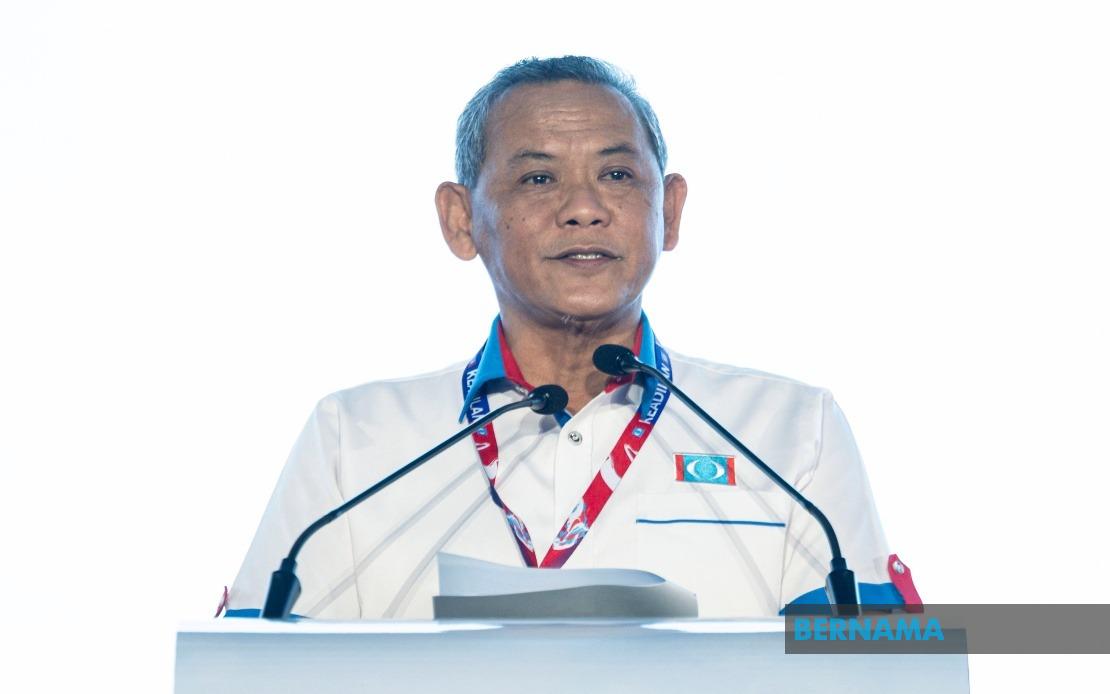
Former Negeri Sembilan Menteri Besar Datuk Seri Aminuddin Harun has publicly declared his readiness to relinquish his position as chairman of the Negeri Sembilan State Leadership Council of Parti Keadilan Rakyat, taking personal responsibility for the party's dismal showing in the state election held on August 1. Speaking at the PKR National Congress in Melaka on August 16, Aminuddin acknowledged mounting pressure from six branch leaders within the state who have demanded the party reassess its direction and leadership following a campaign that yielded only two state assembly seats out of fifteen contested.
The move represents a significant moment in PKR's internal dynamics as the party grapples with the fallout from what has been characterized as a major electoral disappointment in a traditionally contested state. Aminuddin's public acceptance of culpability stands in contrast to the finger-pointing and defensive posturing that often follows political defeats, signalling a willingness to engage in genuine self-reflection within party ranks. His statement carries particular weight given his previous tenure as Menteri Besar, a position he no longer holds, and his personal electoral loss in the Linggi constituency.
The Negeri Sembilan state election results underscored PKR's diminishing influence in a state where it had once held greater sway. The party's collapse from a more competitive position to securing merely two seats—Chuah and Sri Tanjung—represents a catastrophic loss of ground. This performance raises questions about PKR's organizational capacity, campaign messaging, and ability to maintain grassroots support in a state experiencing significant political realignment. The results suggest that voters either shifted allegiance to Barisan Nasional, Bersatu, or other competing factions, reflecting broader dissatisfaction with the governing coalition's performance or strategic repositioning by opposition parties.
Aminuddin's personal defeat in Linggi exemplified the challenging environment PKR faced statewide. Running in a three-cornered contest, he garnered 6,163 votes, falling 2,976 votes behind Barisan Nasional's incumbent Datuk Mohd Faizal Ramli, who secured 9,139 votes. Bersatu's candidate Datuk Zamri Md Said, fielded in the same race, polled a negligible 391 votes, yet may have fragmented opposition support sufficiently to contribute to Aminuddin's loss. The distribution of votes illustrates how split opposition ballots can determine outcomes when facing a unified government candidate, a recurring pattern that has plagued anti-government coalitions across Malaysia.
In his address to the PKR National Congress, Aminuddin emphasized that accepting responsibility did not signal capitulation or abandonment of political struggle. Rather, he framed the electoral defeat as a catalyst for institutional renewal and strategic recalibration. His assertion that "defeat will not be a reason to stop fighting" reflects a determination to interpret the results not as terminal failure but as a juncture demanding fundamental reassessment of tactics, messaging, and organizational structure. This framing is crucial for maintaining party morale during a difficult period and signalling to members that engagement with internal reform processes remains valuable.
The dynamics at play within PKR's Negeri Sembilan structure point to deeper organizational challenges affecting the party nationally. The emergence of six branch leaders collectively demanding leadership change suggests that grassroots dissatisfaction extends beyond individual electoral contests to encompass questions about strategic direction and decision-making quality. This coalition within the party apparatus indicates that the pressure on Aminuddin emanates from substantive concerns about PKR's competitiveness in the state, not merely personal rivalries or factional maneuvering. Such internal mobilization, when genuine, typically reflects serious concerns about party viability and electoral prospects.
Aminuddin's deference to the party leadership on whether to formally relinquish his position demonstrates an understanding that his personal willingness must be ratified through institutional mechanisms. By stating that he has "left the final decision to the party leadership," he positions himself as accepting collective party judgment rather than unilaterally imposing a solution. This approach, while appearing modest, also provides political cover for the party apparatus to make necessary changes without creating the appearance of capitulating to factional pressure or appearing reactive. The language of institutional process legitimizes whatever decision ultimately emerges.
The implications of PKR's Negeri Sembilan collapse extend beyond state-level politics. The state functions as a microcosm revealing broader challenges confronting the opposition coalition. PKR's inability to consolidate anti-government voting or maintain territorial strongholds raises questions about the party's capacity to serve as an anchor for opposition resurgence. Furthermore, the apparent strength of Bersatu in some constituencies despite fielding marginal candidacies suggests that Muhyiddin Yassin's party retains organizational capability and voter recognition that PKR may struggle to counter. For Malaysian political observers and opposition strategists, Negeri Sembilan represents a cautionary case study in how factionalized opposition efforts can deliver victories to entrenched incumbents.
The state election occurred within a broader context of political volatility following the 2023 general election. Negeri Sembilan's results suggest that the anti-government momentum visible during the 2023 federal contest has dissipated substantially or fragmented across competing opposition entities. PKR's particular vulnerability may reflect perceptions that it lacks the leadership bench or strategic clarity necessary to govern effectively, concerns that earlier internal contradictions and power struggles may have amplified among voters. The party's performance indicates that electoral support remains contingent and volatile, shifting readily toward alternatives when confidence erodes.
For the national political landscape, Aminuddin's readiness to vacate his position could catalyze broader leadership discussions within PKR. Whether his departure materializes or remains conditional may influence calculations by other party figures assessing their own viability and prospects. The precedent of accepting responsibility, if followed through, might establish expectations for accountability that reverberate through opposition ranks more broadly. Alternatively, should the party ultimately retain Aminuddin or pursue half-measures, it could signal that internal accountability mechanisms remain ineffectual, potentially deepening member cynicism and disaffection.
The coming weeks will reveal whether PKR translates internal critique into substantive organizational reform or simply cycles through leadership changes without addressing underlying strategic deficiencies. The party leadership's response to Aminuddin and the six branch leaders will communicate volumes about its capacity for genuine renewal. For Negeri Sembilan voters and the broader Malaysian political community, the question remains whether PKR can reconstruct its credibility and competitiveness or whether it faces a prolonged period of electoral marginalization in a state where it once held greater influence.

