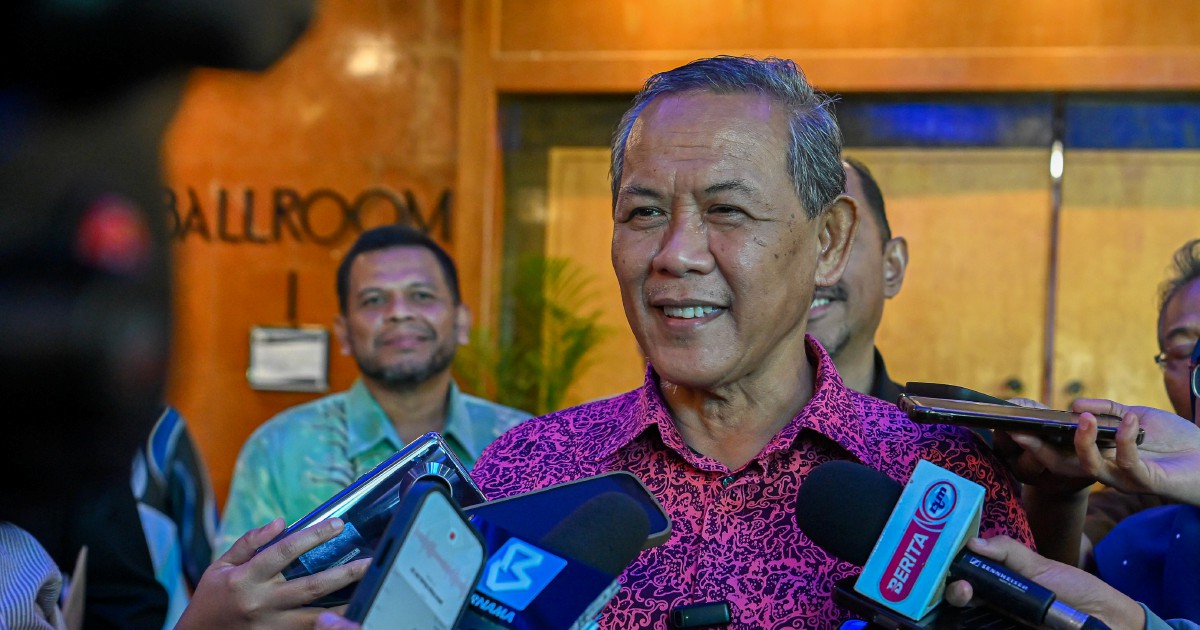
Negeri Sembilan Menteri Besar Datuk Seri Aminuddin Harun has made a direct appeal to voters in the state to assess the government's substantive response to the Linggi flooding crisis, urging them not to permit the longstanding environmental issue to be weaponised for political advantage as the 16th state election approaches. Speaking in Seremban, Aminuddin stressed that the administration had undertaken genuine mitigation efforts to address what remains one of the region's most persistent water-related challenges, and that these tangible measures deserved recognition rather than dismissal.
The Linggi River system has troubled residents and businesses in the surrounding areas for decades, with seasonal flooding causing repeated damage to homes, infrastructure, and livelihoods. The problem reflects broader drainage and water management challenges that have accumulated over years of rapid urbanisation and inconsistent maintenance across the basin. For many households, flooding is no abstract policy question but an immediate threat to their safety and property each monsoon season. The issue has historically carried significant political weight in local constituencies, making it a natural flashpoint during election campaigns when political parties seek to mobilise discontented communities.
Aminuddin's intervention signals a deliberate attempt to reframe the Linggi question away from partisan blame and towards a results-oriented evaluation of government action. By calling on voters to examine what his administration has actually accomplished rather than merely listening to opposition rhetoric, the Menteri Besar was positioning the incumbent government as pragmatic and solutions-focused. This rhetorical strategy acknowledges the legitimacy of public concern whilst implying that political opponents are merely exploiting anxiety rather than proposing viable alternatives. The timing of such remarks, positioned ahead of electoral contests, underscores how flood management has become intertwined with electoral calculations in Malaysian state politics.
The mitigation works currently underway in the Linggi basin represent an acknowledgment that previous approaches proved insufficient. These initiatives likely encompass a combination of structural interventions such as improved drainage systems, river dredging, and retention pond development, alongside non-structural measures including early warning systems and land-use planning adjustments. The effectiveness of such projects often takes considerable time to become fully evident, which creates a communicative challenge for governments seeking to demonstrate progress to impatient voters who experience flooding in real-time.
For residents across Negeri Sembilan, particularly those in flood-prone neighbourhoods, Aminuddin's appeal to focus on substantive governance rather than political point-scoring likely resonates with genuine frustration. Many constituents have experienced multiple electoral cycles during which candidates promised flood relief, only to see minimal tangible improvements. This history of unfulfilled promises across multiple administrations has bred scepticism about political commitments to environmental infrastructure, making voters increasingly demanding of evidence rather than rhetoric. The current appeal thus carries an implicit acknowledgment that the government must now deliver results to maintain credibility.
The broader context in Malaysia involves significant regional variation in flood management capacity and outcomes. Some states have invested heavily in integrated river basin management and modern flood forecasting systems, whilst others continue to struggle with fragmented institutional responsibilities and inadequate funding. Linggi's status as a recurring problem suggests either chronic underinvestment, institutional coordination failures, or both. Addressing such entrenched infrastructure challenges requires sustained political commitment beyond a single election cycle, a point that becomes particularly acute when flood mitigation intersects with electoral calendars.
Aminuddin's comments also implicitly challenge opposition parties to move beyond criticism and propose concrete alternatives. By framing the issue as one of evaluating government performance on measurable mitigation outcomes, he places the burden on critics to articulate what they would do differently and at what cost. In Malaysian state politics, such challenges often expose the difficulty opposition parties face in developing costed, detailed policy alternatives whilst simultaneously maintaining their criticism of incumbent administrations. The invitation to assess results rather than accept partisan claims forces a more substantive political conversation, though whether voters ultimately engage in such evaluation remains open to question.
The intersection of environmental challenges and electoral politics in Negeri Sembilan reflects wider patterns across Malaysia where natural hazards disproportionately affect lower-income communities, creating both genuine humanitarian concerns and electoral vulnerabilities for sitting governments. Flood-prone districts are frequently politically marginal, making them targets for both incumbent attention and opposition mobilisation. This dynamic can either drive improved disaster management outcomes if governments respond to electoral pressure with actual investment, or generate hollow promises if constituencies lack sufficient electoral weight.
Moving forward, the critical measure of Aminuddin's appeal will be whether the mitigation works under way produce demonstrable improvements in flood frequency and severity. Communities affected by Linggi flooding will ultimately judge the government not on rhetoric about avoiding politicisation, but on whether their homes and businesses remain dry during future monsoon seasons. The challenge for Malaysian policymakers generally involves breaking the cycle whereby environmental infrastructure receives inadequate funding until it becomes a political crisis, then generates temporary attention before slipping back down the agenda once electoral pressures ease.

