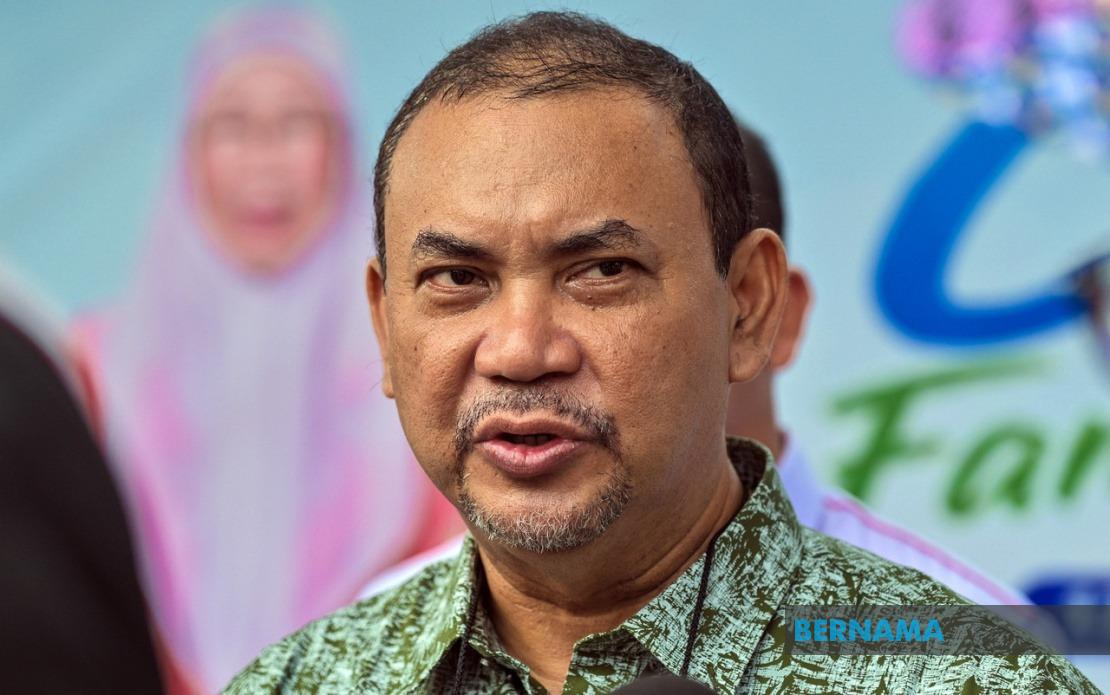
Datuk Azman Abidin, serving as both Ampang Parliamentary Constituency Coordinator and Prime Minister's Political Secretary, has made a formal undertaking to strengthen the welfare assistance framework for residents across the constituency. Following his recent appointment by Prime Minister Datuk Seri Anwar Ibrahim to this additional role, Azman has outlined a comprehensive approach to ensure government support programmes reach beneficiaries more efficiently and transparently than before.
The commitment represents an effort to institutionalise welfare delivery mechanisms within the Ampang parliamentary district, one of the larger constituencies in the Klang Valley region. Rather than relying on ad hoc assistance channels, Azman's office will establish a more systematic process where residents can submit applications directly to the Office of the Prime Minister's Political Secretary. This centralised approach aims to eliminate bureaucratic delays and ensure proper documentation of all requests for government support.
Coordination with the Implementation Coordination Unit under the Prime Minister's Department will form the backbone of this initiative. The ICU, tasked with monitoring and facilitating the execution of federal policies across constituencies, will work alongside Azman's team to track the progress of assistance schemes and verify that allocated resources are being distributed to intended recipients. This multi-agency coordination reflects broader government efforts to improve service delivery at the constituency level, a longstanding challenge in Malaysian public administration.
Local assemblymen representing the various state constituencies within Ampang parliamentary boundaries will play a crucial supporting role in this framework. By engaging directly with elected representatives at the state assembly level, the coordination office can tap into existing grassroots networks and community intelligence. Such cooperation is essential in Malaysia's federal system, where state and federal representatives must work in tandem to address constituent needs effectively, regardless of political party affiliations.
Community leaders and grassroots organisations will also form part of the expanded network for welfare delivery. These intermediaries possess detailed knowledge of their respective communities' vulnerabilities and can identify deserving recipients who may not be aware of available assistance programmes or lack the capacity to navigate bureaucratic processes independently. Their involvement ensures that government welfare reaches marginalised populations who might otherwise slip through administrative cracks.
Azman has emphasised that his office will operate according to principles of professionalism, integrity and accountability. These undertakings address common criticisms levelled at welfare distribution systems in Malaysian politics, where concerns about partisan favouritism or nepotistic allocation sometimes undermine public confidence. By publicly committing to these standards, the coordinator signals an expectation that all decisions will be defensible and based on need rather than political considerations.
The initiative reflects a broader pattern of institutional strengthening within the current administration's governance approach. Rather than relying solely on individual political connections or informal networks, the emphasis on structured coordination suggests an attempt to create lasting systems that persist beyond any single officeholder's tenure. This institutional perspective is particularly important for constituencies like Ampang, which encompasses diverse communities with varying socioeconomic profiles and welfare requirements.
For Malaysian readers, particularly those in urban constituencies facing rising living costs and economic pressures, this development carries practical significance. Access to reliable government assistance programmes can provide crucial support during periods of financial hardship, and streamlined delivery mechanisms reduce the frustration and time investment required to obtain aid. The establishment of a direct channel through the Political Secretary's office may also reduce the political middleman element that sometimes characterises constituency-level assistance.
The Ampang arrangement may serve as a model for other constituencies, should it demonstrate measurable improvements in assistance distribution rates or beneficiary satisfaction. As Malaysia continues to grapple with rising poverty and cost-of-living challenges, replicating effective welfare delivery systems across other parliamentary constituencies could yield significant social benefits. The success or failure of this coordinated approach will likely influence how future administrations structure their constituency-level support mechanisms.
While the commitment promises enhanced efficiency, implementation challenges remain. Ensuring consistent service quality across an office handling numerous applications requires adequate staffing, clear standard operating procedures, and ongoing training. Additionally, the effectiveness of this system depends on sustained cooperation between federal and state-level representatives, a relationship that can sometimes be complicated by political divisions. How these practical obstacles are overcome in coming months will determine whether this initiative becomes a genuine improvement or merely an exercise in administrative reorganisation.

