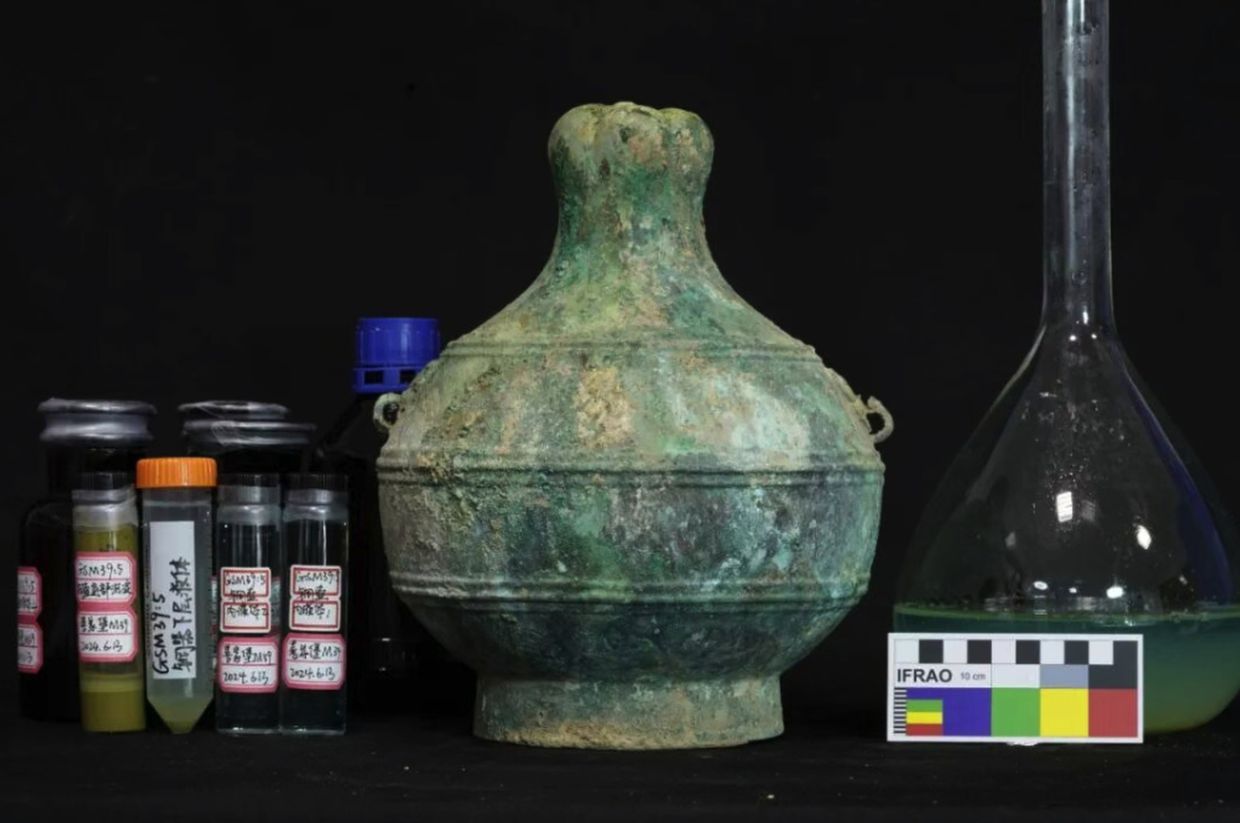
A remarkable archaeological discovery near China's ancient Great Wall has yielded insights into brewing practices during the Warring States period, with researchers extracting and analysing wine from a perfectly preserved bronze vessel that had remained sealed for over two millennia. The find, announced in June through the Journal of Archaeological Science, represents the most comprehensively documented wine relic from the Qin state yet discovered in China, filling a significant gap in understanding how frontier communities produced and consumed alcoholic beverages during this formative historical era.
The excavation took place at the Shanjiabao cemetery, situated just two kilometres from the Warring States-era Qin Great Wall in what is now Ningxia Hui Autonomous Region. This location proves significant because the area functioned as a defensive frontier during the Qin period, with numerous forts, castles and military outposts scattered across a 170-kilometre stretch of fortification. Archaeologists determined that the cemetery served as a burial ground for garrison soldiers and their families who inhabited these fortified positions, providing a window into the daily lives of people stationed at these remote border settlements.
During systematic excavation of the site, researchers uncovered 183 tombs from the Warring States period, with 179 belonging to Qin culture. Within Tomb No 39, they discovered a distinctive garlic-head-shaped bronze pot—a recognised hallmark of Qin craftsmanship—containing approximately 3,740 millilitres of ancient liquid residue. Initial analysis confirmed that this substance was wine, prompting further investigation into its composition and production methods.
The preservation condition of this wine was extraordinary, owing to the ingenious sealing technology employed by ancient craftspeople. The bronze vessel utilised a sophisticated double-layer sealing system consisting of a textile inner lining combined with an outer coating of organic clay. This engineering approach successfully protected the contents from contamination and oxidation, allowing the wine to remain chemically largely intact across the centuries. According to Wang Xiaoyang, head of the Shanjiabao cemetery archaeological project at the Ningxia Institute of Cultural Relics and Archaeology, this represents the most well-preserved and information-rich wine relic from the Qin state ever publicly documented in China.
To determine the precise composition and brewing methods, researchers dispatched samples to Northwest University for advanced analysis. The laboratory work identified 24 distinct chemical compounds within the liquid, including organic acids and their derivatives, amino acids and their derivatives, and various carbohydrates. This chemical fingerprint proved crucial in deciphering the wine's origins and production process, as different brewing techniques and raw materials produce characteristic molecular signatures.
A particularly revealing finding concerned the types of grains used in production. Analysis of starch residues demonstrated that over 92 per cent of the starch content originated from broomcorn millet, a grain widely cultivated in northern China and particularly suited to the climate and soil conditions of the Ningxia region. This composition contrasts sharply with southern Chinese brewing traditions, which typically relied on rice as the primary fermentation substrate. The distribution pattern of organic acids within the liquid matched that of artificially aged yellow wine, definitively confirming that the beverage was grain-based rather than derived from fruits such as grapes.
This discovery carries broader significance for understanding ancient Chinese beverage culture. Archaeological evidence indicates that China ranks among the world's earliest regions to develop and consume alcoholic beverages, with an expanding corpus of discoveries revealing diverse brewing practices across different geographical and temporal contexts. However, meaningful regional variation existed in production methods, largely determined by available agricultural resources and climate. Northern communities like those stationed at the Great Wall relied on hardy grain crops, while southern populations exploited abundant rice cultivation.
The Ningxia find specifically addresses a notable gap in archaeological knowledge regarding winemaking during the Warring States period in this region. Before this discovery, scholars possessed limited concrete evidence about the specific techniques, ingredients and brewing standards practised in frontier territories. The chemical analysis now provides empirical data demonstrating sophisticated knowledge of fermentation processes, ingredient selection and quality control among Qin producers, even in remote garrison locations far from major population centres.
The human dimension of this discovery merits consideration. The decision to include a full bronze vessel of wine in a tomb burial speaks to both the personal preferences and social status of the deceased individual. Wang Xiaoyang's team hypothesised that the tomb's occupant was likely a soldier stationed at the Great Wall who held wine in particular affection. The act of interring such a valuable and carefully sealed vessel alongside the body reflects both familial devotion and the deceased's standing within the garrison community. This practice mirrors broader customs throughout the Qin period, wherein grave goods reflected the social roles and personal tastes of the buried individual.
For modern researchers studying ancient economies and daily life, such discoveries yield multifaceted information beyond simple beverage analysis. The wine vessel itself demonstrates advanced metallurgical and ceramic skills. The contents reveal dietary patterns and agricultural practices. The burial context indicates social structures and religious beliefs regarding the afterlife. Together, these elements construct a richer understanding of frontier society during this transformative period in Chinese history.
The technical achievement of ancient sealing methods particularly intrigues modern scholars studying preservation technology. The combination of textile and organic clay layers created an effective barrier against the primary agents of degradation—oxygen, moisture infiltration and microbial contamination. Understanding how ancient peoples solved these preservation challenges offers perspectives applicable beyond historical research, potentially informing contemporary conservation practices.
Further research is underway to extract additional information from the preserved wine and associated archaeological context. Continued analysis may reveal seasonal production patterns, trade networks through which specific grain varieties were distributed, and connections between frontier garrison consumption habits and broader patterns throughout Qin territories. The Shanjiabao cemetery promises to yield additional insights as excavation and analysis proceed, potentially transforming understanding of how ancient border communities sustained themselves economically, socially and culturally.

