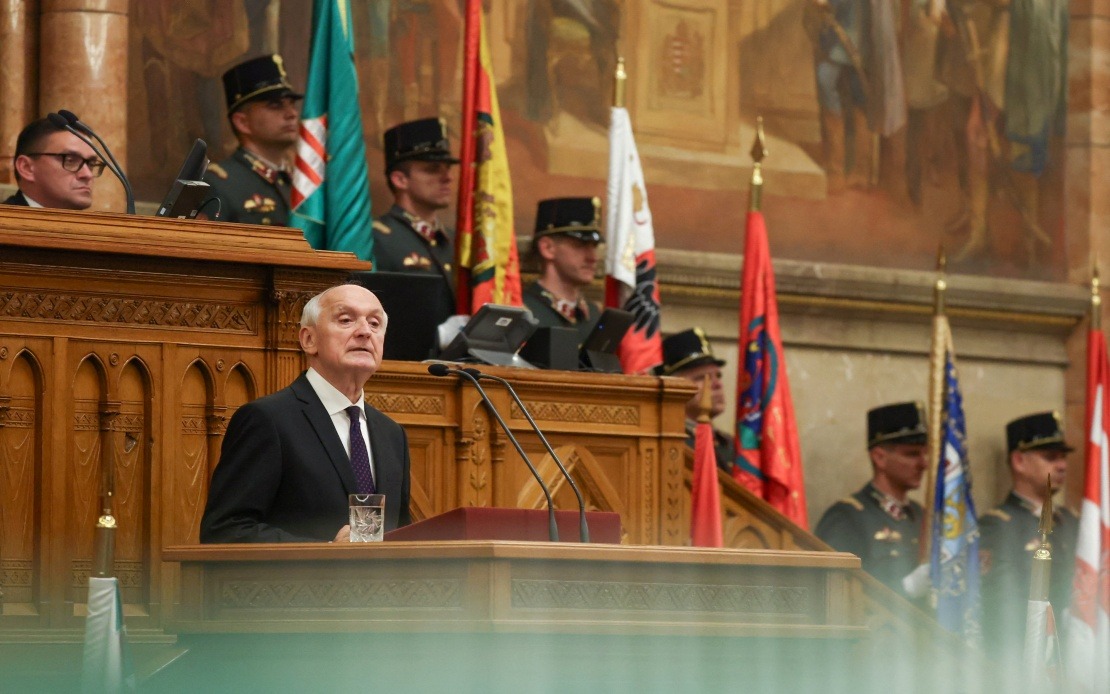
Hungary has entered a new chapter in its leadership with the formal inauguration of Andras Baka as President on August 19, 2026. Prime Minister Peter Magyar confirmed the transition through a social media statement, extending wishes for success and humanitarian values in Baka's presidential tenure. The installation concludes a contentious selection process that has exposed deep fractures within the Hungarian political establishment and raises questions about judicial independence in the Central European nation.
Baka's election by the Hungarian Parliament took place on August 11, following a career marked by significant positions in Hungary's legal system. His elevation to the presidency represents a notable shift in Hungarian governance, though it arrives wrapped in controversy. The 64-year-old jurist brings decades of experience in constitutional and judicial matters, having navigated Hungary's complex legal landscape through multiple governmental administrations. His appointment signals potential changes in how Hungary's executive branch may approach constitutional governance and rule-of-law issues going forward.
The new president's judicial background spans multiple institutions and countries. Between 2009 and 2011, Baka served as president of the Hungarian Supreme Court, a period that coincided with significant reform proposals within the judiciary. His tenure ended when he resigned in response to structural changes implemented by the government of then-Prime Minister Viktor Orban. Rather than leaving the legal field entirely, Baka subsequently took leadership of the Hungarian Curia from 2012 to 2020, the institution that replaced the reformed Supreme Court system. Before his domestic judicial career reached prominence, he worked at the European Court of Human Rights in Strasbourg, providing him with international experience in human rights adjudication.
The presidential election itself became a flashpoint for broader political disagreements. Major opposition parties, including Fidesz and the Christian Democratic People's Party, boycotted the parliamentary vote in protest against the constitutional amendments that had removed Baka's predecessor, Tamas Szujok. This boycott represents more than procedural objection; it reflects fundamental disagreement over how Hungary's constitutional framework should evolve. The opposition's withdrawal from the election process underscores the severity of political polarization affecting Hungary's institutions.
Hungary's situation carries implications for Southeast Asian observers of Central European politics, particularly regarding how elected governments balance constitutional reform with institutional checks on executive power. The tensions surrounding Baka's appointment echo debates occurring across numerous democracies about the relationship between judicial independence and political accountability. For Malaysian observers, Hungary's experience illustrates the delicate equilibrium required when restructuring legal systems, demonstrating how constitutional amendments intended to modernize institutions can become flashpoints for political conflict.
The removal of Baka's predecessor through constitutional amendment raises questions about presidential stability and the proper mechanisms for leadership transitions. Tamas Szujok's departure through this constitutional route rather than conventional electoral cycles suggests Hungary's governing majority pursued structural solutions to achieve desired political outcomes. This approach contrasts with Malaysia's own constitutional framework, where presidential and monarchical transitions follow established protocols that have generally maintained institutional continuity.
Baka's prior tenure at the European Court of Human Rights provides international perspective to Hungary's domestic governance. His work in Strasbourg exposed him to how human rights protections function across European systems, knowledge he may apply to Hungary's approach toward constitutional safeguards. This cosmopolitan background distinguishes him from purely domestically-trained jurists and may influence his perspective on Hungary's obligations within broader European legal frameworks.
The timing of Baka's assumption of office occurs during a period of broader transformation in Hungarian politics and governance. Prime Minister Magyar, who offered public congratulations for the new president's installation, leads a government navigating Hungary's complex relationship with European Union institutions and democratic standards. The interplay between the executive and newly installed presidency will merit close observation, particularly regarding how constitutional powers are exercised across these branches.
For regional observers in Southeast Asia, Hungary's political developments offer lessons about managing judicial system reforms while maintaining democratic legitimacy. The boycott by opposition parties illustrates how procedural changes can undermine perceived legitimacy even when technically constitutional. Malaysia's own experiences with judicial appointments and constitutional governance suggest the importance of broad consensus in major institutional changes, particularly those affecting the legal system's independence and public confidence.
Baka's presidency begins with both formal legitimacy through parliamentary election and substantive questions about political consensus. His background combining domestic judicial experience with international human rights work positions him distinctly within Hungary's political landscape. Whether his tenure can bridge the evident divisions demonstrated by the opposition boycott remains uncertain. The coming months will reveal whether Baka can exercise the presidency in ways that address broader concerns about institutional independence and democratic governance that motivated opposition to his predecessor's removal.
The constitutional and political questions raised by this transition extend beyond Hungary's borders. Central European democracies increasingly face tensions between majority governance preferences and minority protections, issues that resonate across diverse political systems. Baka's capacity to navigate these tensions while maintaining judicial principles will likely define not only his presidency but also Hungary's trajectory within European democratic norms. His installation marks the beginning of a critical test for Hungarian institutions operating under reformed constitutional arrangements.

