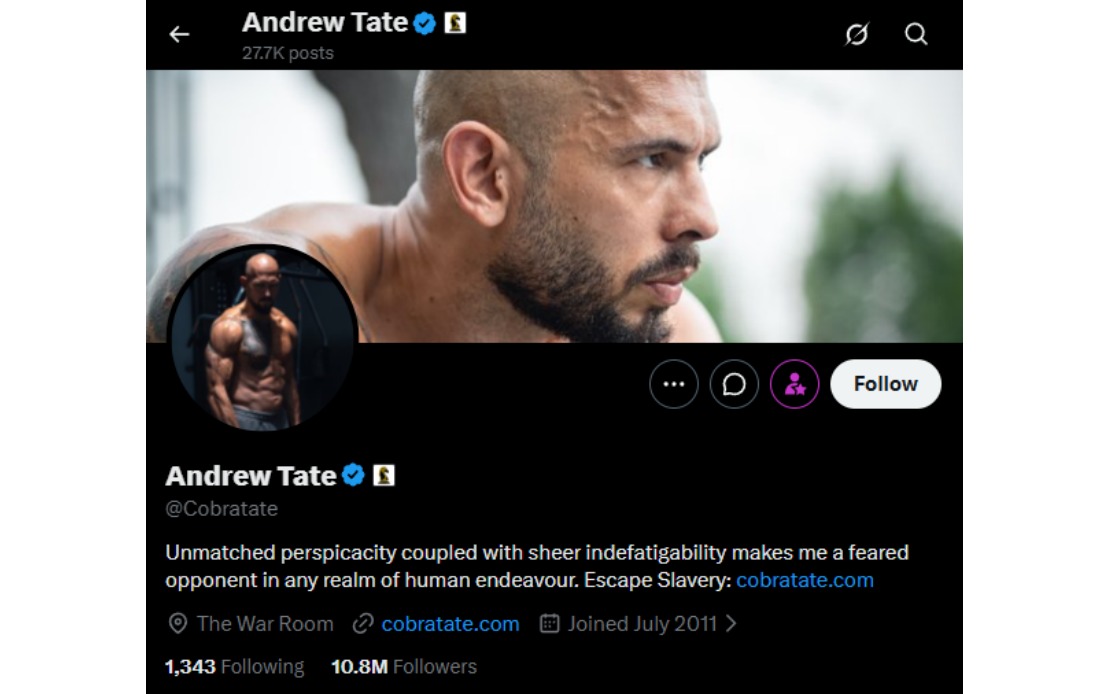
The arrest of Andrew Tate and his brother Tristan in Miami marks a significant escalation in legal proceedings against the two polarising internet personalities. Apprehended by the US Marshals Service on Saturday, the brothers now face a new layer of serious criminal allegations originating from United Kingdom authorities. The Crown Prosecution Service, which handles criminal cases in England and Wales, formally announced the additional charges through an official statement, signalling heightened international coordination in the prosecution effort.
Andrew Tate has cultivated a substantial and controversial online following through social media platforms, building an empire centred on lifestyle coaching and motivational content that has attracted both devoted admirers and fierce critics. His rise to prominence coincided with a growing discourse around influencer accountability and the responsibilities of those wielding significant reach over global audiences. The new charges represent a turning point in how authorities are treating allegations against high-profile digital figures operating across borders, demonstrating that jurisdictional boundaries offer limited protection for those accused of serious crimes.
The timing of the arrest, occurring on a Saturday when many enforcement operations typically remain subdued, underscores the priority assigned to this case by American law enforcement. The involvement of the US Marshals Service, a federal agency responsible for apprehending fugitives and managing significant cases, indicates the gravity with which authorities are treating the matter. The brothers' presence in Miami, a jurisdiction with established infrastructure for handling complex international criminal matters, provided an opportune moment for coordinated action between British and American enforcement agencies.
British prosecutors' decision to file additional charges beyond what may have been previously pursued demonstrates an evolving investigative process. Sex-trafficking allegations carry among the most serious potential penalties within criminal justice systems, particularly in Western democracies where such offences receive substantial public attention and institutional focus. The involvement of multiple jurisdictions underscores how modern criminal networks and alleged misconduct transcend geographical boundaries, requiring sophisticated international cooperation mechanisms.
For Malaysia and Southeast Asian observers, this case illuminates the increasingly interconnected nature of digital-age crime and enforcement. Online influencers and content creators operating from the region frequently target global audiences and may find themselves subject to prosecution in multiple jurisdictions simultaneously. The arrest demonstrates that prominent social media figures cannot assume immunity simply by operating from or relocating to different countries, a principle with implications for how digital content creators across Asia approach their responsibilities.
The Tate brothers' case also reflects broader societal conversations about toxic masculinity and the influence wielded by those promoting particular lifestyle philosophies to vulnerable audiences. Critics have long argued that Andrew Tate's content, which frequently centred on themes of dominance and hierarchy, contributed to harmful attitudes toward women. The formal charges represent institutional acknowledgement of these concerns, moving them from social media discourse into criminal legal proceedings where standards of evidence and procedural protections apply.
The Crown Prosecution Service's involvement indicates that British authorities possess sufficient evidence to pursue conviction in their jurisdiction. The coordination between the United States and United Kingdom demonstrates how serious criminal allegations trigger rapid diplomatic and law enforcement cooperation. Such mechanisms, while occasionally strained by broader geopolitical tensions, remain functional when addressing crimes categorised as fundamentally threatening to public safety and human rights.
The implications for digital platform governance merit consideration as well. Social media companies increasingly face pressure to monitor content and user conduct, particularly regarding sexual exploitation and trafficking. The Tate brothers' case exemplifies how platforms must balance free expression principles with accountability for facilitating spaces where harmful behaviour allegedly occurs. Several major platforms have already taken action regarding Andrew Tate's presence, suspending or removing accounts associated with him during earlier investigation phases.
For those monitoring developments in online regulation and influencer accountability, this arrest signals a maturing legal landscape where digital prominence offers no shield against traditional criminal prosecution. Malaysian policymakers engaged in formulating digital governance frameworks can draw lessons from how established Western jurisdictions are treating these emerging challenges. The case demonstrates that coordinated international enforcement, while complex and time-consuming, remains viable and increasingly routine.
The brothers' detention in Miami initiates a new phase where legal proceedings will determine the validity of allegations. Both Andrew and Tristan Tate will have access to due process protections guaranteed under American law, including representation and the opportunity to contest charges. The transition from investigative phase to formal custody represents a threshold moment, after which the judicial process will proceed according to established protocols.
Observers across Southeast Asia will likely monitor how American and British courts ultimately resolve these charges, as the outcome carries implications for how digital economies and influencer cultures continue developing. The case serves as a cautionary reminder that algorithmic prominence and social media following cannot substitute for legal accountability, and that criminal liability extends seamlessly across continents in contemporary enforcement environments.

