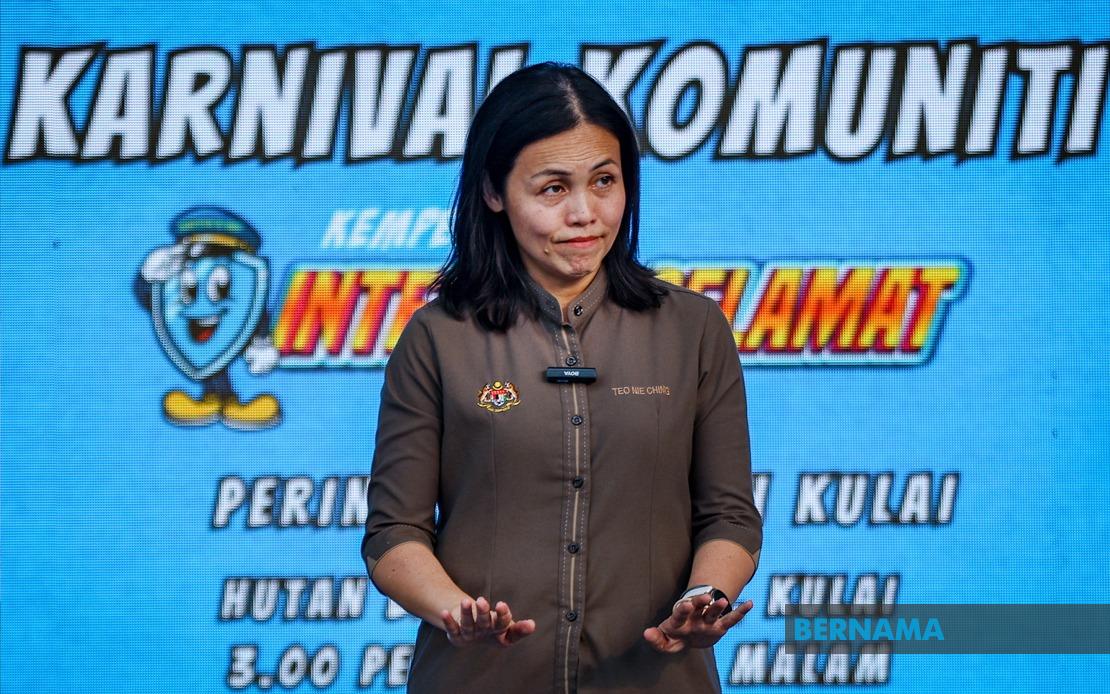
Stulang state assemblyman Andrew Chen Kah Eng has been formally designated as Johor's Leader of the Balancing Force by the Pakatan Harapan coalition, marking his reappointment to a position he previously held during the 2022-2026 state government term. The appointment, announced by Johor DAP chairman Teo Nie Ching, represents the unified agreement of all three component parties within the opposition alliance: DAP, PKR, and Parti Amanah Negara.
The Balancing Force position, known locally as Ketua Pengimbang, holds particular significance in Malaysian state politics as it represents the formal opposition voice within the state assembly. This ceremonial yet influential role tasked Chen with articulating the concerns and policy alternatives of the opposition during legislative proceedings, a responsibility that extends beyond mere symbolism in parliamentary democracies. Teo explained that DAP had put forward Chen's candidacy, which was subsequently endorsed by both PKR and Amanah, signalling broad consensus within the opposition bloc on his suitability for the post.
The appointment comes in the aftermath of the 16th Johor state election held on July 11, which delivered a decisive mandate to Barisan Nasional. The ruling coalition secured 48 of the state assembly's seats, establishing a commanding majority for the new government. In contrast, Pakatan Harapan's combined efforts across its three parties yielded only eight seats, a significant reduction in opposition representation compared to their earlier strength. This electoral outcome substantially weakened the opposition's parliamentary footprint and correspondingly reduced their leverage in legislative debates and committee work.
Chen's continuity in the role reflects both his party's confidence in his parliamentary acumen and his personal standing within PH circles. Having successfully navigated the role during the preceding term, he brings institutional knowledge about state assembly procedures and the mechanics of effective opposition engagement. His reappointment also suggests that despite the coalition's electoral setback, PH remains committed to maintaining organisational cohesion and presenting a coherent alternative vision during the 2026-2030 term.
The Johor state assembly dissolution on June 1 had triggered the need for fresh elections and, consequently, the renewal of various assembly positions. The interim period between dissolution and the July election created procedural space for coalitions to reorganise their internal structures and prepare strategies for the new parliamentary cycle. For Pakatan Harapan, this planning phase involved determining not only which candidates would contest but also which individuals would assume leadership roles within the reduced opposition contingent.
The broader political context in Johor has witnessed significant flux over recent years. The state, historically a Barisan Nasional stronghold with deep roots in Umno-led governance, has nonetheless seen periodic challenges to the ruling coalition's dominance. PH's earlier success in capturing state power during 2022-2026 represented a notable departure from decades of established patterns, though the most recent election results suggest that voters returned to their traditional preferences or responded to shifting political dynamics that favoured the incumbent government.
For Malaysian political observers, the appointment underscores how opposition coalitions function even in diminished circumstances. The Balancing Force role, while lacking executive power, provides a platform for policy critique, scrutiny of government decisions, and articulation of alternative approaches on matters ranging from economic development to social services. In Johor, where Barisan Nasional controls both the executive apparatus and legislative supermajority, the opposition's primary function shifts toward constructive engagement and public representation of constituencies that did not support the ruling coalition.
Chen's appointment also reflects the internal dynamics of Malaysia's multi-party opposition ecosystem. The coordination required among DAP, PKR, and Amanah—parties with distinct ideological emphases, organisational structures, and grassroots support bases—demands skilled leadership capable of building consensus. The fact that all three parties agreed on a single opposition leader candidate indicates functional coalition mechanics, a prerequisite for opposition effectiveness regardless of electoral outcomes.
Looking ahead, the next five-year term presents both challenges and opportunities for Johor's opposition. Electoral defeats can catalyse organisational renewal and policy recalibration, allowing defeated coalitions to regroup and identify messaging approaches that might resonate more effectively with voters in subsequent contests. Chen's role will involve balancing the immediate need to hold government accountable with the longer-term imperative of rebuilding PH's support base for 2030.
The appointment process itself, executed swiftly and without apparent controversy among coalition partners, suggests that Pakatan Harapan has resolved internally how to structure its opposition presence in Johor. This contrasts with other Malaysian states where opposition fragmentation or internal disputes have sometimes complicated the opposition's parliamentary effectiveness. A unified, clearly designated opposition leader can streamline communication with media, coordinate legislative strategy, and provide focal points for public engagement on key issues.

