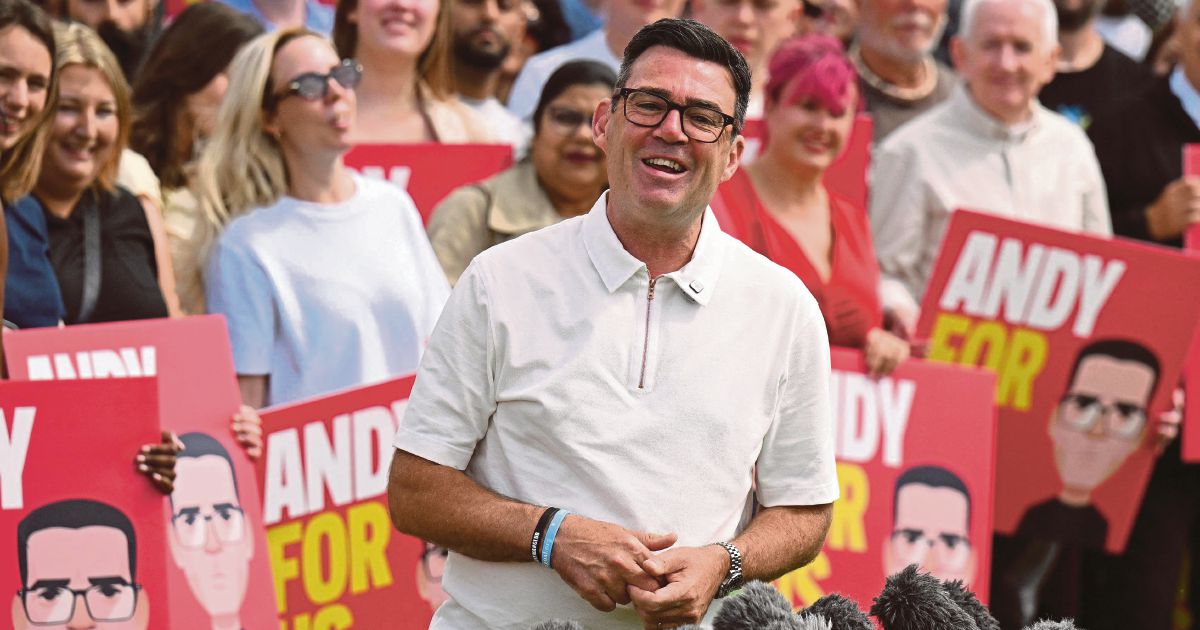
Andy Burnham, the politician long celebrated for championing the interests of northern England, has ascended to the office of Prime Minister on Monday, marking yet another transition at the apex of British governance. His appointment represents the seventh change in leadership within a single decade, a frequency that underscores the volatility and instability that has characterised Westminster politics in recent years. The new premier's rise follows a career spent building credibility as a voice for working communities outside London's sphere of influence.
Burnham's immediate messaging centres on the need for fundamental transformation across British institutions and society. He employs the phrase "rewire" to describe his intended approach, suggesting an ambitious reorganisation rather than incremental adjustment of existing systems. This rhetorical framing carries particular weight given the catalogue of challenges awaiting his administration, from the persistent squeeze on household finances to the degradation of essential public infrastructure and services that citizens depend upon daily.
The cost-of-living crisis has become the defining economic burden for millions of British families. Energy bills, food costs, and housing expenses continue to consume disproportionate shares of household income, particularly among those earning modest wages. Burnham's emphasis on this issue reflects his political base in working-class communities where such pressures are most acutely felt. His commitment to addressing these material concerns rather than focusing exclusively on macroeconomic measures suggests a government attuned to lived experiences beyond statistical indices.
Beyond economic hardship, public services across Britain have deteriorated visibly in recent years. The National Health Service faces severe strain, with waiting lists reaching record levels and emergency departments overwhelmed. Schools struggle with inadequate funding, and local authorities have faced budget cuts that have diminished community facilities and support services. Burnham's promise to improve these provisions indicates recognition that voters expect tangible improvements in their everyday lives, not merely favourable economic projections on paper.
The rapid succession of prime ministers in the preceding decade reflects deeper fractures within the British political system and Conservative party governance. Each transition typically followed a period of growing dissatisfaction with leadership competence, internal party conflict, or electoral setbacks. This pattern has eroded public confidence in institutional stability and raised questions about whether Westminster can effectively address complex, long-term policy challenges requiring sustained focus and coherent strategy.
Burnham's background differs notably from many of his recent predecessors. His career has been rooted in service to northern constituencies rather than primarily in Westminster climbing or business advancement. This positioning as an outsider to London's political establishment carries both advantages and risks. Voters in peripheral regions may perceive him as genuinely attuned to their concerns, while traditional power structures in the capital may regard him with scepticism or resistance.
For Malaysian observers and regional readers, Burnham's elevation deserves attention as part of the broader pattern of political instability across developed Western democracies. When major economies experience repeated leadership transitions and struggle with governance effectiveness, it affects international stability, trade relationships, and the rules-based order upon which Southeast Asian prosperity partly depends. Britain remains a significant trading partner for Malaysia and a cultural and educational reference point for many Southeast Asians.
The new Prime Minister's emphasis on "rewiring" suggests recognition that incremental tinkering will not suffice to restore public confidence. Whether his administration can deliver substantive improvement in living standards, service quality, and economic opportunity will determine the durability of his tenure and the viability of his political vision. The British public has demonstrated declining patience with leaders who promise transformation but deliver only conventional politics.
Burnham's challenge includes not merely addressing immediate crises but also restoring a sense of coherent direction and purpose to British governance. The cost-of-living pressures and service failures he identifies are real and urgent, yet they are symptomatic of deeper structural questions about economic direction, industrial policy, and the distribution of prosperity. His government will need to move beyond rhetorical commitment to concrete policies that demonstrably improve conditions for ordinary households.
The international dimension should not be overlooked. Britain's relationships with key partners, including those in Southeast Asia, depend upon a government capable of coherent strategic thinking. Repeated leadership changes create uncertainty and reduce Britain's capacity to pursue sustained diplomatic or economic objectives. Burnham's stated commitment to national renewal may extend to restoring Britain's international standing alongside domestic recovery.
The months ahead will reveal whether the new Prime Minister can translate the energetic messaging of his appointment into tangible improvements that voters can perceive in their lives. His credibility as a voice for working communities provides political capital, yet also creates expectations. The breadth of Britain's challenges—from infrastructure decay to service collapse to household financial stress—means that success will demand not only political will but also sustained focus and effective execution across multiple policy domains simultaneously.

