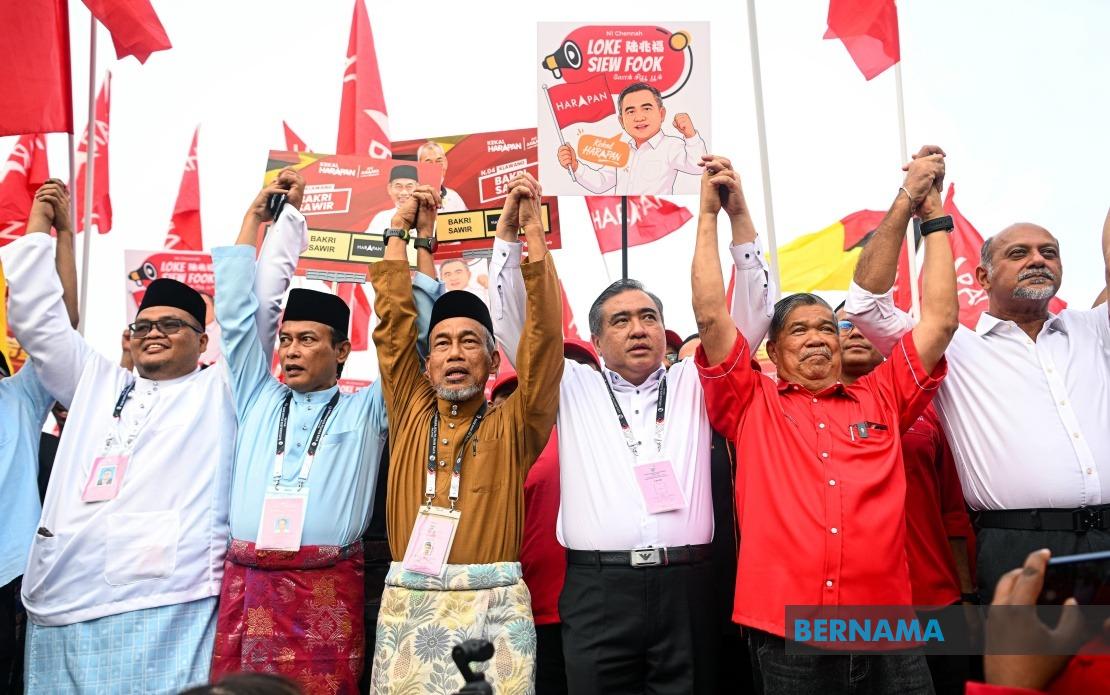
Transport Minister Anthony Loke has been confirmed as the DAP candidate in a straight contest to retain the Chennah state seat that he has held since 2013. The Seremban Member of Parliament faces a significant electoral challenge from Siow Kong Choon, the state MCA Youth chief, who is standing under the Barisan Nasional banner. The nomination process for the 16th Negeri Sembilan state election concluded this morning with both candidates officially registered for what observers expect to be a closely watched constituency battle in a state where control remains politically fluid.
The Jelebu Parliamentary returning officer, Abdul Rahim A Aziz, formally announced the contest following the close of nominations at the Dewan Besar Kuala Klawang nomination centre. Loke submitted his nomination papers at 9.05 am, with Siow following approximately four minutes later at 9.09 am. The swift and orderly process underscores the maturity of electoral procedures in the state, though it also reflects the anticipation surrounding this particular matchup between two well-organised political machines.
Loke's track record in the constituency demonstrates considerable electoral strength. In the 2023 Negeri Sembilan state election, he secured 5,888 votes to defeat his Perikatan Nasional challenger Rosmadi Arif by a commanding margin of 2,200 votes. This substantial victory provides the incumbent with a psychological advantage, though the political landscape has shifted considerably in the intervening months, with coalition dynamics and voter sentiment potentially altered by national developments and economic conditions affecting household finances across Malaysia.
The selection of Siow as the BN challenger represents a deliberate strategic choice by the coalition. As state MCA Youth chief, he brings youth-oriented credentials and a organisational base within MCA structures. However, he faces the inherent challenge of mobilising support in what has become an increasingly competitive three-cornered or straight fight dynamic, where traditional BN machinery must contend with the incumbent's consolidated support and DAP's organisational presence in urban and semi-urban areas of the constituency.
Chennah's political significance extends beyond its electoral mathematics. The constituency encompasses diverse demographic segments, from traditional rural voters to emerging suburban populations. This composition has made it a barometer of broader political shifts in Negeri Sembilan, where Malay and Chinese votes can significantly determine outcomes. The 2023 result demonstrated that despite BN's presence and PN's challenge, a strong incumbent with cross-community appeal could maintain control, a lesson that reverberates through current campaign strategies.
Loke's position as Transport Minister adds national dimensions to the local campaign. His portfolio responsibilities and visibility at federal level provide both advantages and vulnerabilities. While his ministerial rank enhances his profile and resource access, it also makes him accountable for transport policy outcomes that affect daily commuters throughout the Klang Valley and surrounding regions, areas from which Chennah draws many residents and workers. This dual accountability shapes the nature of campaign messaging and voter expectations.
The Election Commission has scheduled early voting for July 28, with polling day set for August 1. This timeline provides candidates approximately two weeks for intensive campaigning, relatively compressed compared to some previous election cycles. Both camps must maximise ground presence and digital engagement to reach voters, particularly given voter fatigue from frequent electoral contests and the competing demands on public attention from economic concerns and cost-of-living pressures affecting household budgets.
BN's decision to contest Chennah reflects its commitment to reclaiming ground in Negeri Sembilan, where it seeks to strengthen its position ahead of potential federal realignments. The coalition's performance in state elections has varied across Malaysia, with some constituencies proving more competitive than anticipated while others have shifted more decisively toward alternative coalitions. Negeri Sembilan remains strategically significant both as a state assembly and as a testing ground for coalition strategies that may influence approaches in other states.
For DAP, Loke's defence of Chennah carries symbolic weight beyond the single seat. His retention demonstrates the party's capacity to hold urban and semi-urban constituencies against BN challenges, particularly where multi-ethnic voter bases exist and where development-oriented candidates with ministerial experience can build supporting coalitions. A defeat would raise questions about DAP's electoral sustainability in seemingly secure seats, whereas retention would reinforce narratives about party consolidation in its traditional strongholds.
The contest also reflects Negeri Sembilan's unique political culture, where coalition governments have traditionally required cooperation between multiple parties and where no single party commands overwhelming dominance. This fragmented landscape creates opportunities for incumbents to build personal support bases that transcend strict party lines, an advantage Loke appears to have cultivated through his eleven-year tenure in the constituency. Whether this can withstand the combined organisational efforts of BN, coupled with any residual anti-incumbent sentiment, will be tested definitively on polling day.
Voter sentiment in Chennah will partly reflect broader evaluations of DAP-led Selangor state government and the federal coalition government that includes DAP. Economic conditions, particularly inflation and employment, remain salient concerns for middle-class constituencies. Siow's campaign will likely emphasise BN's economic management credentials and claims about development projects, while Loke will stress continuity, ministerial achievements, and local representation effectiveness built over more than a decade of constituency service.

