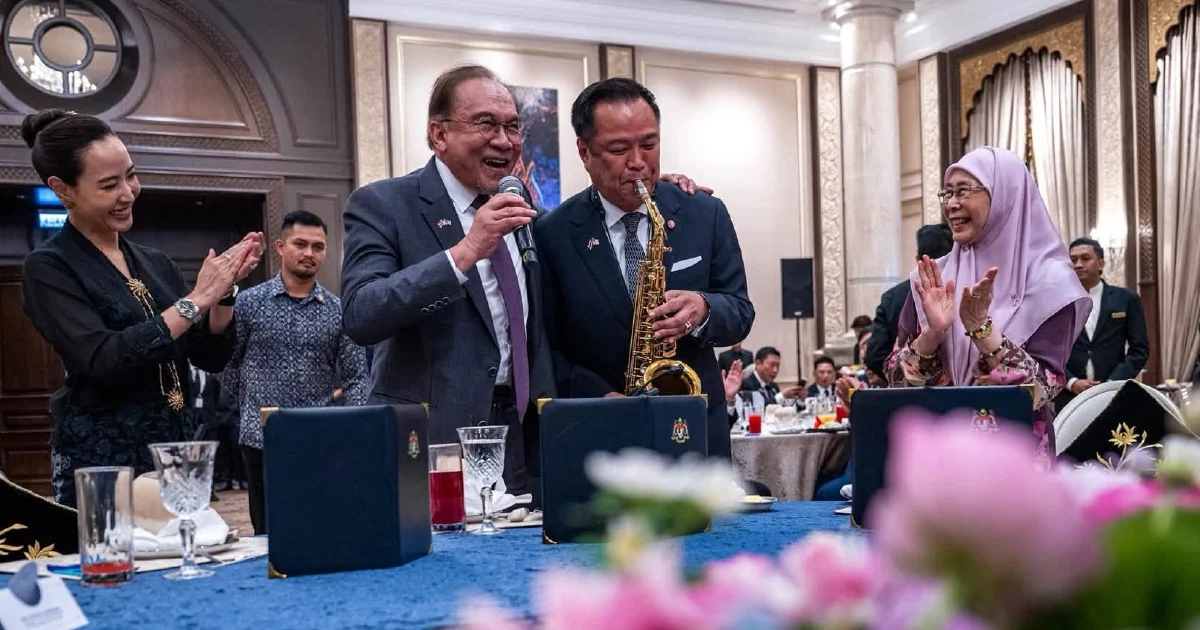
Prime Minister Datuk Seri Anwar Ibrahim and Thai Deputy Prime Minister Anutin Charnvirakul demonstrated the warmth of Malaysia-Thailand relations by delivering an unexpected musical performance at an official luncheon in Putrajaya following substantive bilateral negotiations. The impromptu entertainment, featuring the Malaysian leader's vocals alongside his counterpart's saxophone accompaniment of Frank Sinatra's classic My Way, offered a refreshing interlude to formal diplomatic proceedings and provided insight into the personal rapport between the two neighbouring nations' top officials.
The performance emerged naturally during the working lunch that concluded the high-level talks between the two delegations. Rather than confining their engagement to conference tables and formal statements, Anwar and Anutin seized the opportunity to express the strength of bilateral ties through a medium that transcended language barriers. The choice of My Way—a song synonymous with individual determination and personal conviction—carried subtle symbolic weight, perhaps reflecting each leader's commitment to steering their respective nations through complex regional challenges whilst maintaining strong mutual cooperation.
Thailand and Malaysia have historically maintained close ties rooted in geographic proximity, shared cultural heritage, and complementary economic interests. However, bilateral relations have occasionally faced headwinds stemming from maritime boundary disputes, cross-border security concerns, and competition for regional influence. The visible camaraderie demonstrated during this luncheon suggests current efforts to strengthen partnership across multiple domains, from trade and investment to security and cultural exchange.
Anwar's willingness to participate in such an unconventional diplomatic gesture underscores a leadership style that balances formal protocol with accessible, human connection. Since assuming office, the Malaysian Prime Minister has occasionally employed cultural events and personal interactions to build relationships with regional counterparts. This particular moment resonates particularly within Malaysia's political culture, where such displays of bilateral warmth can influence public perception of government effectiveness in foreign affairs.
Anutin's background in the Thai political establishment, combined with his role as Deputy Prime Minister, positions him as a significant actor in shaping Thailand's regional strategy. His participation in the musical performance signals Thailand's continued interest in deepening engagement with Malaysia across multiple dimensions. The saxophone, traditionally associated with jazz and contemporary musical expression, represents a departure from ceremonial formality and suggests both leaders view their relationship as dynamic and forward-looking rather than bound by rigid diplomatic conventions.
The impromptu nature of the performance distinguishes it from orchestrated cultural displays often featured at state banquets. Such unscripted moments frequently generate significant media attention throughout Southeast Asia, particularly when they involve leading political figures. In an age where diplomatic communication occurs across multiple channels—from formal communiqués to social media engagement—such humanising moments serve valuable functions in building soft power and public approval for bilateral initiatives.
For Malaysia specifically, strengthening ties with Thailand holds strategic importance given Thailand's influence within ASEAN structures and its significant role in mainland Southeast Asian affairs. Enhanced bilateral cooperation can facilitate Malaysia's broader regional objectives whilst providing mutual benefits in security cooperation, particularly regarding transnational crime, terrorism prevention, and maritime safety in the Straits of Malacca. Economic collaboration remains another critical dimension, with both nations recognising opportunities in tourism, manufacturing, and digital economy development.
The luncheon performance also reflects contemporary diplomatic practices whereby informal settings increasingly complement formal negotiations. Modern international relations recognise that substantive progress often emerges from environments where officials can relate to one another as individuals rather than purely as representatives of state interests. The musical interlude demonstrated that serious bilateral agenda items—presumably discussed during the formal talks preceding lunch—need not preclude moments of genuine human connection and shared enjoyment.
For Malaysian observers, the imagery of their Prime Minister engaging confidently in international settings carries particular resonance given ongoing domestic political considerations. Demonstrating effective relationship-building capacity with neighbouring leaders strengthens perceptions of diplomatic competence and international stature. Furthermore, highlighting positive Malaysia-Thailand relations counters narratives of regional discord and instead emphasises the potential for constructive multilateral cooperation within Southeast Asia.
The incident also subtly illustrates how cultural familiarity, particularly shared appreciation of global popular culture, can facilitate cross-cultural understanding between leaders. That both officials recognised and could jointly perform a Frank Sinatra standard speaks to the cosmopolitan nature of ASEAN leadership and their exposure to diverse cultural influences. Such commonalities, whilst seemingly minor, provide conversational entry points and shared reference frames that can ease diplomatic negotiations on weightier matters.
The broader implications of this bilateral engagement extend beyond the immediate moment captured in photographs and video footage. It signals to regional observers and international partners that Malaysia-Thailand relations remain stable and characterised by genuine goodwill between leadership figures. Within ASEAN contexts, where harmony and consensus-building remain valued principles, projecting such unity holds diplomatic significance. The voluntary nature of the performance—neither leader was obligated to participate—suggests authentic appreciation for the counterpart and the bilateral relationship itself.
Moving forward, observers of regional diplomacy should monitor whether this warming of Malaysia-Thailand ties translates into substantive cooperation frameworks and practical agreements. Whilst musical interludes provide valuable atmospheric improvement, sustained bilateral progress requires commitment to resolving outstanding disputes, expanding trade volumes, and coordinating positions on regional challenges ranging from climate change to economic integration. The luncheon performance thus represents not merely a charming diplomatic moment but potentially a marker of renewed commitment to comprehensive bilateral engagement.

