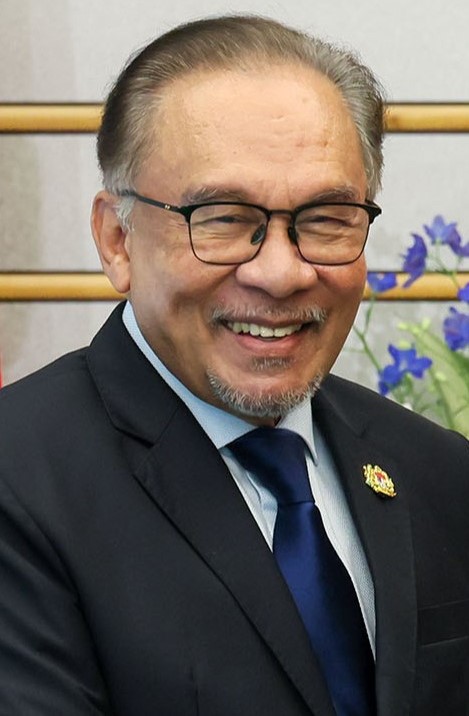
Prime Minister Anwar Ibrahim has secured a commitment from Johor's Regent Tengku Muda Ismail to uphold positive working relations between the federal government and Johor state administration, marking an important diplomatic engagement in Malaysia's federal-state governance landscape. The meeting, held in Kuala Lumpur at the regent's residence, underscores the significance that Putrajaya places on maintaining stable institutional relations with the country's economically influential southern state.
The audience between Malaysia's top federal executive and one of the nation's most prominent traditional rulers reflects the delicate balance required in managing centre-state dynamics within Malaysia's constitutional framework. Johor's position as the nation's second-largest economy and gateway to Singapore has long made it strategically critical to federal policymaking. The personal engagement between Anwar and Tengku Muda Ismail demonstrates recognition that collaborative governance between these two tiers produces superior outcomes for citizens and investors alike.
Cooperation between federal and state authorities has emerged as a recurring priority in recent Malaysian political discourse, particularly as development projects increasingly require coordination across administrative boundaries. The timing of this meeting suggests the government is investing in relationship-building at the highest levels to preempt friction points that might emerge during implementation of major initiatives. Such preventive diplomacy, conducted through formal channels and personal connections, has historically smoothed potential conflicts in Malaysia's multi-level governance system.
Johor's administration, under the political leadership structures that operate with guidance from the royal institution, maintains significant autonomy in matters ranging from land administration to Islamic affairs. When disagreements arise between state and federal authorities—whether over land development, water resources, or revenue allocation—the capacity for senior leaders to communicate directly becomes invaluable. The fact that Anwar made the effort to seek this audience suggests a proactive approach to federal-state relations rather than a reactive response to existing tensions.
The pledges exchanged during the meeting carry symbolic and practical weight within Malaysia's constitutional monarchy system. The regent's position as a constitutional advisor to the state government gives his perspectives considerable influence over how state interests are articulated and defended in negotiations with Putrajaya. When federal and state leadership publicly align on commitment to cooperation, it sends reassuring signals to investors, civil servants, and the broader public about institutional stability.
This engagement also reflects broader Southeast Asian patterns of managing centre-periphery relations in diverse federal systems. Malaysia's constitutional framework, which reserves certain powers to states while centralizing others at federal level, requires continuous negotiation and good faith cooperation. The personal rapport between top leaders at both levels often determines whether constitutional arrangements function smoothly or become sites of political conflict. Countries across the region have learned that institutions alone cannot guarantee harmonious centre-state relations without complementary interpersonal dynamics.
For Johor specifically, federal goodwill carries implications for infrastructure investment, particularly in ports, transportation, and manufacturing corridors that benefit from integrated national planning. The state's Johor Bahru urban centre faces mounting competition from Singapore's technological dominance and other regional hubs, making federal support for competitive positioning increasingly valuable. When state and federal authorities work cohesively, Johor gains advantages in bidding for national projects and coordinating cross-border initiatives with Singapore.
The meeting also occurs within a context of evolving federal-state fiscal relations. Johor, as a major revenue contributor to the national exchequer, maintains interests in tax policy, royalty payments, and federal transfers that require sustained engagement with Putrajaya. Clear communication channels between the regent's office and the Prime Minister's office help ensure that state concerns reach decision-makers promptly, reducing the risk of grievances festering through bureaucratic processes.
Beyond Johor specifically, this engagement demonstrates that Anwar's administration views maintaining harmonious multi-level governance as central to its political programme. In Malaysia's context, where states retain constitutionally protected powers and where traditional rulers exercise real political influence, no Prime Minister can govern effectively without cultivating relationships with powerful state-level actors. The fact that senior federal leadership prioritizes these personal interactions suggests institutional maturity and awareness that democratic governance in a federal system demands respect for distributed authority.
Looking forward, the commitment articulated during this meeting will be tested through concrete policy decisions and resource allocation choices. Whether these pledges translate into visible cooperation on economic development, infrastructure spending, or regulatory matters will ultimately determine their substantive significance. Malaysian observers will note whether the undertaking to preserve good relations produces measurable improvements in federal-state coordination, particularly in areas where interests might diverge, such as environmental regulation or development approvals affecting both jurisdictions.