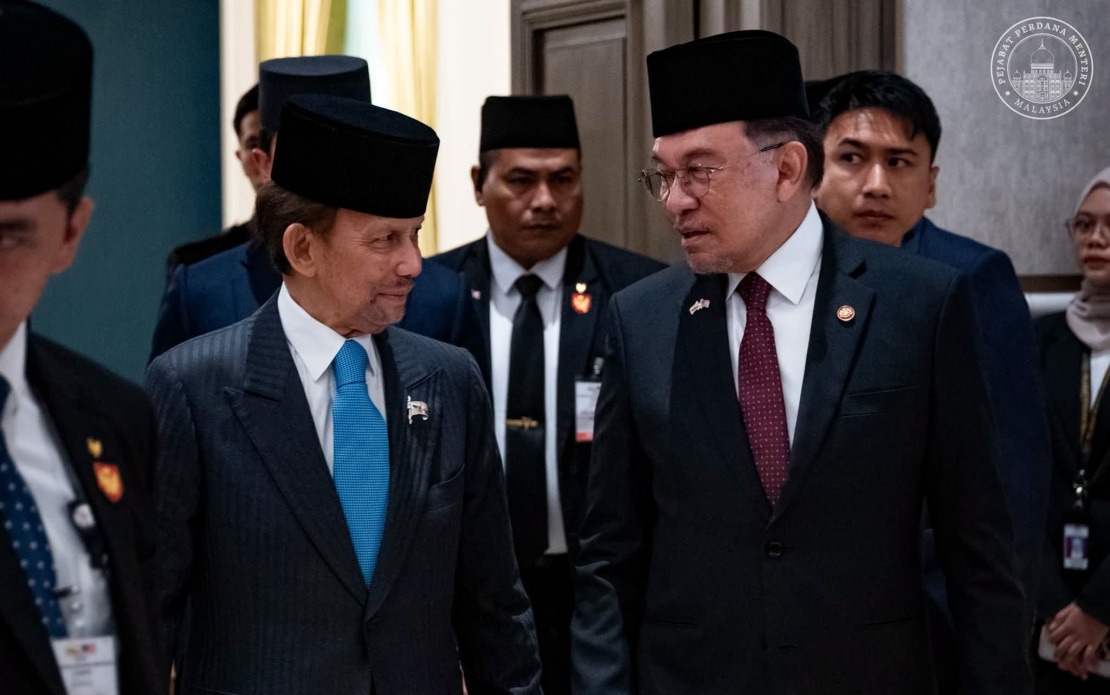
Prime Minister Datuk Seri Anwar Ibrahim received a personal phone call from Sultan Hassanal Bolkiah of Brunei Darussalam on August 12, during which the Sultan enquired about his health and offered prayers for his continued wellbeing. The gesture underscores the warm bilateral ties between Malaysia and its neighbouring sultanate, demonstrating the personal rapport between the two nations' leadership. Through a Facebook post, Anwar expressed his sincere gratitude for the Sultan's concern, reciprocating the goodwill by praying that His Majesty would continue to enjoy robust health and remain under the protection and mercy of Allah SWT.
This exchange of well-wishes comes as Anwar continues his recovery following a medical procedure undertaken the previous week. The Prime Minister underwent an elective laparoscopic operation to address a para-umbilical hernia, a condition affecting the abdominal wall near the navel. Following the intervention, Anwar has remained under the vigilant care of a dedicated team of medical specialists who are monitoring his progress closely. The relatively minor nature of the elective procedure, combined with ongoing professional medical oversight, has allowed the government to maintain continuity in its operations while ensuring the Prime Minister receives appropriate care.
The timing of Sultan Hassanal Bolkiah's call is particularly significant given the scheduled high-level engagement between the two countries in the coming days. Anwar indicated that he will travel to Bandar Seri Begawan the following week for an audience with the Sultan, coinciding with the 27th Annual Leaders' Consultation, or ALC, a longstanding bilateral mechanism through which Malaysia and Brunei coordinate on matters of mutual interest and regional significance. This diplomatic calendar reflects the regularity and importance both nations attach to maintaining sustained dialogue at the highest levels.
The Malaysia-Brunei relationship has historically been characterised by cooperation on regional security, economic development, and cultural exchange. Both nations share membership in ASEAN and maintain overlapping interests in managing the geopolitical complexities of Southeast Asia. The personal courtesy extended by Sultan Hassanal Bolkiah demonstrates that even routine medical matters affecting a prime minister can become occasions for reinforcing diplomatic bonds. Such gestures, though perhaps appearing ceremonial on the surface, carry weight in the context of maintaining the personal relationships that undergird formal bilateral relations.
For Malaysian observers, the news provided reassurance about Anwar's condition and his capacity to fulfil his official duties. The fact that the Prime Minister is able to receive calls and will shortly travel for international engagements suggests his recovery is proceeding as expected. Medical transparency regarding leadership health, particularly following procedures, helps maintain public confidence in the continuity and stability of government. Anwar's willingness to communicate through social media about both his treatment and his interactions with fellow leaders reflects a modern approach to political communication.
The forthcoming ALC meeting in Bandar Seri Begawan will provide a comprehensive opportunity for Malaysia and Brunei to discuss bilateral matters in a structured setting. As an annual consultation mechanism, the ALC serves as a formal platform for addressing ongoing cooperation, reviewing progress on previous agreements, and identifying new areas for collaboration. The 27th iteration of these talks will occur against the backdrop of regional developments affecting both nations' strategic interests, including maritime security, trade relations, and responses to transnational challenges.
Brunei's Sultan has long maintained a measured and dignified approach to his international relations, and his decision to personally contact Anwar reflects the particular importance he accords to the Malaysia-Brunei relationship. As the head of state of a small but strategically positioned nation with significant hydrocarbon resources, Sultan Hassanal Bolkiah plays a crucial role in determining his country's diplomatic orientation and regional engagement strategy. His outreach to Anwar signals continuity in Brunei's commitment to maintaining strong ties with its larger neighbour.
From a broader Southeast Asian perspective, the exchange illustrates how ASEAN member states maintain collegial relationships that transcend purely transactional diplomacy. The region's stability benefits from such personal bonds between leaders, which create pathways for dialogue and mutual understanding. When senior officials experience health challenges, the expressions of concern from neighbouring countries help reinforce a sense of shared regional identity and mutual responsibility for each other's wellbeing.
Anwar's recovery trajectory will likely be followed closely by both domestic observers and international partners. As Prime Minister, his health is not merely a personal matter but a question of national governance and continuity. The medical team overseeing his post-operative care has signalled that close monitoring will continue, suggesting appropriate caution regarding a leader's return to full duties. Nevertheless, the ability to maintain diplomatic engagement, even in the immediate aftermath of surgery, demonstrates the robustness of Malaysia's administrative machinery and the Prime Minister's own determination to sustain his leadership responsibilities.

