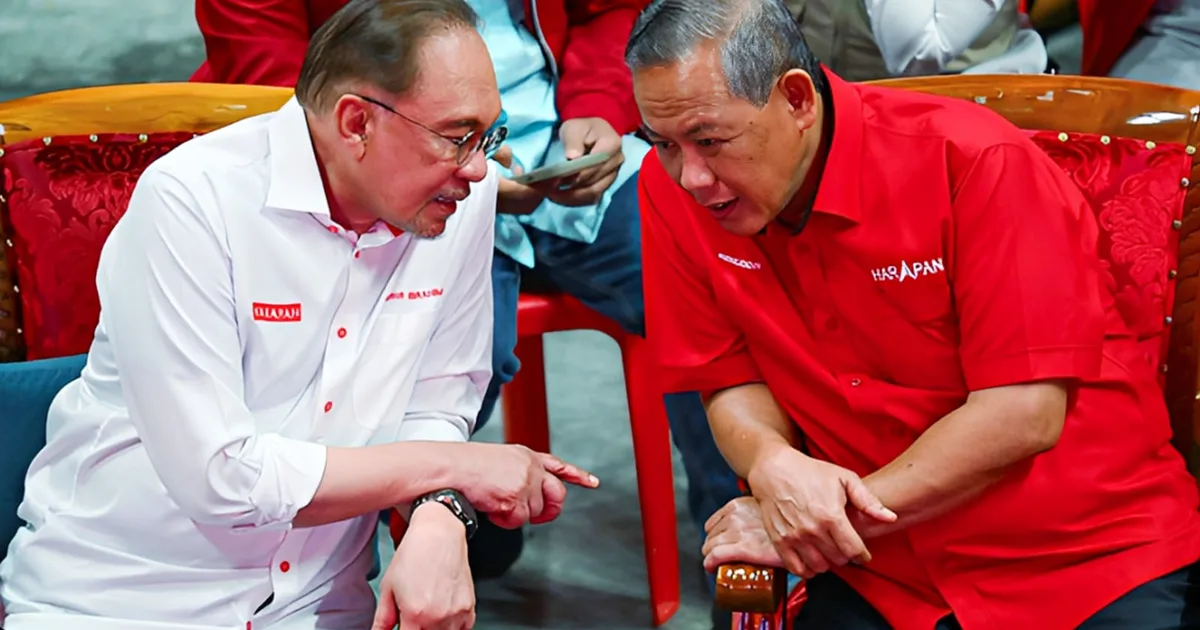
PKR president Anwar Ibrahim has signalled that former Negeri Sembilan menteri besar Aminuddin remains a valuable figure within the party structure, particularly in developing younger political talent. Speaking to the broader party membership, Anwar drew attention to Aminuddin's recent electoral setback and how he has managed the outcome, positioning his response as a behavioural benchmark for aspiring leaders navigating the competitive landscape of Malaysian politics.
The emphasis placed by Anwar on Aminuddin's conduct underscores a recurring challenge within political parties across Malaysia and the region: sustaining institutional cohesion when senior figures experience electoral disappointment. Rather than allowing such moments to fray party unity or invite internal recrimination, Anwar has framed Aminuddin's approach as demonstrative of the maturity required of those seeking to lead. This perspective reflects a pragmatic recognition that parties benefit when senior members model composure and forward-thinking perspectives following electoral reverses.
Aminuddin's tenure as menteri besar of Negeri Sembilan positioned him as a significant figure within PKR's state-level operations. His leadership during that period would have exposed him to the practical dimensions of governance, constituency management, and coalition dynamics—experiences that newer party members typically lack. Anwar's suggestion that these insights remain valuable implies a deliberate strategy to retain institutional memory and avoid the loss of experienced administrators when political fortunes shift.
The specific quality Anwar highlighted—Aminuddin's refusal to assign blame following his electoral loss—touches on a critical distinction in Malaysian political culture. Public recriminations between senior figures can accelerate factional tensions and embolden dissidents within party structures. By contrast, dignified acceptance of electoral outcomes, even when disappointing, signals stability and commitment to collective purposes beyond individual advancement. For a party like PKR, which has navigated complex internal dynamics and coalition pressures, such examples carry practical significance.
Mentoring emerging leaders represents an often-underestimated dimension of party management. While media attention typically focuses on electoral campaigns and policy announcements, the behind-the-scenes work of developing successor talent determines organizational sustainability. Anwar's acknowledgment of Aminuddin's potential mentoring role suggests an intentional approach to capacity-building within PKR's younger cadre. This is particularly relevant in the Malaysian context, where significant generational transitions are underway across multiple political parties.
The broader implications for PKR extend beyond individual personalities. Political parties in Malaysia increasingly face pressure to demonstrate ethical governance and principled leadership, particularly as younger voters show greater selectivity in their political allegiances. By publicly validating leaders who handle defeat with grace rather than vindictiveness, Anwar sends a signal about PKR's institutional values. This positioning can enhance the party's appeal among voters seeking alternatives to perceived political tribalism.
For the Southeast Asian region more broadly, the exchange reflects patterns observable across several democracies where parties grapple with managing transitions and maintaining cohesion amid electoral volatility. Thailand, Indonesia, and the Philippines have all experienced situations where senior political figures either successfully or unsuccessfully navigated the shift from executive office back to mentoring roles. Anwar's comments suggest PKR is consciously learning from such precedents by attempting to preserve institutional wisdom rather than allowing electoral reversals to trigger purges or departures.
The timing of Anwar's remarks also carries significance. By reaffirming Aminuddin's value now, rather than allowing his profile to diminish following his electoral loss, Anwar mitigates the risk of creating a perception that PKR discards members who fail to retain electoral victories. Such perceptions can deter talented individuals from accepting challenging assignments and create cultures of self-preservation rather than collective purpose. This calculation reflects sophisticated understanding of organizational psychology.
Aminuddin's specific role in mentoring could encompass several dimensions: direct guidance to candidates navigating first campaigns, advice to newly elected state representatives learning governance, or input into party strategy discussions drawing on his experience. The flexibility inherent in mentoring arrangements allows parties to deploy experienced members' expertise without requiring them to hold formal positions that might become sources of continuing tension if contested.
The PKR president's remarks also implicitly challenge a transactional view of political value wherein individuals are assessed solely through their electoral performance at any given moment. Instead, Anwar's framing suggests a longer temporal perspective that recognizes how individuals contribute differently across phases of their political careers. This approach, if implemented consistently, could reshape how Malaysian political parties manage succession and retain institutional continuity.
For Malaysian voters and observers of PKR specifically, these comments offer insights into how the party leadership approaches internal dynamics and organizational health. The emphasis on exemplary conduct and mentorship suggests an attempt to build a party culture that prizes substantive governance and ethical behaviour over purely electoral metrics. Whether such intentions translate into actual practice will likely become apparent as PKR navigates upcoming electoral cycles and as younger leaders emerge from its mentoring programs.

