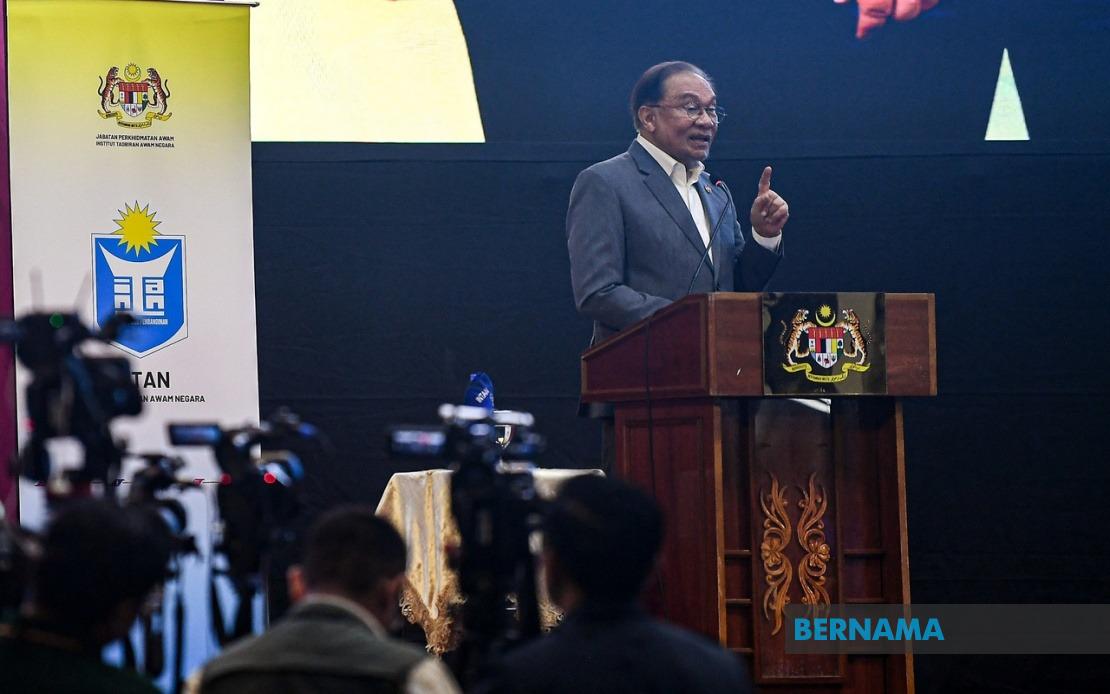
Prime Minister Datuk Seri Anwar Ibrahim has challenged Malaysians to dismantle ingrained colonial attitudes that position Western institutions, languages, cultural practices and development frameworks as benchmarks of superiority. Speaking at a gathering of Central Zone civil servants at Universiti Islam Selangor on July 20, Anwar articulated a vision where independence transcends mere political sovereignty and becomes rooted in authentic national identity and locally-driven progress. The intervention reflects growing concern within government circles about the persistence of psychological and intellectual dependencies inherited from the colonial period.
Anwar stressed that the present generation bears responsibility not only for preserving the hard-won independence secured by their predecessors but for actively constructing a Malaysia shaped by indigenous values and strengths. This represents a departure from a passive relationship with the colonial legacy toward one of deliberate national construction. The Prime Minister framed the challenge as fundamentally about reclaiming agency in determining how Malaysia develops across multiple dimensions—from education policy and language use to economic structures and governance frameworks.
A significant portion of Anwar's remarks targeted what he characterised as the lingering Western orientation among segments of the population, including some born after independence in 1957. His observation that certain Malaysians, despite their brown skin, continue to regard English as the language of serious education, Western culture as the standard to emulate, and Anglo-American governance models as templates worth copying, points to a deeper psychological colonisation. This phenomenon extends beyond simple preference for foreign languages or systems; it reflects a deeper internalisation of colonial hierarchies that position the West as inherently progressive and superior.
The critique carries particular weight coming from a Prime Minister navigating Malaysia's complex position as a developing nation seeking to assert regional leadership while remaining deeply integrated into global structures. Anwar's framing suggests that true independence requires interrogating why educated Malaysians often default to Western solutions without adequate consideration of homegrown alternatives or culturally-rooted approaches. The implication is that Malaysia's development trajectory has sometimes been constrained by an unexamined assumption that Western models represent inevitable modernity.
For Malaysian policymakers and civil servants, Anwar's message signals a potential shift in how government institutions approach reform and development. Rather than importing wholesale Western bureaucratic practices, administrative structures, or policy frameworks, there may be increased emphasis on studying and adapting models that reflect Malaysian conditions, values and organisational traditions. This could manifest in language policy decisions, educational curriculum design, and the localisation of governance practices—areas where Western dominance has been particularly pronounced.
The remarks also resonate within Malaysia's broader national identity debates. As a multicultural, multireligious nation with significant Arab, Chinese, and Indian cultural influences alongside indigenous Malay-Muslim traditions, Malaysia's development path need not follow a single Western template. Instead, Anwar appears to be advocating for a genuinely syncretic approach that draws on multiple civilisational traditions while crafting distinctly Malaysian solutions to governance and development challenges. This perspective acknowledges that Western models, while not inherently invalid, should not be imported uncritically or treated as universal solutions.
The event brought together senior government figures including Chief Secretary to the Government Tan Sri Shamsul Azri Abu Bakar and Director-General of the Public Service Tan Sri Wan Ahmad Dahlan Abdul Aziz, suggesting this represents deliberate policy messaging toward the civil service. The targeting of government workers implies that state institutions themselves may need to recalibrate their approach to governance, policy development and service delivery. If the civil service—which plays a critical role in translating political direction into administrative reality—continues to rely excessively on Western organisational models and English-language frameworks, it may inadvertently perpetuate the colonial dependencies Anwar seeks to eliminate.
For Southeast Asian observers, Anwar's intervention contributes to a regional conversation about post-colonial development and the search for authenticity in governance. While several ASEAN neighbours have similarly grappled with the tension between global standards and local needs, Malaysia's approach under Anwar appears to emphasise conscious, strategic engagement rather than wholesale rejection of Western systems. The argument is not that Western models are inherently wrong, but that they should be evaluated on merit rather than accepted through historical conditioning.
The practical implications for Malaysia could be substantial. Educational institutions might place greater emphasis on Malaysian history and values in curricula. Language policies could shift to strengthen Bahasa Malaysia in professional and academic spheres. Economic planning might draw more explicitly on Islamic finance principles or cooperative models rather than exclusively Western capitalist frameworks. Governance structures could incorporate traditional consultation mechanisms alongside modern democratic practices. These shifts need not isolate Malaysia from the global economy or international best practices, but would ensure such engagement occurs from a position of confident national agency rather than perceived subordination.
Anwar's challenge also implicitly critiques the professional and intellectual classes who mediate between global knowledge systems and local application. Lawyers trained in common law traditions, economists schooled in Western economic theory, and administrators versed in Anglo-American public administration may need to consciously interrogate their inherited frameworks and consider alternative approaches rooted in Malaysian or broader Asian intellectual traditions. This requires intellectual humility and a willingness to question assumptions long treated as universal truths.

