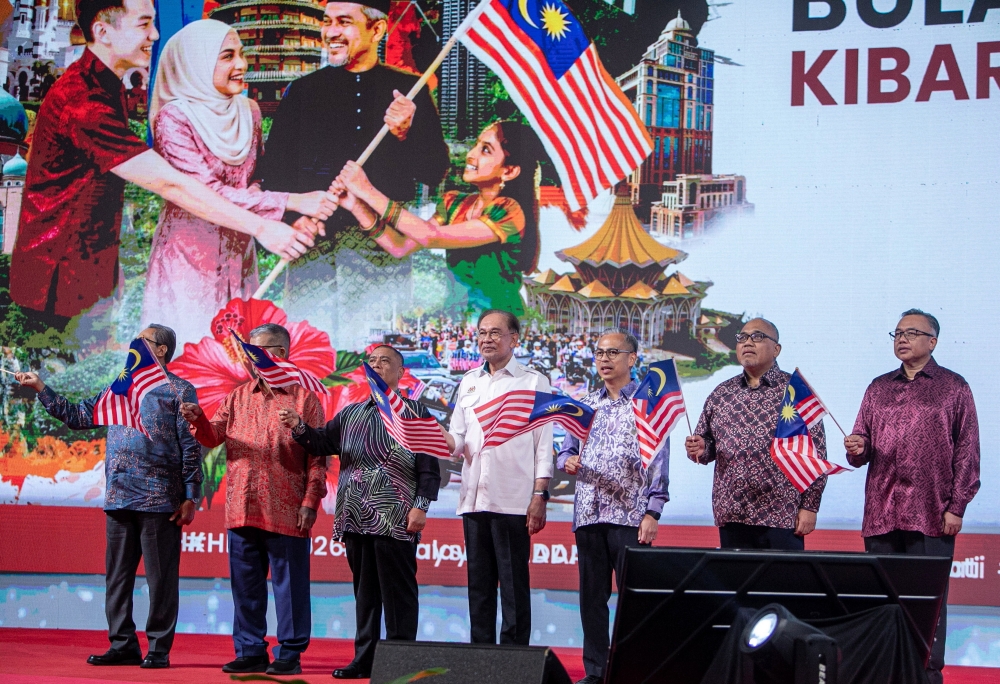
Prime Minister Datuk Seri Anwar Ibrahim delivered a poignant message to Malaysia's youth on July 19 in Ipoh, stressing the critical importance of understanding and cherishing the nation's independence struggle. Speaking to the current generation, Anwar emphasised that young Malaysians must never overlook or underestimate the immense sacrifices made by those who fought for the country's freedom from colonial rule. His remarks underscored a recurring concern among Malaysia's political leadership: that younger citizens risk losing touch with the historical narratives that shaped the nation's identity and values.
Anwar's exhortation reflected deeper anxieties within Malaysian society about generational memory and civic consciousness. As Malaysia approaches its seventh decade of independence, successive governments have grappled with the challenge of transmitting historical awareness to citizens born well after Merdeka. The Prime Minister's call suggests that this educational gap remains a pressing concern for policymakers who view historical literacy as foundational to national cohesion and resilience.
The independence movement that culminated in Malaysia's freedom on 31 August 1957 represented a complex negotiation between nationalist leaders, colonial authorities, and competing ethnic and regional interests. The architects of the nation—figures like Tunku Abdul Rahman, Tun Tan Cheng Lock, and others—navigated competing demands while constructing the constitutional and institutional frameworks that would define modern Malaysia. Understanding this intricate historical context helps youth appreciate not merely that independence was achieved, but how it was achieved and at what cost.
Anwar's intervention carries particular weight given his own position within Malaysia's political trajectory. As a veteran of the nation's political system who has experienced imprisonment during the Reformasi movement, his appeals to historical memory resonate with lived experience of struggle and resilience. His message implicitly connects the independence struggle of the 1950s with Malaysia's ongoing democratic evolution, suggesting that the values contested over decades remain relevant to contemporary challenges.
The question of how to maintain collective memory in rapidly modernising societies presents genuine pedagogical and cultural challenges. Malaysia's education system has traditionally incorporated independence narratives into the curriculum, yet critics argue that instruction often remains superficial or utilitarian, failing to generate genuine emotional or intellectual engagement with the period. Social media, globalised entertainment, and competing demands on young people's attention have further fragmented the spaces where historical consciousness traditionally took root.
Anwar's remarks also implicitly address anxieties about national unity. Malaysia's independence was constructed as a bargain between different ethnic, religious, and regional communities—a constitutional settlement that required compromise from all parties. When younger citizens lack familiarity with this foundational agreement and its underlying tensions, they become vulnerable to narratives that emphasise division rather than negotiated coexistence. Historical knowledge thus serves not merely as cultural inheritance but as a stabilising force for multiethnic cohesion.
The Prime Minister's call must also be understood within the context of Malaysia's contemporary political climate. In an era marked by polarisation over governance, representation, and resource distribution, appeals to historical memory often function as implicit calls for unity and shared purpose. By invoking the sacrifices of the independence generation, Anwar sought to reorient political discourse toward foundational principles rather than contemporary grievances.
Educational initiatives and public commemoration remain important mechanisms for sustaining historical consciousness. Yet these institutional efforts require renewal to engage younger cohorts effectively. Museums, documentaries, public discourse, and school curricula must translate abstract historical narratives into relatable stories that illuminate how the choices made during independence shaped opportunities and constraints that young Malaysians navigate today. Without such translation, history risks becoming an obligatory subject rather than a living framework for understanding contemporary reality.
Anwar's emphasis on remembrance also carries implicit lessons about democratic citizenship. The independence struggle involved ordinary Malaysians—plantation workers, teachers, farmers, and merchants—not merely elite negotiators. Young citizens who understand this broader participation may develop stronger commitments to civic engagement and democratic participation. The struggle for independence thus becomes a template for understanding how individual and collective action shapes national destiny.
The intergenerational transmission of historical memory proves especially urgent given Malaysia's demographic profile. With approximately 70 percent of the population born after independence, the majority of citizens lack direct family connections to the independence era. This historical distance requires deliberate institutional effort to prevent forgetting. Anwar's public reminder underscores that maintaining national memory demands consistent attention and renewal from political leadership.
As Malaysia confronts contemporary challenges ranging from economic competitiveness to climate change to political renewal, the Prime Minister's invocation of independence-era values suggests continuity between the nation's founding aspirations and present circumstances. Young Malaysians equipped with genuine understanding of how the nation was constructed prove better positioned to participate thoughtfully in its continued evolution. Anwar's call thus transcends mere nostalgia, positioning historical consciousness as essential infrastructure for engaged democratic citizenship.

