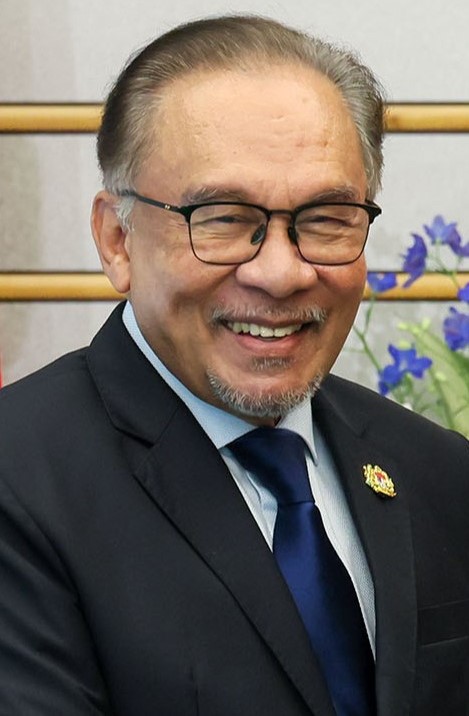
Prime Minister Datuk Seri Anwar Ibrahim brought together the country's top territorial leaders at Parliament House for the 149th Menteris Besar and Chief Ministers meeting, signalling the government's determination to chart a unified economic course amid mounting external pressures. The gathering, held on June 23, underscored Kuala Lumpur's recognition that coordinated action across federal and state jurisdictions remains essential as Malaysia navigates a confluence of international and domestic challenges.
The centrepiece of discussions revolved around devising measures to strengthen and revitalise the national economy. With conflicts raging across West Asia—a region whose geopolitical volatility continues to reverberate through global supply chains and commodity markets—Malaysian policymakers face the dual imperative of shielding domestic growth from external shocks whilst positioning the economy to capitalise on emerging opportunities. The deteriorating security situation and economic uncertainty in that region have already begun affecting global trade patterns and investment flows, raising stakes for export-dependent economies like Malaysia.
Beyond economic metrics, the assembled leaders confronted a pressing environmental concern: the anticipated El Niño phenomenon and its cascading impacts on critical sectors. The expected climatic disruption threatens multiple dimensions of national wellbeing, from water availability and agricultural productivity to food security and public health. Rising temperatures coupled with increased haze risk pose tangible threats to economic output and quality of life, particularly in states heavily reliant on agriculture and those vulnerable to drought conditions. Such challenges demand sophisticated coordination between state and federal authorities, given that water management, agricultural policy, and disaster preparedness fall across multiple administrative boundaries.
Anwar's emphasis during the meeting reflected a deliberate pivot towards integrated, efficient policymaking that places ordinary Malaysians at the centre of government action. This people-centric framing suggests an acknowledgment that economic revival cannot be measured solely through gross domestic product figures or foreign direct investment announcements. Instead, the Prime Minister's comments indicate a commitment to ensuring that growth strategies translate into tangible improvements in living standards, employment opportunities, and social security across all segments of society.
The discussions also highlighted the government's focus on economic competitiveness and investment attraction. In an era of heightened global uncertainty, Malaysia recognises the imperative to differentiate itself as a stable, forward-thinking investment destination. Quality foreign investment—emphasising technology transfer, skills development, and high-value manufacturing—represents a strategic priority rather than merely chasing volume. State governments play crucial roles in this competition for capital, managing special economic zones, industrial parks, and local incentive frameworks that either facilitate or hinder investor confidence.
The articulation of "spirit of togetherness and consensus" carries particular significance in Malaysia's political context. The federal system distributes substantial powers to state administrations, and economic policy effectiveness depends heavily on alignment between Kuala Lumpur and state capitals. A divided approach, where federal initiatives face state-level resistance or indifference, undermines implementation capacity. The meeting's emphasis on consensus-building suggests the government views coordinated federalism as foundational to economic success.
For Southeast Asia observers, Malaysia's forthright addressing of both external economic shocks and climate-related vulnerabilities reflects broader regional anxieties. Most ASEAN members confront similar exposure to West Asian geopolitical upheaval, comparable climate risks from El Niño, and comparable pressures to maintain growth whilst managing infrastructure and social needs. Malaysia's institutional approach—leveraging the federal structure to coordinate responses—offers one model for how middle-income economies can attempt to balance competing demands.
The timing of such a high-level meeting during a period of global uncertainty carries implicit reassurance. By convening leadership across all states and territories, the federal government demonstrates that economic challenges are being actively managed rather than passively observed. This performative dimension of governance matters, particularly for investor sentiment and public confidence, which themselves influence economic behaviour and capital flows.
Looking forward, the substantive outcomes of this meeting will materialise through specific policy measures, budget allocations, and coordinated implementation mechanisms. Whether discussions translate into concrete action on water security infrastructure, agricultural adaptation strategies, or investment-promotion initiatives will determine the meeting's true significance. The challenge facing Malaysian policymakers lies in operationalising consensus at the federal-state level whilst maintaining sufficient flexibility to address local conditions and priorities that inevitably vary across Malaysia's diverse geography.
The convergence of economic, climatic, and geopolitical pressures demands sustained political attention and coordinated institutional responses. Anwar's convening of this leadership assembly signals recognition of these stakes, though the ultimate test will emerge through implementation and observable improvement in Malaysia's resilience against external shocks and internal vulnerabilities.