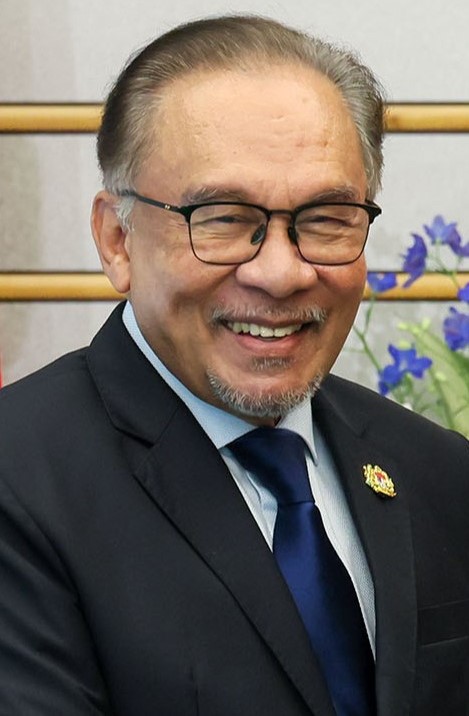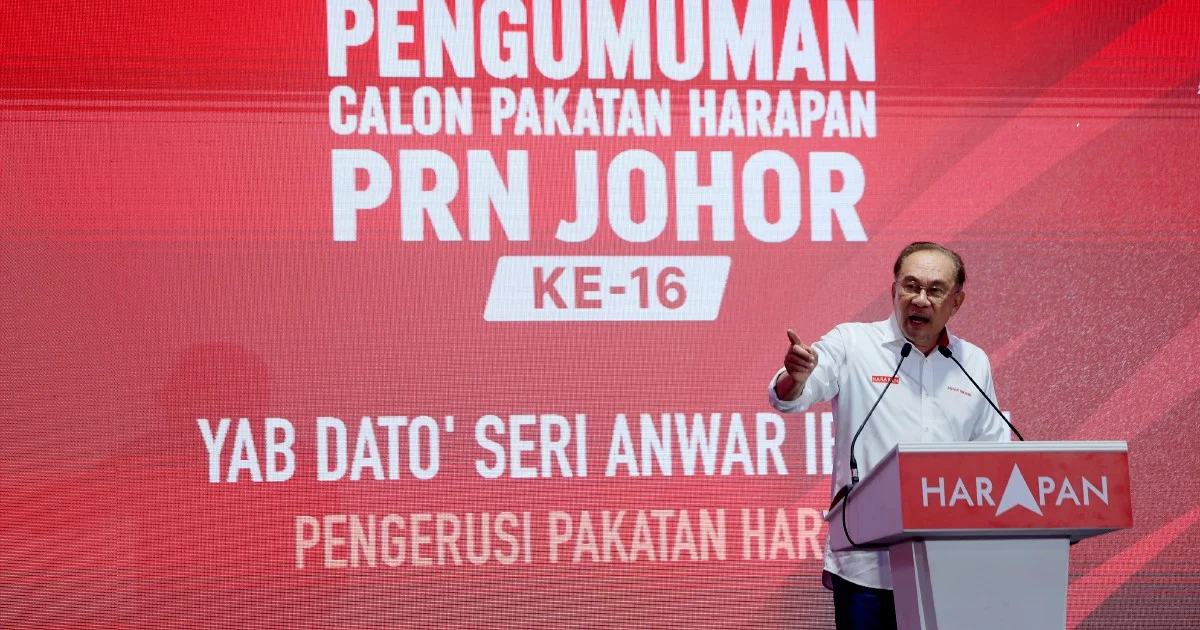
Prime Minister Datuk Seri Anwar Ibrahim has directly challenged Johor's state executive councillors to take a more combative approach toward investigating federal revenue distributions under the previous Barisan Nasional and Perikatan Nasional governments. Speaking at an event in Tangkak, the premier suggested that the state authority had legitimate grounds to question whether Johor received equitable allocations from federal coffers during those administrations.
The remarks underscore an emerging theme in Anwar's messaging: that Malaysia's transition to Pakatan Harapan-led federal governance has created space for state governments to demand greater accountability from their predecessors. By specifically directing his comments toward a state executive councillor, Anwar appeared to be encouraging more aggressive oversight and transparency demands from officials responsible for managing Johor's finances and development priorities.
Johor has long occupied a unique position within Malaysian federalism. As a sultanate with significant economic output and a substantial petroleum revenue share, the state's relationship with the federal government carries outsized importance for broader fiscal policy discussions. The Johor government's willingness to challenge historical revenue allocation decisions could set a precedent for how other state administrations approach their grievances with federal authorities.
Anwar's intervention suggests that the current federal administration sees political advantage in amplifying state-level complaints about previous federal allocations. This approach represents a departure from earlier administrations, which typically maintained tighter control over federal-state financial narratives. By empowering state officials to voice concerns, the Prime Minister is effectively distributing political credit for any eventual remedial measures while simultaneously placing blame for alleged shortfalls squarely on his predecessors.
The Barisan Nasional's six-decade dominance of federal affairs means that investigating BN-era revenue decisions implicates an administration that governed through most of Malaysia's independence. Perikatan Nasional's tenure, though shorter, introduced competing federal-state priorities and its own controversial allocation decisions. Both legacies remain contested terrain in Malaysian politics, with different stakeholders interpreting the same policy decisions through fundamentally opposed lenses.
For Johor specifically, the stakes encompass not only historical grievances but future funding arrangements. If state officials successfully demonstrate that previous allocations fell short of constitutional entitlements or established formulae, they may build stronger cases for enhanced revenue sharing under current federal leadership. This creates incentive alignment between state actors and the Pakatan-led federal government, at least temporarily.
However, the broader implications extend beyond Johor's borders. Other Malaysian states facing budget constraints or developmental gaps may similarly begin demanding investigations into their historical treatment. Kedah, Kelantan, Sabah, and Sarawak—each with distinct grievances—could use precedent set by Johor to escalate their own demands. Such cascading claims could complicate federal budgeting and expose tensions within the current coalition government, particularly given the heterogeneous composition of state administrations across the peninsula and East Malaysia.
The timing of Anwar's remarks also warrants attention. Made in Tangkak, a Johor parliamentary constituency with political significance, the message reached local audiences directly while also signalling to state-level allies that challenging previous federal policies enjoys prime ministerial support. This dual audience approach reflects sophisticated political communication but also hints at the transactional nature of federal-state relations in Malaysia.
From an economic governance perspective, Anwar's challenge to officials raises important questions about documentary evidence and forensic analysis of past allocations. Evaluating whether previous revenue distributions departed from established formulas or constitutional provisions requires technical expertise and access to historical financial records. The capacity of Johor's state apparatus to conduct such investigations independently remains unclear, potentially necessitating federal assistance—thereby potentially compromising investigative independence.
Moreover, recommendations emanating from such state-level inquiries could face political resistance if they threaten to destabilize federal-state power balancing arrangements. Successive Malaysian administrations have historically used revenue allocation as a tool for political management, rewarding cooperative states with enhanced allocations while constraining those perceived as antagonistic. Reopening historical allocations decisions could expose this political economy explicitly.
Anwar's rhetorical move also reflects broader debates within coalition governments about whether state governments serve as autonomous policy actors or as extensions of federal party machinery. By empowering state officials to challenge federal predecessors, he positions Johor's executive council as an active, questioning body rather than a subordinate administrative unit. This shift toward treating states as genuine stakeholders in federal decision-making has potential ramifications for how Malaysia's federal system functions in practice.
Looking forward, the Prime Minister's remarks will likely be interpreted as an invitation for Johor to pursue formal investigation protocols and potentially seek technical support from federal agencies. Whether this translates into concrete remedial measures or remains largely rhetorical will significantly shape how other state governments evaluate their own relationships with federal authorities. The coming months will reveal whether Anwar's challenge produces substantive policy shifts or primarily serves as positioning within ongoing federal-state negotiations over resource distribution and political alignment.