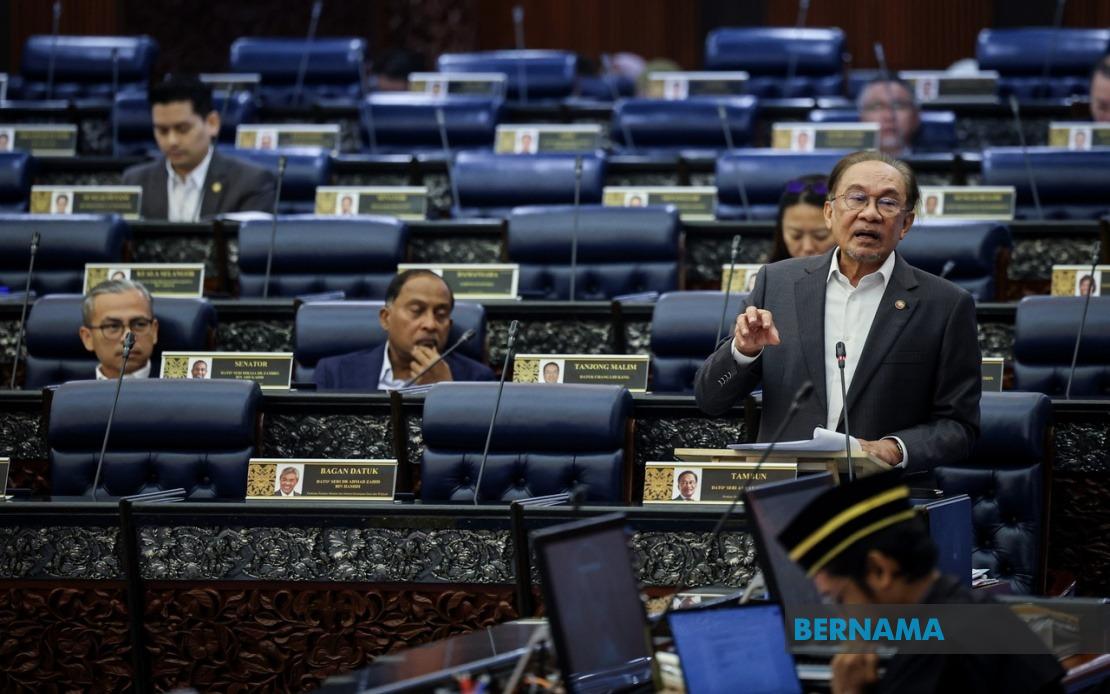
Prime Minister Datuk Seri Anwar Ibrahim moved swiftly on July 7 to defuse controversy surrounding his recent remarks about Johor's state election polling date, insisting in Parliament that his comments reflected only his personal perspective and carried no intention to meddle in the Election Commission's autonomous operations. Speaking during Minister's Question Time in the Dewan Rakyat, Anwar emphasised the distinction between offering an opinion and overstepping into administrative interference, a nuance that has assumed greater significance given Malaysia's commitment to upholding institutional independence.
The Prime Minister's clarification arose from his earlier campaign statements suggesting that Sunday voting would prove more convenient than Saturday polling for the substantial Malaysian workforce employed across the border in Singapore. Anwar noted that many of these cross-border commuters work only half-day shifts on Saturdays, making a Sunday election date more practical for their return journey and participation in the democratic process. However, he was careful to frame this observation within the broader principle that the Election Commission, as an autonomous constitutional body, retains sole responsibility and authority to determine when elections are conducted.
Anwar's defence gained additional weight when he addressed parliamentary concerns raised by Ahmad Fadhli Shaari of Pasir Mas, a Perikatan Nasional member who specifically questioned whether the Prime Minister's campaign commentary constituted inappropriate pressure on the electoral authority. The PM's response underscored a critical institutional boundary: while leaders may express views on policy matters, they must scrupulously avoid crossing into coercive territory that would compromise the election body's independence. This distinction carries particular importance in Malaysia's constitutional framework, where maintaining the Election Commission's credibility as a neutral arbiter remains essential to democratic legitimacy.
The question of cross-border voter convenience touches on a practical reality often overlooked in electoral planning. Tens of thousands of Malaysians maintain residency and voting rights at home whilst maintaining employment in Singapore, creating logistical challenges during state and federal elections. Recognising these genuine obstacles to participation, as Anwar did, represents sound democratic stewardship—provided, as he insisted, that such acknowledgement never translates into pressure on the election administration. The tension between accommodating voter needs and respecting institutional autonomy remains a delicate balance in contemporary Malaysian politics.
When pressed further by Mohd Sany Hamzan of Hulu Langat, who proposed that Malaysia might seek Singapore's cooperation to facilitate voter returns during the election period, Anwar firmly declined the suggestion. He stated unequivocally that he harboured no intention of approaching Singapore's Prime Minister Lawrence Wong regarding voting arrangements or electoral procedures within Malaysia. This response reflected Malaysia's principled adherence to non-interference doctrine—the same standard to which Malaysia holds other nations and expects reciprocal respect.
Yet Anwar did acknowledge that Malaysian companies operating in Singapore had received informal guidance about permitting employees to take time off during elections to return and cast ballots. This distinction proved crucial: encouraging private-sector cooperation to facilitate voter participation differs substantially from enlisting foreign governmental assistance in Malaysian electoral matters. The approach respects both Malaysia's institutional sovereignty and Singapore's political neutrality, whilst pragmatically supporting workers' electoral rights.
Anwar's emphasis on Malaysia-Singapore relations further contextualised his position. Despite the countries' excellent bilateral ties and his personal relationship with Wong, electoral processes remain strictly within each nation's internal affairs. This principle, though straightforward in theory, demands rigorous consistency in practice, particularly when practical considerations might tempt expedient shortcuts. By explicitly rejecting any engagement with Singapore's government on Malaysian voting matters, Anwar reinforced a crucial boundary that protects both nations' electoral integrity.
The controversy also illuminates broader questions about how elected leaders should navigate the relationship between opinion-sharing and institutional deference. In Malaysia's system, the Prime Minister wields substantial executive authority, yet the Election Commission's constitutional standing requires that political leaders—regardless of their office—respect clear boundaries. Anwar's parliamentary clarification suggests an understanding that explicit acknowledgment of these limits strengthens, rather than weakens, democratic institutions.
For Malaysian voters, particularly those based in Singapore, the episode underscores that whilst accessibility and convenience matter in electoral design, these considerations must channel through proper institutional mechanisms rather than political pressure. The Election Commission retains the responsibility to weigh such practical factors alongside other considerations—security, administrative capacity, constitutional requirements—when determining election dates. Public advocacy for voter-friendly policies carries legitimacy only when divorced from institutional coercion.
Moving forward, this clarification establishes a precedent for how Malaysia's political leadership should handle situations where institutional independence and practical governance objectives intersect. Anwar's distinction between personal observation and administrative interference offers a template for other leaders navigating similar tensions. The Prime Minister's willingness to clarify his position in Parliament, moreover, demonstrates responsiveness to concerns about potential overreach—a habit that strengthens democratic norms when consistently practised.
The Johor election itself remains scheduled to proceed according to the Election Commission's determination, uninfluenced by prime ministerial commentary. This outcome preserves both the practical concerns that Anwar raised and the institutional autonomy that he acknowledged must prevail. For a democracy functioning within a diverse regional context, maintaining such balance proves essential to public confidence in electoral processes. The distinction between advocating for voter-friendly policies and attempting to dictate electoral administration remains precisely the kind of boundary that separates healthy democratic discourse from institutional compromise.

