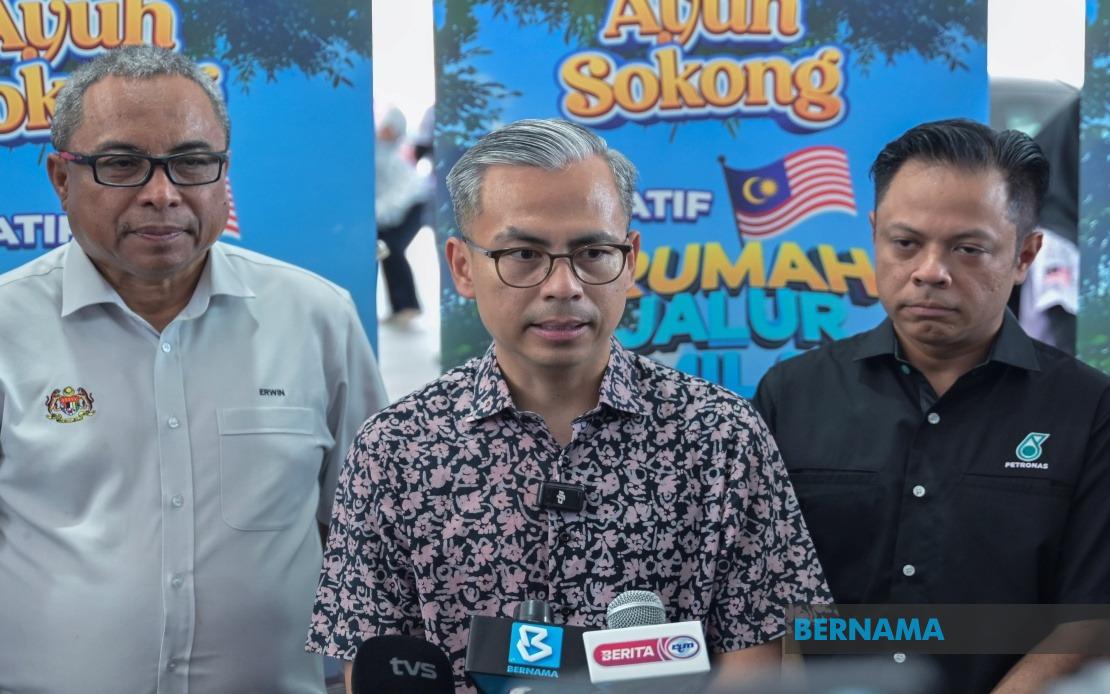
Prime Minister Datuk Seri Anwar Ibrahim has reaffirmed the federal government's commitment to expanding Sarawak's State Legislative Assembly, directing the Election Commission to furnish an updated report on the contentious electoral redelineation proposal. Government spokesman Datuk Seri Fahmi Fadzil disclosed the decision following recent Cabinet deliberations, indicating that while the administration remains firmly committed to the initiative, several procedural steps remain pending before formal implementation can commence.
The redelineation exercise represents a significant constitutional undertaking that would reshape Sarawak's political landscape by introducing 17 additional state assembly seats, boosting the chamber's total strength from 82 to 99 members. This expansion proposal had previously been tabled as the Sarawak State Legislative Assembly (Composition of Membership) Bill 2025, though the specific timeline for parliamentary passage and state assembly ratification continues to remain uncertain as the federal government awaits critical information from electoral authorities.
Fahmi explained during a media interaction that the Cabinet had been informed of the Prime Minister's directive to the Election Commission without a predetermined deadline for completion. He acknowledged that several outstanding queries and requirements from the electoral body must be satisfied before proceeding further, suggesting the process involves complex logistical and constitutional considerations that cannot be hastened without proper groundwork. This measured approach reflects the sensitivity surrounding electoral reforms in Malaysia, particularly those affecting state-level representation structures.
The initiative gained particular momentum when Ministers of Women, Family and Community Development Datuk Seri Nancy Shukri and Works Datuk Seri Alexander Nanta Linggi jointly raised the redelineation matter during the Cabinet session, demonstrating cross-ministerial support for the proposal. Their intervention signalled that the expansion enjoys backing beyond merely the Prime Minister's office, suggesting broader consensus within the federal administration regarding the necessity of recalibrating Sarawak's electoral framework to better reflect population distribution and demographic changes across the sprawling East Malaysian state.
For Malaysian readers and stakeholders, this development carries implications extending beyond electoral mechanics. Sarawak holds substantial political weight within the federal coalition architecture, and adjustments to its legislative representation could influence the balance of power both within the state and at the national level. The expansion would provide additional seats that various parties might contest, potentially altering the competitive dynamics in an already complex state political environment where multiple parties including the governing Democratic Action Party maintain significant presence.
The redelineation proposal addresses longstanding concerns about unequal constituency sizes across Sarawak, where vast geographic distances and sparse populations in certain divisions contrast sharply with densely populated urban centres. Increasing the total seat count allows the state assembly to accommodate these disparities more effectively, though determining precise boundary demarcations and ensuring equitable representation remains technically complex given Sarawak's unique geographical and demographic circumstances.
Parallel to these developments, the Prime Minister's government continues intensive preparations for the impending Melaka state election, with Fahmi indicating that logistical groundwork is well underway. The administration has prioritised establishing comprehensive digital infrastructure at polling stations, recognising that modern electoral operations require reliable internet connectivity for various administrative functions. Drawing lessons from previous state elections conducted in Johor and Negeri Sembilan, federal authorities have tasked the Malaysian Communications and Multimedia Commission with coordinating with the Election Commission to identify and address internet capacity requirements across all Melaka polling centres systematically.
This focus on polling station infrastructure reflects evolving expectations for contemporary elections in Malaysia, where technological systems support voter registration verification, results transmission, and administrative coordination. By ensuring internet access is properly available at each polling location, the government aims to facilitate smoother election administration while maintaining the security and efficiency standards that modern democratic processes demand. The media arrangements currently being established similarly indicate the administration's commitment to transparent election conduct and comprehensive press coverage.
The staggered approach to Sarawak's redelineation—combining clear political commitment with pragmatic recognition of remaining procedural requirements—characterises the current government's methodology on constitutional matters. Rather than forcing implementation through executive decree, the administration is following established channels and respecting the Election Commission's technical expertise, even as it maintains pressure for timely progress. This approach may frustrate those seeking immediate action, but reflects the institutional constraints and checks that characterise Malaysia's constitutional framework.
Looking forward, the successful completion of Sarawak's seat expansion would represent a notable achievement for the current administration in delivering electoral reforms. However, the timing remains uncertain, and the Election Commission's forthcoming report will prove crucial in determining whether further obstacles emerge or whether the path to implementation becomes clearer. For Sarawak's political stakeholders, the expansion offers opportunities and uncertainties alike, as additional seats create new avenues for political competition while forcing parties to recalibrate their strategic positioning ahead of the next state election cycle.

