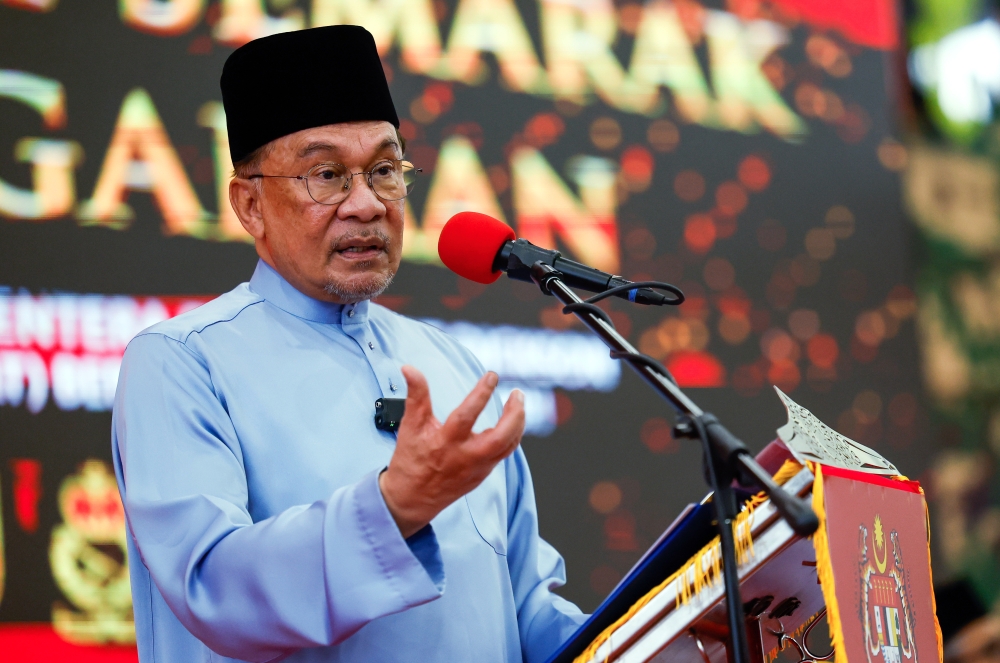
Prime Minister Anwar Ibrahim has offered a new explanation for the government's decision to withhold the Royal Commission of Inquiry report into Lembaga Tabung Haji, suggesting that public disclosure posed significant risks to the institution's stability. Speaking in Port Dickson on July 24, the premier indicated that releasing the report could have triggered widespread panic among the 8.8 million account holders who depend on Tabung Haji for their pilgrimage savings and retirement funds, potentially destabilizing the institution through unprecedented withdrawal requests.
The Tabung Haji RCI was established to investigate serious governance failures and financial irregularities at the state-owned Islamic finance institution, which has faced mounting pressure to rehabilitate its balance sheet following years of poor investment decisions and operational mismanagement. The inquiry examined a range of concerns including questionable property investments, excessive administrative expenditure, and lapses in fiduciary responsibility that have eroded public confidence in the organization. Rather than immediately making the findings public as many stakeholders had anticipated, the government opted for a more cautious approach, citing the need to protect the institution's operational continuity.
Anwar's position reflects a broader tension in Malaysian governance between transparency and financial stability concerns. Tabung Haji serves as a crucial savings mechanism for millions of Malaysians preparing for the Hajj pilgrimage, making it far more than a conventional investment vehicle. The institution accumulated significant liabilities in recent years, and officials have worried that any revelation of deeper structural problems could erode depositor confidence irreversibly. A sudden surge in withdrawal requests could have forced the organization into a liquidity crisis, jeopardizing the savings of everyday Malaysian families.
The decision to restrict access to the RCI findings has drawn criticism from transparency advocates and opposition politicians who argue that accountable governance requires public disclosure of official inquiries. They contend that Malaysians deserve to know what went wrong at an institution entrusted with billions of ringgit in public money and personal savings. The withholding of the report also raises questions about whether selected cabinet members and senior officials are receiving privileged access to information that the general public cannot see, creating a two-tiered system of knowledge that conflicts with democratic principles.
Tabung Haji's rehabilitation efforts have included staff rationalization, investment portfolio restructuring, and organizational reforms aimed at restoring operational efficiency. However, the institution continues to grapple with legacy challenges from the previous leadership era, when aggressive and sometimes speculative investment strategies resulted in substantial losses. The RCI report presumably identifies specific individuals and departments responsible for these failures, which may explain the government's reluctance to release it in full, given the potential for legal liability and political fallout.
From a Malaysian investment perspective, the Tabung Haji situation highlights broader governance weaknesses in state-owned enterprises and Islamic financial institutions. Depositors have limited recourse when large, ostensibly secure institutions fail to meet fiduciary standards, and there is no equivalent to the deposit insurance schemes that protect bank account holders in many developed nations. This places ordinary Malaysians at considerable personal financial risk when institutional mismanagement occurs, a vulnerability that the government has not adequately addressed despite the Tabung Haji crisis.
The withholding strategy also raises questions about whether the government is using stability concerns as a justification for limiting accountability rather than as a genuine protective measure. Other democracies have released critical inquiries into troubled financial institutions while simultaneously implementing safeguards to prevent institutional destabilization. The government could potentially have released the RCI report while introducing mechanisms to reassure depositors, such as public statements from financial regulators or transparent timelines for implementing remedial measures.
Regionally, Malaysia's approach to the Tabung Haji situation contrasts with how other Southeast Asian nations have handled similar financial institution crises. Some countries have opted for full transparency combined with strong regulatory backstopping, while others have adopted more guarded approaches. The Malaysian experience may serve as a cautionary tale about the long-term costs of information restriction, as speculation and distrust often proliferate in the absence of official clarity.
Anwar's explanation suggests that the government intends to manage the RCI findings gradually rather than releasing them comprehensively. This incremental approach may reduce the shock to the system, but it also defers the difficult task of institutional accountability. For Tabung Haji depositors and the broader Malaysian public, the central question remains unresolved: how long will the government maintain restrictions on the report, and under what conditions will full disclosure occur? Until those questions are answered, confidence in both Tabung Haji and the government's commitment to transparent governance will remain uncertain.

