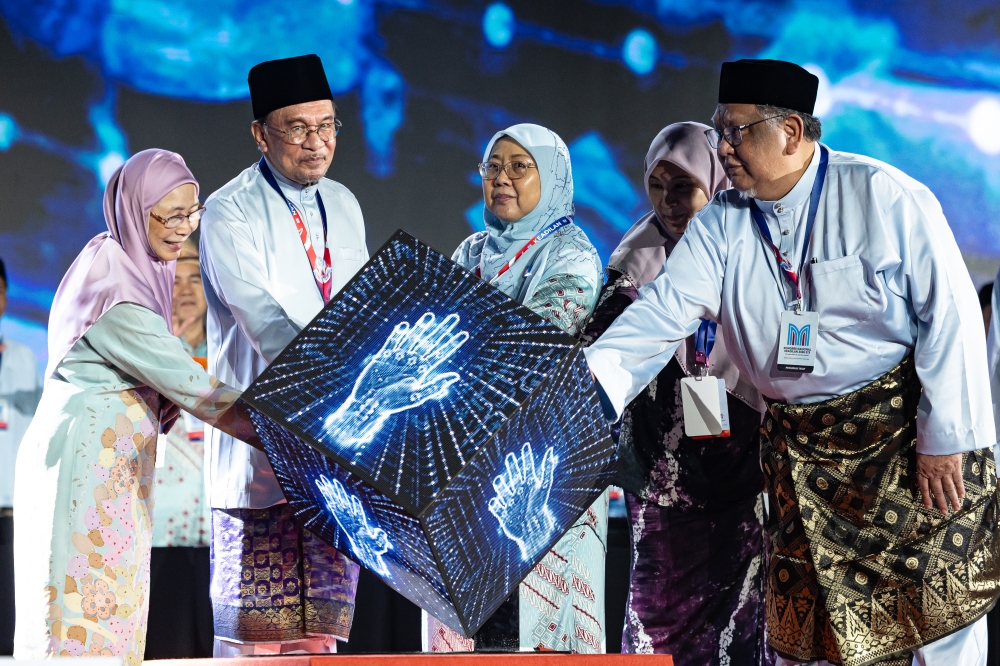
Prime Minister Datuk Seri Anwar Ibrahim has responded to growing criticism over the government's spending distribution by highlighting the enhanced federal allocations directed to Sabah, Sarawak, Kedah and Kelantan during the Madani administration's tenure. Speaking in Melaka on August 15, Anwar dismissed suggestions that the federal government has neglected certain regions, asserting instead that the economic framework prioritises equity across Malaysia's diverse geography.
The Prime Minister's remarks reflect mounting political pressure from opposition figures and state-level leaders who have questioned whether development funds reach all corners of the country fairly. In recent months, concerns have surfaced particularly from opposition-governed and swing states that feel sidelined in national resource allocation. Anwar's defence signals the government's determination to counter such narratives before they gain wider traction in the public consciousness.
Sabah and Sarawak, the two largest states geographically and economically significant contributors to Malaysia's federal structure, have historically raised concerns about their share of development investments relative to their population and land area. The Madani administration appears to have responded by boosting allocations to both East Malaysian territories, signalling a strategic pivot toward addressing longstanding regional grievances. This move carries implications for federal-state relations and could influence political support dynamics in the run-up to future elections.
Kedah and Kelantan present distinct political contexts. Kedah, historically a competitive battleground between ruling and opposition coalitions, has seen increased federal attention that likely reflects its pivotal electoral importance. Kelantan, governed by the opposition PAS party, demonstrates the Madani government's willingness to direct resources to states outside its political coalition—a positioning that undercuts claims of partisan budgeting while attempting to build goodwill in regions where Pakatan Harapan lacks control.
The broader debate over federal allocations reflects fundamental questions about governance priorities under the Madani framework. Since assuming office, the administration has articulated commitments to inclusive development and fiscal responsibility, yet critics argue that budget decisions don't consistently reflect these principles. By citing specific increases to selected states, Anwar attempts to ground these abstract commitments in concrete figures that demonstrate tangible commitment to regional equity.
For Malaysian readers, the stakes extend beyond partisan political scoring. Development allocations determine quality of infrastructure, educational facilities, healthcare services and economic opportunities available in respective regions. How federal funds are distributed influences property values, employment prospects, and overall quality of life for millions of families. The government's spending decisions thus carry real consequences for ordinary Malaysians across the country.
The timing of Anwar's comments also merits attention. By mid-August, the political calendar typically shifts toward preparation for year-end parliamentary sessions and budget formulation cycles. Senior government figures often use this period to consolidate messaging around fiscal priorities and preempt potential criticism from parliament and the public. Anwar's intervention suggests the Madani government views narrative control over budget equity as strategically important for maintaining political momentum.
Regional disparities in development remain a persistent feature of Malaysian politics and governance. East Malaysia particularly has historically felt economically marginalised despite constitutional protections guaranteeing equitable treatment. Federal allocation increases to Sabah and Sarawak thus carry symbolic weight beyond mere numerical adjustments, representing acknowledgment of regional grievances that have periodically threatened national cohesion. Whether these increased allocations translate into meaningful improvements on the ground remains an open question requiring sustained monitoring.
The opposition to Madani policies has coalesced around several themes, including concerns about fiscal management, investment priorities, and regional development equity. By preemptively addressing the allocation question, Anwar attempts to neutralise one vector of criticism while maintaining broader policy flexibility. However, effectiveness of such rhetorical strategies depends on whether stated increases materialise into visible development projects that tangibly improve residents' lives in targeted states.
For Southeast Asian observers, Malaysia's approach to regional resource distribution offers instructive lessons about managing federal governance in diverse, multi-ethnic societies. How the Madani government balances competing regional demands while maintaining fiscal sustainability will likely influence Malaysian politics throughout its tenure. The willingness to direct resources to opposition-held territories also reflects democratic principles that transcend electoral cycles—an approach increasingly rare in global politics but potentially stabilising for long-term governance.
Moving forward, scrutiny will intensify regarding whether promised allocations are actually disbursed and efficiently utilised. State governments in Sabah, Sarawak, Kedah and Kelantan will face pressure to demonstrate how federal funds translate into infrastructure improvements, economic development and service delivery. The Madani administration's credibility on regional equity hinges ultimately not on budget announcements but on implementation outcomes measurable by residents in these states.

