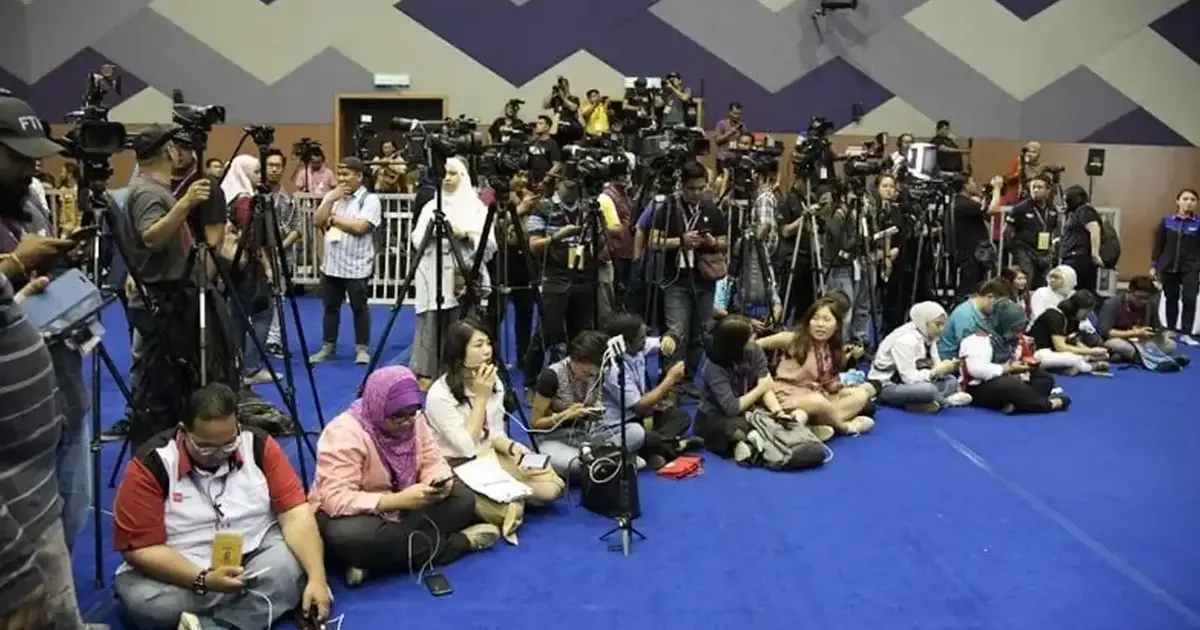
Prime Minister Anwar Ibrahim has moved to clarify the government's position on managing complaints involving media professionals, establishing a procedural framework that channels grievances through existing regulatory channels rather than directly into enforcement mechanisms. According to the Prime Minister, allegations against journalists must first pass through the Malaysian Media Council, the industry's self-regulatory body, before any investigative or punitive measures can be pursued.
This clarification comes amid broader discussions about press freedom and accountability in Malaysia, where concerns about government overreach and media independence have periodically surfaced. The Prime Minister's articulation of this complaint mechanism appears designed to address criticism that authorities might move swiftly against journalists perceived as hostile, particularly in an era of heightened political polarisation and competing narratives around governance.
The Malaysian Media Council has long served as a voluntary self-regulatory organisation for the industry, tasked with upholding journalistic ethics and standards. By funnelling complaints through this body rather than jumping directly to law enforcement or regulatory agencies, the government positioning suggests a commitment to allowing the media industry itself to police its conduct first. This approach mirrors similar models in other Commonwealth democracies where industry councils provide a buffer between political grievances and state enforcement apparatus.
For Malaysian readers accustomed to navigating a complex media landscape influenced by both ownership patterns and regulatory frameworks, this procedural requirement carries practical implications. Journalists operating under various proprietorships—from traditional newsrooms to digital platforms—may face scrutiny through multiple channels simultaneously, and establishing clear hierarchy of complaint adjudication theoretically provides transparency about which body examines which allegations at which stage.
The Prime Minister's intervention suggests recognition that unstructured complaint mechanisms could easily become tools for political pressure on inconvenient coverage. By insisting on Malaysian Media Council involvement, Anwar Ibrahim appears to be creating institutional space for professional editorial judgment to precede government action. This represents a subtle but significant distinction between reactive suppression and proactive governance through existing bodies designed for such purposes.
However, the effectiveness of this mechanism depends heavily on the Malaysian Media Council's actual independence and capacity. The council has historically operated with limited enforcement power, relying primarily on issuing corrections, apologies, and formal findings rather than imposed penalties. Its ability to genuinely arbitrate between government complaints and editorial freedom remains a matter of ongoing debate within Malaysian journalism circles and among press advocacy groups.
Southeast Asian context matters here. Regional governments face constant tensions between controlling narratives and appearing to respect democratic institutions. Malaysia's approach—institutionalising complaint procedures through industry bodies—sits somewhere between the relatively open media environments of countries like Singapore and Thailand and the more restrictively regulated systems elsewhere in the region. This middle path has consequences for how journalists, news organisations, and audiences understand the boundaries of acceptable coverage.
The requirement to pursue Malaysian Media Council channels first also reshapes incentives for complainants. Government ministers, politicians, and officials who feel aggrieved by coverage must now invest time in formal complaint procedures rather than having immediate recourse to enforcement agencies. This procedural friction theoretically encourages dialogue and factual correction over punitive approaches, though critics might argue it simply delays potential pressure.
For regional media organisations and international outlets covering Malaysian affairs, this clarification establishes expectations about how complaints will be handled. Multinational news organisations already accustomed to navigating different regulatory environments across Southeast Asia can now factor this staged complaint process into their operational planning. The explicit routing through Malaysian Media Council provides predictability, which some journalists view as preferable to ad hoc governmental responses.
The Prime Minister's articulation also reflects internal Malaysian political dynamics. Different factions within government and ruling coalitions harbour varying attitudes toward media scrutiny. By establishing a formalised process, Anwar Ibrahim may be attempting to harmonise these divergent impulses while maintaining flexibility for legitimate accountability. This bureaucratic solution suggests political pragmatism—creating sufficient structure to satisfy those demanding action against perceived media misbehaviour while preserving enough procedural safeguards to satisfy those concerned about press freedom.
Looking forward, the real test of this mechanism lies in implementation. How quickly does the Malaysian Media Council respond to complaints? Does it actually exercise independent judgment or tend toward dismissing government complaints? What happens when the council's findings conflict with government preferences? These operational questions will determine whether this system functions as genuine accountability infrastructure or primarily as political theatre designed to project compliance with press freedom principles.
For Malaysian readers engaged with current affairs, understanding this procedural requirement provides insight into how political power actually operates in contemporary Malaysia. It reflects both genuine tension between governance needs and press freedom, and the institutional complexity through which that tension gets managed. As Malaysia navigates evolving media landscapes and audience expectations around transparency, these complaint mechanisms will increasingly define the relationship between power and information.

