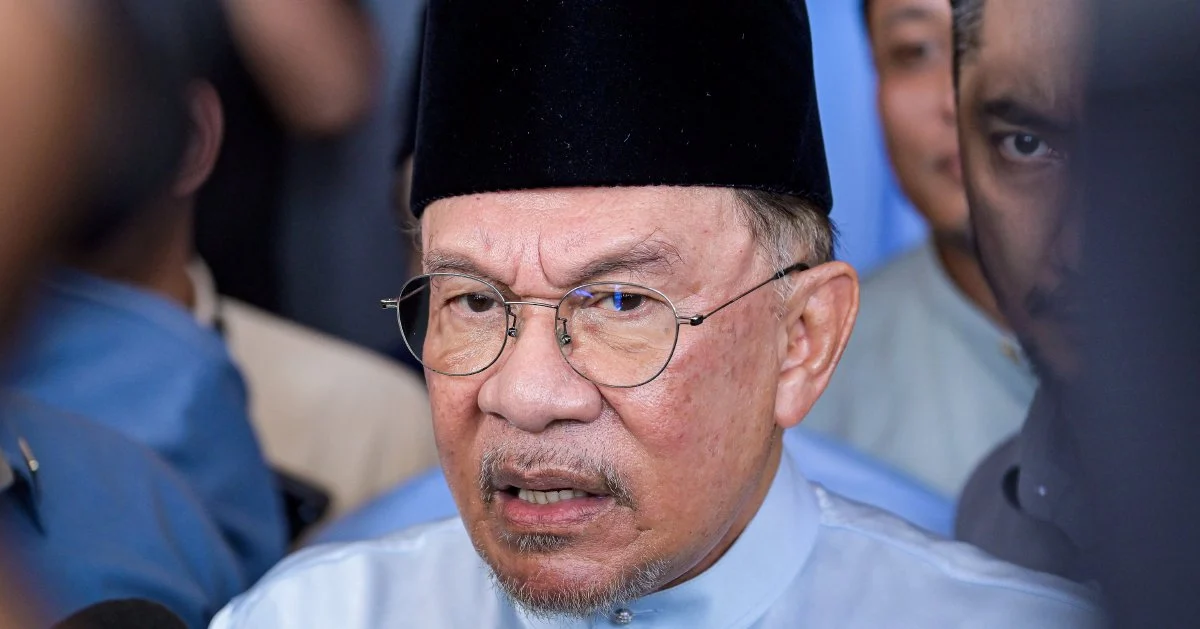
Prime Minister Datuk Seri Anwar Ibrahim moved swiftly on Tuesday to rebut allegations that caretaker Johor Menteri Besar Datuk Onn Hafiz Ghazi had been barred from accessing Felda settlements during a planned event. Speaking at Dengkil, Anwar categorically denied that any directive had been issued to exclude the senior Umno figure from the federal land development authority's holdings, characterising such claims as baseless and politically motivated.
The denial comes as Malaysia's political landscape grows increasingly fractious during the lead-up to Johor's state election, with both sides of the political divide jockeying for visibility and influence in the rural constituencies that Felda communities represent. Onn Hafiz, who continues in his caretaker capacity while the election machinery gears up, has built much of his political brand on direct engagement with Felda settlers, who represent a crucial voting bloc in the state. The allegations of exclusion, if substantiated, would have carried significant symbolic weight in the eyes of this traditionally conservative rural demographic.
Felda settlements, scattered across Johor and other states, comprise tens of thousands of smallholder farmers who have historically leaned toward government-aligned parties. These communities have long been viewed as bellwether constituencies in Malaysian electoral politics, making access to their forums and events a closely contested resource. The state election campaign has intensified competition for narrative control in these areas, with each coalition accusing the other of unfair tactics and media manipulation.
Anwar's swift rebuttal suggests that the government coalition views such allegations as a threat to its standing among rural voters, particularly in Johor where Pakatan Harapan and its allies seek to consolidate recent electoral gains. The Prime Minister's categorical denial, rather than a technical clarification or partial acknowledgement, indicates the seriousness with which the government treats claims of political interference in access to state institutions and developmental schemes. The rhetoric around such incidents often outweighs their factual basis in shaping voter perceptions.
The timing of the accusation, emerging during the caretaker period when official machinery remains technically neutral, raises questions about the mechanics of event coordination in Malaysia's election cycle. During such periods, the line between partisan political activity and administrative function becomes deliberately blurred, creating opportunities for charges of bias from either direction. Onn Hafiz, as a caretaker menteri besar, maintains administrative authority even as he campaigns for his political survival in the coming election.
From Pakatan Harapan's perspective, the denial protects the coalition's image as a reform-minded government committed to fair play and institutional neutrality. Given the coalition's previous campaigns against what it characterised as Umno-led abuse of state resources and administrative machinery, any credible allegation of similar conduct would undermine its moral authority and create ammunition for opposition counterattacks. The swift denial therefore serves both defensive and offensive purposes in the broader political messaging.
Onn Hafiz's Umno party and its political allies, meanwhile, have increasingly framed themselves as victims of a system stacked against them by the incumbent federal government. Such allegations, whether ultimately substantiated or not, reinforce this narrative among the party faithful and sympathetic constituencies. The dispute over event access becomes emblematic of larger grievances about democratic fairness and institutional impartiality during electoral transitions.
The Felda communities themselves occupy an increasingly complex political position. Long considered a reliable support base for the government, they have shown signs of fracturing in recent elections, with some constituencies voting for opposition candidates or remaining undecided. Competition for their allegiance has consequently intensified, making their access to official announcements, development projects, and political forums a point of contention. Both coalitions have invested substantially in messaging directed at Felda settlers, recognising their potential to swing marginal constituencies.
Anwar's intervention at the administrative level, appearing in Dengkil to make a personal denial, underscores how these seemingly procedural disputes can escalate rapidly into matters requiring prime ministerial attention. The choice of venue and the directness of his response suggest calculation about the political cost of allowing such allegations to circulate unchallenged. In Malaysia's media environment, a denied claim can retain considerable currency among voters who either miss the clarification or view it as insufficient.
Looking ahead to the Johor election, expect continued scrutiny of administrative decisions affecting opposition access to government-administered spaces and platforms. Both sides will likely continue documenting and publicising instances they view as discriminatory, while denying equivalent allegations directed at themselves. The underlying issue—ensuring genuinely level electoral playing fields while managing sprawling bureaucracies during election periods—remains structurally unresolved in Malaysian politics.
The episode also highlights the persistent tension between Malaysia's formal commitment to electoral democracy and the practical difficulties of neutralising state apparatus during campaigns. Caretaker periods are meant to create breathing room for fairness, yet they frequently become zones of heightened contestation as parties seek advantages before voters deliver their verdict. How authorities navigate such disputes, particularly at the federal level overseeing state-level events, will shape perceptions of institutional impartiality throughout the election season.

