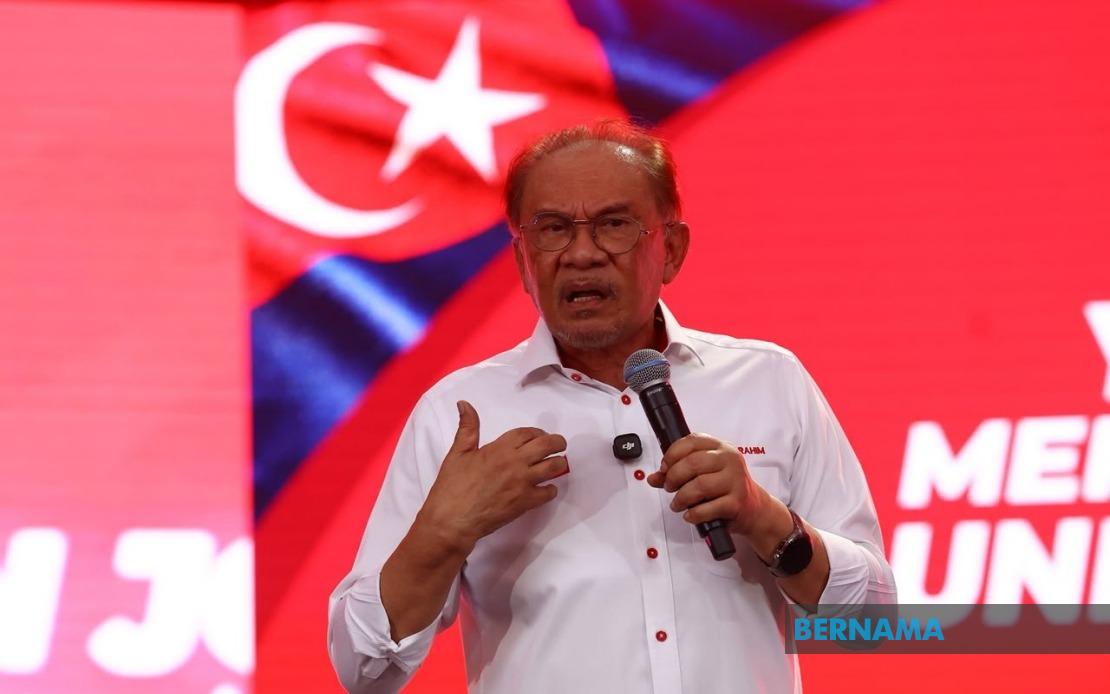
Prime Minister Datuk Seri Anwar Ibrahim has emphatically rejected allegations circulating on social media that he acquired a luxury BMW vehicle for his personal use, describing such claims as deliberate misinformation. The denial came during a campaign rally in Senggarang, Johor, as he addressed mounting speculation about the status and ownership of vehicles in his possession, a sensitive issue in Malaysian politics where public scrutiny of official resource management runs high.
Anwar's remarks underscore the persistent tension between political leaders and digital-savvy constituents who increasingly scrutinise government spending and ministerial conduct. The Prime Minister characterised the controversy as part of a broader pattern of false narratives, noting that the BMW in question was not a recent purchase but rather an established government asset that had been in use prior to the allegations. His pointed rebuttal—"Why spread lies?"—signals frustration with what his office views as coordinated misinformation campaigns designed to undermine his administration's credibility, particularly during a crucial period of electoral campaigning in Johor.
In a separate clarification, Anwar addressed the ownership structure of his primary vehicle, a Mercedes-Benz, emphasising that this automobile was bestowed upon him by His Majesty Sultan Ibrahim, King of Malaysia, rather than acquired through personal funds or official misappropriation. The distinction holds significance because it establishes the vehicle as a formal gift from the royal institution, lending it constitutional legitimacy and placing it beyond ordinary proprietary classification. By registering the Mercedes under the Prime Minister's Department rather than under his individual name, Anwar has attempted to establish a clear institutional separation that distinguishes the vehicle as an official asset rather than a personal possession, thereby negating any suggestion of personal enrichment or improper use of state resources.
The Prime Minister's explicit rejection of ownership claims becomes particularly noteworthy when positioned against his broader political messaging about fiscal responsibility and anti-corruption. Anwar's assertion that he differs from those who "siphon off and steal the people's money" reflects his administration's anti-corruption positioning and attempts to position himself as a custodian of public trust. This rhetorical stance proves crucial for maintaining his coalition's political narrative, especially given that he leads Pakatan Harapan, a coalition partially built on anti-corruption credentials following the 1Malaysia Development Bhaad (1MDB) scandal and its aftermath.
The Prime Minister's Department and the Ceremonial and International Conference Secretariat Division (BIUPA) issued a formal statement providing institutional corroboration for these claims. According to the statement released on Monday, the BMW vehicle in question represents an existing government asset rather than a newly procured official automobile, suggesting that the vehicle had been part of the fleet prior to recent allegations. Furthermore, BIUPA clarified that the BMW falls under its direct management authority and remains designated exclusively for official government logistics purposes, thereby establishing a clear institutional trail of accountability and designated use that theoretically prevents personal application.
The vehicle controversy gained traction through social media platforms, highlighting how rumour and allegation now permeate Malaysian political discourse through digital channels that operate outside traditional media gatekeeping mechanisms. The speed with which such claims spread, coupled with their capacity to influence public perception even without substantiation, underscores the contemporary challenge facing political leaders who must now manage narratives across multiple information ecosystems simultaneously. For Anwar and his administration, countering such allegations requires swift, multi-level responses involving both direct personal denial and institutional verification through official departments.
The timing of these clarifications proved strategically significant, occurring during active campaigning for the 16th Johor state election scheduled for Saturday. Pakatan Harapan's decision to contest all 56 state seats in this crucial electoral exercise makes the management of reputation and public perception particularly acute, as voters prepare to evaluate the coalition's track record and suitability for continued governance. Campaign events like the "Yok! Meriahkan Johor! Undi Harapan" programme in Senggarang thus serve dual purposes, functioning simultaneously as electoral mobilisation platforms and opportunities for direct engagement with concerns affecting voter confidence.
Present alongside Anwar at the Senggarang event were prominent coalition figures including Datuk Fahmi Fadzil, who holds dual responsibility as Communications Minister and Pakatan Harapan communications director, alongside the coalition's respective candidates for the Senggarang, Semerah, and Penggaram constituencies. The presence of high-profile figures and coordinated campaign messaging suggests that the coalition is treating this electoral engagement with considerable institutional importance, recognising Johor as a state where improved performance could meaningfully influence broader peninsular political dynamics.
For Malaysian and Southeast Asian observers, the episode illustrates broader patterns in contemporary democratic politics where digital communications and social media allegations increasingly shape political narratives independent of traditional verification mechanisms. The ability of unsubstantiated claims to gain currency and force institutional responses reflects changing information environments that political leaders across the region must navigate. Anwar's response—combining personal denial, institutional verification, and rhetorical repositioning around corruption concerns—represents a contemporary playbook for managing such challenges, though questions remain about whether such clarifications effectively neutralise damage to public perception or merely amplify awareness of allegations among constituencies not previously exposed to them.
For Pakatan Harapan specifically, managing such controversies while maintaining anti-corruption credentials proves essential given that portions of the coalition's political foundation rest upon reform narratives and fiscal responsibility messaging. The administration's handling of asset and resource management questions therefore carries disproportionate political weight, as any perception of impropriety risks undermining the coalition's primary competitive advantage over alternative governing arrangements in Malaysian voters' minds. Johor, as a state where such messaging competes for influence, becomes particularly significant as a testing ground for whether the coalition's institutional responses and direct political communications can effectively defend its public reputation.

