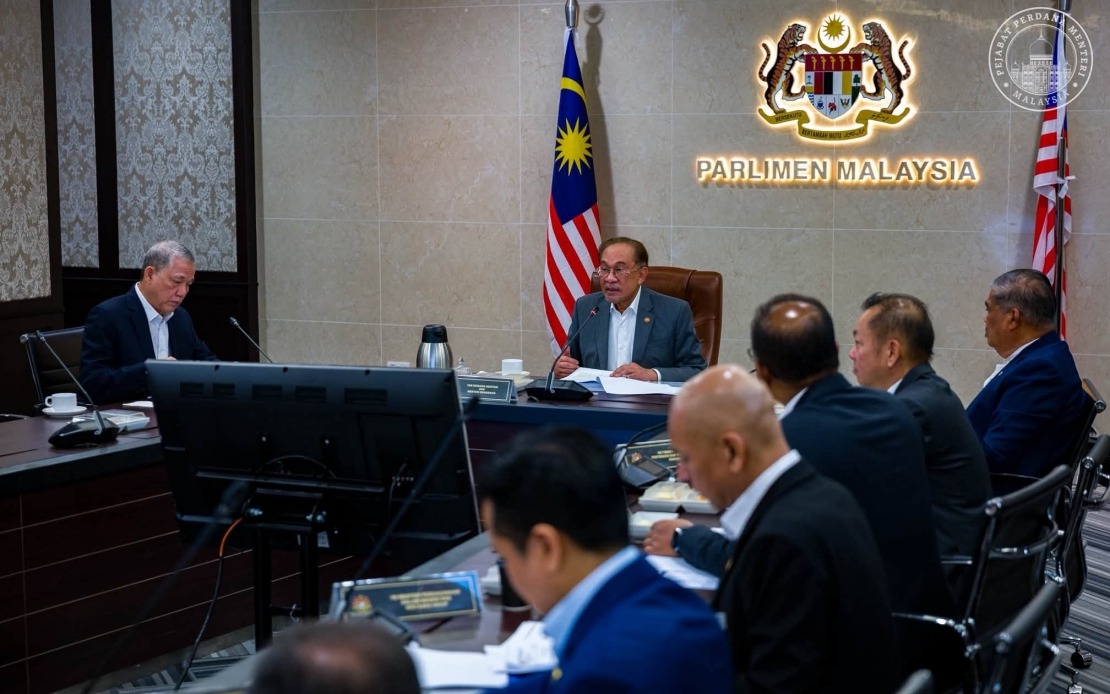
Prime Minister Datuk Seri Anwar Ibrahim has moved swiftly to mobilise the government's agricultural apparatus against an impending climate challenge, ordering the Ministry of Agriculture and Food Security (KPKM) to develop comprehensive mitigation strategies before the Super El Niño phenomenon strikes Malaysia in November. The directive underscores growing concern among policymakers about weather-induced disruptions to the nation's food system, a vulnerability that has become increasingly acute across Southeast Asia as climatic patterns grow more volatile and unpredictable.
The threat posed by Super El Niño extends far beyond temporary weather inconvenience. Extended periods of reduced rainfall and elevated temperatures characteristic of this pattern could severely constrain harvests of staple crops including rice, vegetables, and fruits—commodities critical to both domestic food security and the economic stability of Malaysia's farming communities. For a country that imports roughly half its food requirements, any significant contraction in local production capacity forces greater reliance on international markets at potentially inflated prices, a scenario with immediate implications for consumer costs and household budgets across the income spectrum.
Anwar raised the matter during the inaugural meeting of the National Food Security Council (No. 1/2026), signalling that agricultural resilience has moved to the apex of the government's policy agenda. The forum's focus on food security reflects a broader strategic reassessment, recognising that climate vulnerabilities can cascade rapidly into economic and social instability if inadequately anticipated. By convening this high-level council and personally directing action, the Prime Minister has demonstrated commitment to treating this challenge as a matter of national consequence rather than a sectoral concern confined to agricultural ministries.
The specific instructions to KPKM emphasise urgency, asking the ministry to complete detailed mitigation frameworks through proper channels without allowing administrative delays to compromise preparation. This linguistic formulation suggests awareness that Malaysia's bureaucracy sometimes struggles with rapid response, and Anwar appears determined to cut through potential bottlenecks. The emphasis on maintaining food safety and quality standards alongside mitigation efforts reveals a sophisticated understanding that emergency measures must not lower the regulatory standards that protect consumer health—a balance that often proves politically and administratively challenging during crises.
Beyond atmospheric phenomena, the council also deliberated on fisheries cooperation with Thailand, reflecting recognition that Malaysia's food security cannot be viewed in isolation. Regional trade arrangements, particularly regarding aquaculture and marine products, interconnect the food systems of neighbouring countries. Strengthening fisheries partnerships ensures that supply chain disruptions in one nation do not cascade regionally, while also creating opportunities for Malaysian fishermen to access new markets or inputs during domestic production shortfalls.
The requirement for continuous engagement with fishing communities underscores an often-overlooked dimension of agricultural policy: social acceptance and compliance. When fishing communities understand government support structures and the rationale behind regulatory standards, they become partners in implementation rather than reluctant subjects of external mandates. This cooperative approach differs markedly from enforcement-only models and has proven more effective in sustainable resource management across comparable Southeast Asian contexts.
The council's broader agenda—strengthening competitiveness of Malaysia's agrifood sector—connects contemporary climate challenges to longer-term structural questions about productivity and market positioning. Malaysian agriculture faces persistent challenges including ageing farmer demographics, labour shortages, relatively small plot sizes, and competition from lower-cost producers in neighbouring countries. Super El Niño provides a forcing event that may accelerate necessary transitions toward technology-intensive, resilient farming systems, but only if policy support aligns properly with actual agricultural realities rather than abstract best practices imported from temperate zones.
Technology adoption and innovation represent the council's preferred long-term remedies, though the practical meaning of these terms remains somewhat undefined in the government's public statements. In the Malaysian context, this likely encompasses precision irrigation systems to cope with water scarcity, crop varieties with enhanced drought tolerance, climate-controlled growing facilities, and data-driven farming techniques. However, translating such technologies into practice requires substantial investment, technical training, and business models that work for smallholder farmers—the backbone of Malaysia's agricultural labour force—rather than solely for large commercial operations.
The livelihood dimension cannot be overstated. Malaysia's farming communities, encompassing padi growers, livestock breeders, and fishermen, often operate on thin profit margins vulnerable to production shocks. Without targeted support measures—potentially including subsidised inputs, guaranteed purchase schemes, or income stabilisation mechanisms—climate-driven crop failures could force permanent exodus from farming, accelerating rural-urban migration patterns that have already reshaped Malaysian demographics. Loss of agricultural knowledge and experience, once dispersed, becomes extraordinarily difficult to rebuild.
Regional implications merit consideration. If Malaysia's agricultural output contracts significantly during the Super El Niño period, downstream effects will ripple through Southeast Asia's food trade networks. Countries dependent on Malaysian palm oil, seafood exports, or processed agricultural products face supply pressures, while Malaysia itself may compete more aggressively for imported foodstuffs, potentially raising prices regionally. The timing is particularly sensitive given global food price volatility linked to various geopolitical disruptions.
The success of Anwar's directive ultimately hinges on execution quality—whether KPKM develops truly innovative mitigation approaches or merely rehashes existing programmes with cosmetic adjustments. Critical unknowns include budget allocation, whether implementation extends equitably to smallholder farmers, and whether measures address both immediate production challenges and longer-term systemic vulnerability. The November arrival of Super El Niño provides a concrete deadline, transforming abstract policy pronouncements into testable outcomes measurable against actual climate data and agricultural performance.
Looking forward, the government's response to this particular climate challenge will establish precedents for handling subsequent weather disruptions. El Niño patterns may ease, but climate volatility appears structural rather than cyclical. Building adaptive capacity now—through technology, policy flexibility, and farmer-centred support systems—represents an investment in Malaysia's resilience across multiple future crises. Whether this particular initiative transcends rhetorical commitment to create lasting institutional and agricultural change remains an open question that Malaysian consumers and farmers will spend the coming months answering through their harvests and livelihoods.

