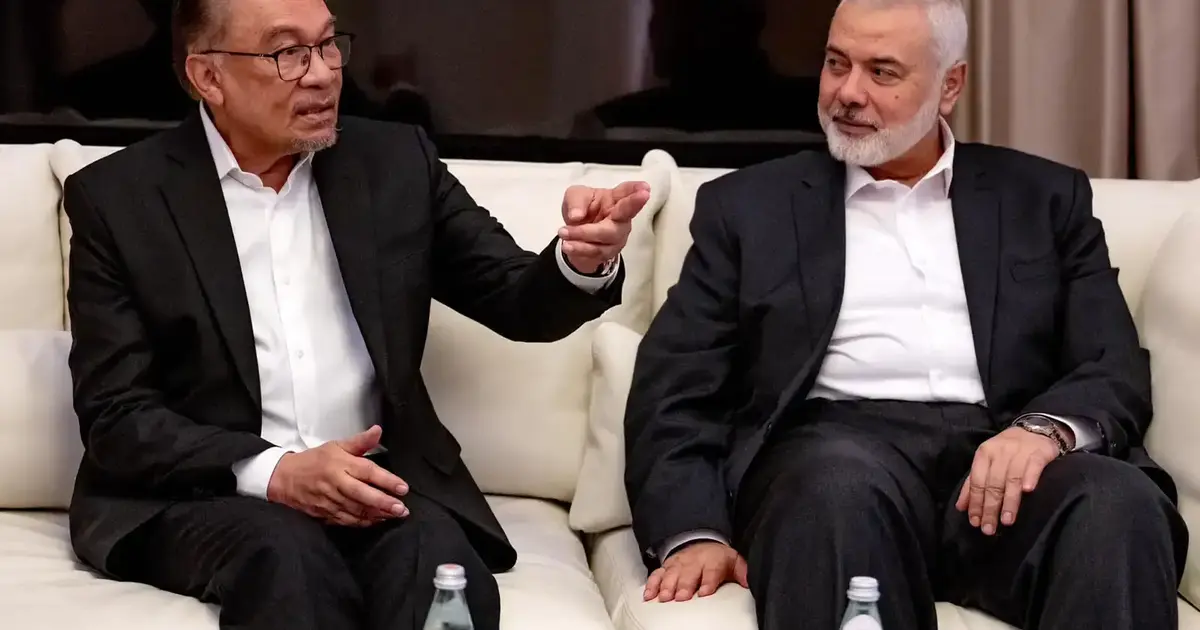
Prime Minister Anwar Ibrahim has categorically denied accusations that Malaysia served as a training ground for Hamas operatives, describing such allegations as completely unfounded. The rejection comes amid heightened scrutiny of Malaysia's historical relationships with various Palestinian movements and international pressure from Western nations regarding counter-terrorism cooperation.
Anwar's forceful dismissal of the claims represents a significant moment in Malaysia's diplomatic posture, particularly as the country seeks to balance its traditional support for Palestinian causes with growing pressure from the United States and its allies to tighten security protocols. The Prime Minister's statement underscores the delicate positioning required of Malaysia as it navigates complex geopolitical currents in the Middle East conflict and global anti-terrorism efforts.
Beyond simply rejecting the allegations, Anwar has taken the proactive step of informing US President Donald Trump about his previous encounters with Hamas leadership figures. This disclosure reflects a diplomatic strategy aimed at preempting potential criticism from Washington and demonstrating transparency regarding Malaysia's past engagements with groups that the United States designates as terrorist organisations. Such openness with the American administration signals Anwar's commitment to maintaining robust bilateral relations despite historical differences in policy approaches.
The timing of these statements is significant given Malaysia's broader regional and international standing. As a moderate Muslim-majority nation with substantial economic interests across multiple continents, Malaysia has long maintained a nuanced approach to Middle Eastern politics. However, the intensification of scrutiny around terrorist financing, training operations, and operational networks has placed renewed pressure on countries with historical ties to various Palestinian factions to demonstrate clear daylight between diplomatic engagement and support for militant activities.
Anwar's historical engagement with Hamas representatives reflects Malaysia's complex positioning within the Islamic world and its traditional solidarity with Palestinian self-determination. However, the reframing of such contacts as historical rather than ongoing, combined with transparent communication to American officials, represents a recalibration of how Anwar's administration presents Malaysia's role in Middle Eastern affairs. This approach allows the Prime Minister to acknowledge Malaysia's diplomatic traditions while signalling alignment with Western security concerns.
The denial of Hamas training operations on Malaysian territory carries significant implications for Malaysia's international reputation. Any confirmation of such allegations could invite sanctions, reputational damage, and complications in trade relationships with Western nations and their allies. Malaysia's economic health depends substantially on relationships with the United States and Europe, making such denials strategically essential beyond their factual accuracy.
For Malaysian readers and regional observers, this episode illustrates the persistent tension between solidarity with Palestinian causes—a deeply rooted sentiment across much of the Muslim world—and the pragmatic imperatives of modern international relations and counter-terrorism frameworks. Malaysia must demonstrate its commitment to international security standards without abandoning the principled positions that resonate with significant portions of its population.
Anwar's approach of combining categorical denial with transparent dialogue with Trump suggests an attempt to establish clear boundaries. By proactively discussing his previous contacts rather than allowing them to be discovered independently, the Prime Minister positions Malaysia as cooperative with American security interests while maintaining that such historical diplomatic engagement did not translate into operational support for militant activities.
The incident also reflects broader regional dynamics, where Southeast Asian nations increasingly find themselves pressured to adopt security frameworks aligned with Western countries' Counter-terrorism strategies. Malaysia, with its significant Muslim population and traditional connections to the broader Islamic world, faces particular challenges in navigating these expectations while maintaining domestic legitimacy and regional standing.
Further complicating Malaysia's position is the distinction between designation-based approaches to terrorism—which vary between countries—and operational reality. While the United States designates Hamas as a terrorist organisation, other nations maintain more differentiated stances. Malaysia's effort to demonstrate that acknowledging diplomatic history differs fundamentally from operational support reflects this complex international legal and diplomatic landscape.
The confirmation that Anwar has briefed Trump directly on these matters suggests a high-level engagement aimed at preventing misunderstandings or intelligence assessments from derailing bilateral relations. Such diplomatic groundwork, conducted discreetly but confirmed publicly, forms part of contemporary statecraft among nations seeking to maintain positive relationships despite differing perspectives on particular geopolitical questions.
Moving forward, Malaysia's ability to maintain its diplomatic integrity while satisfying international security expectations will depend substantially on demonstrating clear operational separation between historical political engagement and any form of support for organisations designated as terrorist entities. Anwar's recent statements appear designed to establish that critical distinction, while his direct communication with the American President signals serious intent to prevent misinterpretations from complicating Malaysia's strategic relationships.

