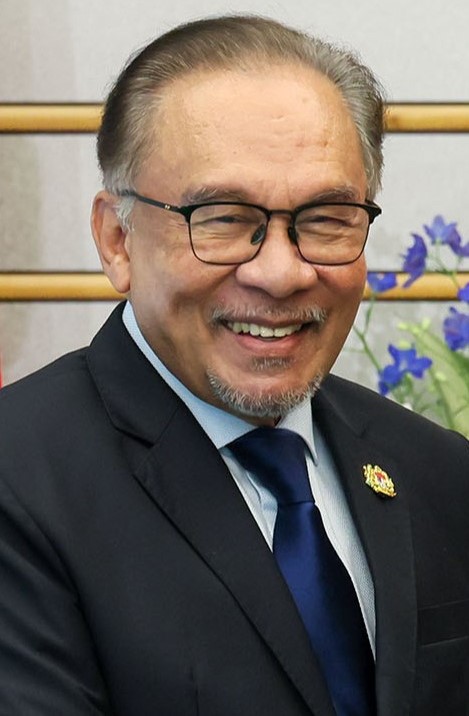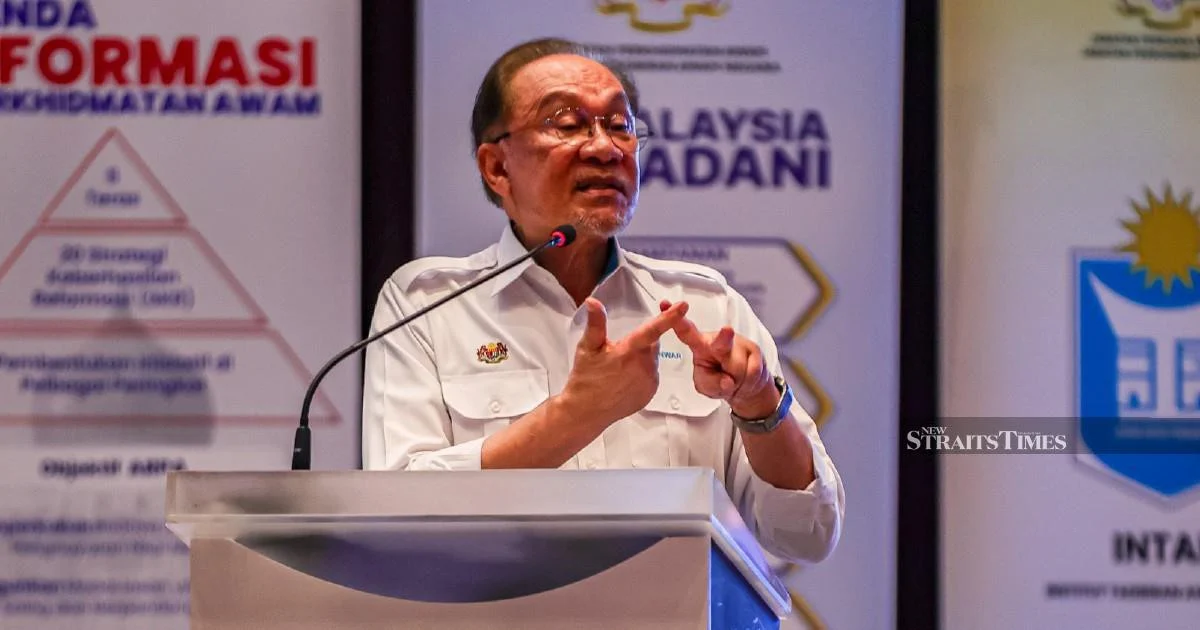
Prime Minister Datuk Seri Anwar Ibrahim intervened on Saturday to quell mounting tensions within the Pakatan Harapan coalition, asserting that Amanah president Datuk Seri Mohamad Sabu had not intended to disparage any of the ruling alliance's component parties during his speech at the PH candidate announcement ceremony in Tangkak on Friday. His statement came as political observers scrutinised remarks made by Sabu at the event, with some interpreting his comments as critical commentary directed at coalition partners.
Anwar's calibrated response reflects the delicate balancing act required to maintain cohesion among PH's diverse membership at a time when the coalition faces electoral pressures and internal disagreements on policy direction. The Amanah party, a relative newcomer to Malaysian politics compared to the Democratic Action Party and the People's Justice Party that form the core of PH, has emerged as a significant influence within the government structure. Sabu's position as Amanah president carries particular weight given the party's representation in federal leadership positions and state governments, making his public statements subject to heightened scrutiny from rival factions.
The Tangkak event represented a crucial moment for PH's campaign machinery ahead of what political analysts expect to be a closely contested electoral period. Candidate announcements carry symbolic importance within coalition politics, signalling factional priorities and demographic targeting strategies. When leaders address such gatherings, their words are frequently parsed for hidden meanings or coded messages intended for specific audiences within the broader coalition framework. This environment of heightened sensitivity meant that Sabu's remarks, regardless of intent, risked misinterpretation or weaponisation by those seeking to highlight divisions.
Anwar's intervention from Alor Gajah, a constituency in Melaka state, demonstrates the PM's commitment to acting as a stabilising force within PH during periods of internal friction. His willingness to publicly defend Sabu suggests confidence that the Amanah chief's comments, while perhaps inartfully expressed, did not cross established lines of acceptable coalition discourse. This approach contrasts with allowing criticism to fester unchecked, which might have escalated into formal factional disputes requiring more elaborate reconciliation efforts.
The broader context involves several ongoing tensions within PH that extend beyond any single speech. Different component parties maintain distinct organisational cultures, electoral bases, and policy preferences. The Democratic Action Party draws significant urban and Chinese voter support, the People's Justice Party relies on its historical Anwar-centric voter loyalty, while Amanah cultivates an Islamic-moderate positioning that appeals to religiously conscious constituencies. These divergent coalition partners must constantly negotiate how to present unified messaging while maintaining separate party identities and appealing to their respective support bases.
Sabu's role within the government as Defence Minister adds another layer to the political sensitivity surrounding his public pronouncements. As a minister, his statements carry the weight of government authority, yet as Amanah president, he represents party interests that may not always align perfectly with broader coalition objectives. This dual responsibility creates inherent tension that requires careful navigation. Any perception that Sabu was using his ministerial platform to settle internal coalition scores would undermine the principle of collective cabinet responsibility.
The incident also reveals how quickly internal coalition tensions can become public knowledge and invite external commentary. News coverage of political events, particularly candidate announcements, serves to amplify statements that might otherwise circulate only among party activists. Once a narrative develops around controversial remarks, even clarifications struggle to fully suppress the original interpretation among observers predisposed to view coalition relations negatively.
For Malaysian voters assessing political stability and government effectiveness, such internal coalition friction raises legitimate questions about whether PH partners can effectively govern together despite their ideological differences. The coalition's ability to manage these tensions without splintering directly affects its capacity to govern and maintain legislative majorities. Anwar's public reassurances about coalition unity therefore serve a practical governing purpose beyond mere political theatre.
The Amanah party's position within PH also reflects broader trends in Malaysian politics regarding religious identity and political positioning. As an Islamic-oriented party within a multi-faith coalition, Amanah must constantly balance loyalty to PH's pluralistic values with demonstrating Islamic commitment to its electoral base. This balancing act sometimes produces rhetoric or policies that other coalition partners find troubling, requiring mediation from senior leadership.
Moving forward, the incident highlights the ongoing need for improved communication protocols within coalition structures. Clear guidelines about permissible criticism, appropriate forums for airing disagreements, and structured processes for resolving disputes could reduce the frequency of misunderstandings that escalate into public controversies. Malaysian coalition politics, despite decades of experience with multi-party alliances, continues to operate with relatively informal dispute-resolution mechanisms.
Anwar's intervention ultimately served to de-escalate an emerging controversy before it could damage coalition morale or provide ammunition to opposition parties seeking to exploit internal divisions. Whether this approach successfully prevents similar incidents from recurring will depend on whether coalition leaders simultaneously address the underlying structural issues that generate these tensions. For now, the PM's reassurance provides breathing room for PH to refocus on campaign activities and policy delivery ahead of electoral challenges.