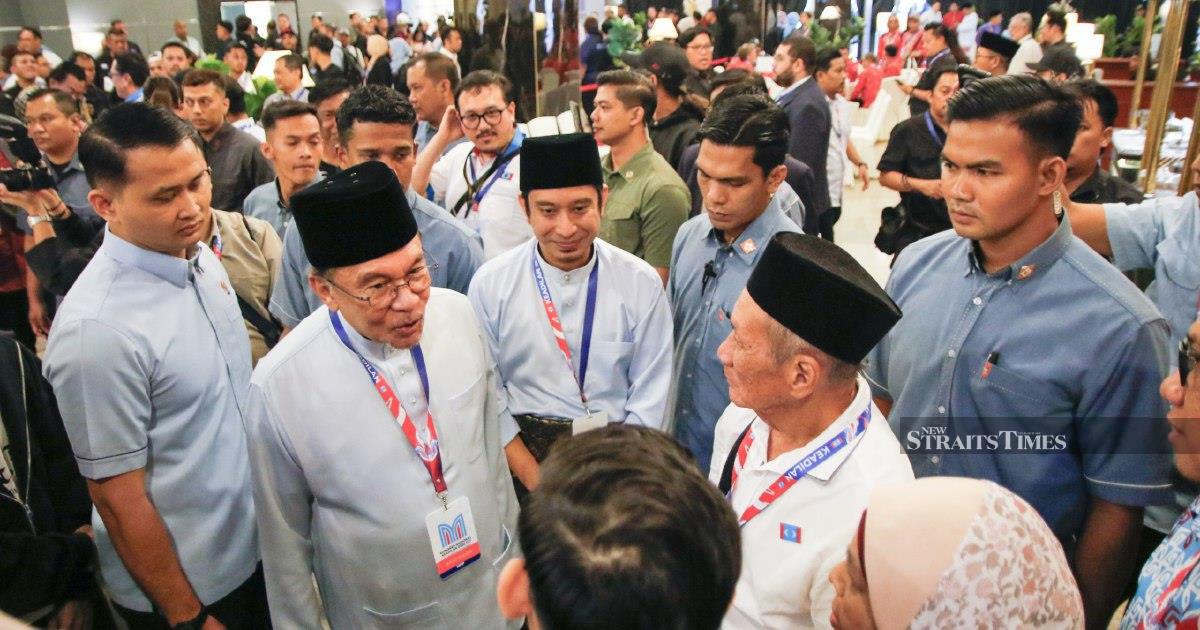
Prime Minister Datuk Seri Anwar Ibrahim has firmly rejected suggestions that his relationship with Deputy Prime Minister Datuk Seri Dr Ahmad Zahid Hamidi has deteriorated, emphasising that their partnership remains constructive and stable at the highest levels of government. Speaking in Ayer Keroh, Anwar sought to dispel mounting concerns about potential fractures within the coalition administration that have circulated in recent weeks.
The denial comes amid what analysts have characterised as an unusually active rumour cycle concerning the dynamics between Malaysia's top two elected officials. Such speculation could prove destabilising to investor confidence and parliamentary cohesion, particularly given the delicate balance required to maintain the multi-party government coalition that currently holds power. Anwar's statement therefore serves a strategic purpose in reassuring both domestic stakeholders and international observers about the stability of the current administration.
Relations between political figures at the prime ministerial and deputy prime ministerial levels carry outsized significance in Malaysia's Westminster-style parliamentary system. Unlike ceremonial vice-presidencies in other democracies, the deputy prime minister holds substantive executive authority and typically leads specific policy portfolios. Any genuine friction between these two figures could theoretically cascade through the entire government apparatus, affecting everything from budget allocation to legislative priorities.
The timing of Anwar's statement reflects broader concerns about coalition management in Malaysian politics. The current government comprises representatives from multiple parties spanning the political spectrum, a configuration that demands careful balancing and frequent dialogue at senior levels. Zahid, who leads the United Malays National Organisation (UMNO), brings significant parliamentary numbers to the coalition, making his cooperation essential for the government to maintain its legislative majority.
For Malaysian readers accustomed to tracking the intricate movements within the nation's political establishment, such denials of internal conflict merit careful scrutiny. While Anwar's remarks provide the official narrative, observers typically evaluate the credibility of such statements by monitoring subsequent government actions, ministerial appointments, and legislative voting patterns. Any genuine deterioration in the PM-DPM relationship would likely manifest in delayed policy implementation, cabinet reshuffles, or reduced coordination on major initiatives.
Regionally, the stability of Malaysia's federal government carries implications beyond domestic politics. The country remains a significant economic player in Southeast Asia and ASEAN, with government continuity directly affecting trade negotiations, infrastructure development, and security cooperation. International partners, from regional institutions to major trading nations, maintain close interest in whether Malaysia's administration can function effectively or faces internal paralysis.
Anwar's assertion that ties remain good specifically at the national level warrants interpretation. The phrasing acknowledges that working relationships operate across multiple domains and hierarchical levels, with the prime ministerial-deputy prime ministerial connection representing only the apex. This suggests that government business continues to flow through established channels, even if lower-level personnel or secondary relationships might experience occasional tension—a common feature in large coalitions.
The political context in which such reassurances become necessary has roots in Malaysia's recent electoral history. The 2022 general election produced a hung parliament where no single coalition possessed an outright majority, forcing unprecedented negotiations and eventually yielding the current multi-party arrangement. This fragmented parliamentary landscape means that both Anwar and Zahid exercise considerable leverage over the government's survival, creating inherent tensions between the desire to cooperate and the temptation to position oneself advantageously for future elections.
Future indicators of whether the PM-DPM relationship remains genuinely stable will include the pace at which government business proceeds through parliament, the coherence of major policy announcements, and whether both figures continue to make joint public appearances. Additionally, observers will track whether coalition partners receive their expected allocation of ministerial positions and resources—a common measure of health within Malaysian administrations.
Anwar's intervention in dismissing rift reports also serves to constrain media speculation that might otherwise escalate into self-fulfilling prophecy. In Malaysian politics, where perception often drives reality, the prime minister's public stance can either dampen or amplify rumours depending on how credibly he presents his position. His direct, unequivocal language suggests an attempt to definitively close the conversation rather than acknowledge underlying tensions that might appear addressed but unresolved.
For the broader Malaysian public, the stability of the federal government directly impacts policy delivery across sectors from healthcare and education to infrastructure and economic planning. Prolonged internal conflict at the highest levels inevitably diverts ministerial attention from substantive governance toward survival politics, potentially delaying implementation of promised reforms or development initiatives. This reality underscores why political leaders invest considerable effort in publicly maintaining appearances of unity, even when private relationships face strain.
Looking forward, the test of whether Anwar's reassurance holds credibility will emerge through concrete actions rather than words alone. The coming months will reveal whether the PM and DPM continue coordinating effectively on major policy initiatives, whether their parliamentary delegations vote in concert on critical legislation, and whether neither makes public statements suggesting policy divergence. Such observable metrics will ultimately determine whether the relationship survives the multiple pressures that inevitably test even the most professionally cordial political partnerships in Malaysia's complex multi-party environment.

