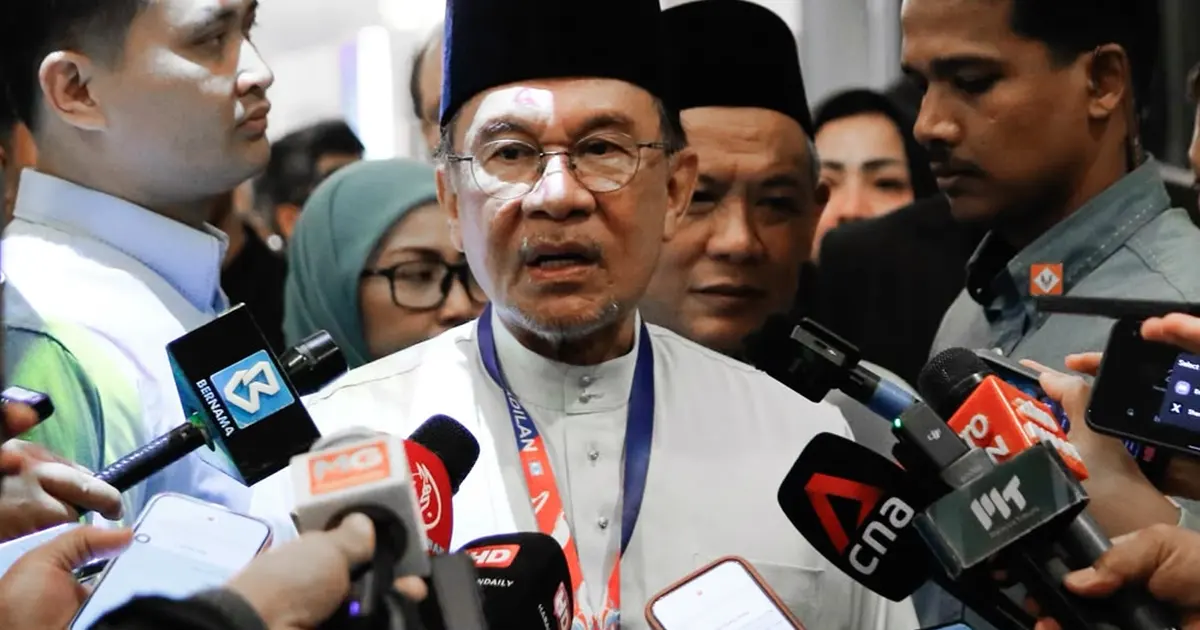
Prime Minister Anwar Ibrahim has moved to quell speculation about fractured ties within Malaysia's ruling coalition by firmly denying that trust issues plague his relationship with Deputy Prime Minister Zahid Hamidi. The clarification came as a direct response to comments made by former Umno Youth chief Khairy Jamaluddin during a podcast appearance, in which he had suggested underlying concerns about the stability of the government's senior leadership partnership.
Anwar's measured response underscores the delicate balancing act required to maintain cohesion across the multi-party Pakatan Harapan coalition and its allies from Umno, whose cooperation has been instrumental in stabilising Malaysia's fractious political landscape since 2022. Rather than engaging in a direct rebuttal, the prime minister characterised the divergence between his position and that articulated by Khairy as simply reflecting contrasting interpretations of the same situation. This framing allows both figures to maintain face while deflating tensions that could potentially undermine the fragile consensus holding the government together.
Khairy's podcast intervention, whilst notably not carrying an official party or government endorsement, touched upon sensitive internal dynamics that observers have long tracked. The former youth wing leader, who remains an influential voice within Umno despite losing his ministerial portfolio in recent political reshuffles, appears to have been commenting on perceived tensions that he believes warrant public acknowledgment. However, his characterisation has clearly been deemed problematic by Anwar's office, which recognises that public airing of such concerns, however substantive, risks damaging investor confidence and undermining Malaysia's standing during a critical economic recovery period.
The prime minister's response reveals something important about the contemporary Malaysian political ecosystem: whilst disagreements between senior officials inevitably occur, there exists a shared understanding that broadcasting these tensions to the wider public can prove counterproductive. Zahid Hamidi, as deputy prime minister and head of Umno, commands significant influence within the ruling coalition, and any genuine rupture between him and Anwar would reverberate across multiple governance structures and party alliances. The stakes of such divisions extend beyond mere personal relations to encompass legislative priorities, cabinet allocation, and the government's ability to govern effectively.
The distinction Anwar drew between trust and differing viewpoints carries particular weight given Malaysia's recent political volatility. The nation has experienced repeated cycles of coalition dissolution and reformation, with the 2022 transition to Anwar's premiership representing a deliberate attempt to establish greater stability. Each public hint of internal friction between top leaders inevitably invites speculation about potential shifts in political alignment, which in turn can spook foreign investors and create space for opportunistic opposition moves. By characterising the disagreement with Khairy as merely perspectival rather than structural, Anwar signals that the government's foundations remain solid.
From a coalition management perspective, Anwar's response also serves to insulate Zahid from potentially damaging insinuations. The deputy prime minister, who has faced numerous controversies and judicial proceedings in the past, has benefited from the government's current stability and his position within it. Any suggestion that Anwar harbours doubts about Zahid's reliability could hasten moves against him by rivals within Umno or create openings for opposition parties to exploit. By firmly denying trust issues exist, Anwar shields his coalition partner whilst simultaneously asserting his own authority as the ultimate arbiter of government harmony.
Khairy's intervention itself warrants contextualisation within Umno's internal power struggles. As former Youth chief and erstwhile ministry holder, he remains a significant figure whose views carry weight among younger party members and more reform-minded sections of the base. His decision to air concerns publicly, rather than through private channels, suggests he may believe such issues merit wider discussion. Yet his positioning outside government proper also means he can express views that serving ministers cannot, creating space for airing grievances without direct governmental accountability. Whether he was genuinely expressing deep-seated concerns or attempting to position himself within party debates remains unclear.
The incident illustrates how Malaysia's coalition government operates in a perpetual state of managed tensions. Unlike single-party governments where internal dissent occurs largely behind closed doors, Malaysia's power-sharing arrangements involve constant negotiation between entities with different interests, constituencies, and historical grievances. Anwar's challenge lies in acknowledging the reality of these tensions whilst preventing them from metastasising into existential threats to governance. His response to the Khairy remarks demonstrates a sophisticated understanding of this requirement.
Looking forward, the episode suggests that maintaining coalition stability will require ongoing communication efforts between Anwar and Zahid, as well as careful management of public commentary by party figures. The government's ability to navigate such challenges successfully will significantly influence its prospects for delivering on economic and policy agendas. For Malaysian observers and regional stakeholders, the takeaway is that whilst friction exists within the ruling coalition, senior leaders remain committed to preserving the arrangement, at least in the near term.

