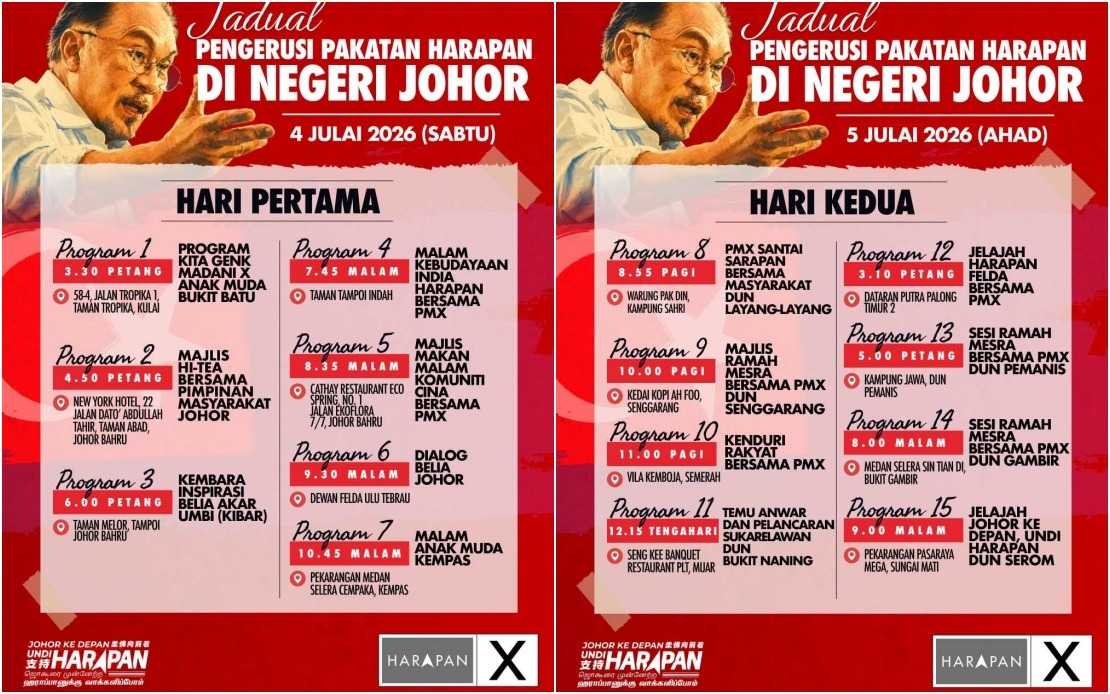
Datuk Seri Anwar Ibrahim, chairman of Pakatan Harapan, is preparing for a demanding weekend schedule across Johor as the coalition intensifies its push to secure voter support in the 16th state election. The PH leader will participate in 15 distinct campaign activities over Saturday and Sunday in a determined effort to energise both the party machinery and the electorate behind the coalition's 56 state assembly candidates.
This high-octane campaign blitz underscores the strategic importance Pakatan Harapan places on the Johor electorate and the competitive nature of the upcoming contest. By personally attending multiple events from mid-afternoon through late evening, Anwar is signalling that the coalition views Johor as crucial terrain that demands top leadership attention. The sheer volume of scheduled appearances reflects a classical ground game strategy where senior party figures maintain visible presence and direct engagement with voters across different demographics and localities.
The weekend itinerary spans multiple constituencies and community segments, revealing a deliberate attempt by Pakatan Harapan to reach beyond traditional support bases. Saturday's schedule commences with the Kita Genk MADANI x Anak Muda Bukit Batu programme in Kulai at mid-afternoon, transitioning into community leader engagement and youth-focused sessions by evening. The inclusion of cultural events—an Indian Cultural Night and Chinese Community Dinner—demonstrates recognition of Johor's multicultural composition and the importance of appealing across ethnic communities in what remains a competitive political landscape.
The late-evening programming is particularly noteworthy, with activities scheduled through 10:45 pm. This extended commitment suggests that Pakatan Harapan believes sustained visibility and accessibility throughout the day, including after-hours engagements, can effectively capture voter attention and demonstrate leadership dedication. The progression from community breakfasts to townhall-style meetings to cultural celebrations creates multiple touchpoints for different voter segments to encounter the PH narrative directly.
Sunday's agenda maintains similar intensity while shifting geographical focus to different parliamentary areas. Beginning with an early breakfast engagement at a grassroots location in Layang-Layang, the schedule incorporates meet-and-greet sessions, community meals, and volunteer mobilisation events. The launch of Bukit Naning Volunteers suggests that PH is simultaneously building grassroots organisational infrastructure while the senior leadership commands public attention, a coordinated approach that links top-down communication with bottom-up activation.
The strategic timing of this campaign blitz becomes significant when considered against the broader electoral calendar. With polling day set for July 11 and early voting on July 7, this weekend represents a critical window when voter attention may be cresting and final decisions crystallise. For a coalition seeking to recapture or maintain ground, intensive leadership presence during this period aims to create momentum, generate media coverage, and provide rallying points for party activists.
From a Malaysian political perspective, Anwar's hands-on campaign participation reflects evolving expectations about party leadership visibility and accessibility in the social media age. Unlike earlier electoral contests where senior figures might maintain distance from day-to-day campaigning, contemporary competition demands that top leaders be seen engaging directly with communities, demonstrating stamina and commitment. This approach also serves to overshadow competing narratives by dominating the information space through continuous event announcements and social media updates.
The breadth of Pakatan Harapan's candidate slate—56 candidates across the state assembly seats—indicates the coalition's ambition to contest substantially across Johor rather than pursuing a minimal footprint. By channelling national party leadership into sustained ground presence, PH seeks to elevate its candidate pool's visibility and legitimacy, particularly for lesser-known contenders who benefit from association with the chairman's endorsement and personal attendance.
The inclusion of specific programmatic themes—youth dialogue, community meals, volunteer mobilisation—reveals nuanced messaging strategy beyond generic campaign appeals. Each event category targets distinct voter psychology: youth programming addresses concerns about generational representation and future economic prospects; community dinners invoke shared cultural identity and collective aspiration; volunteer launches build institutional persistence beyond election day. This segmentation allows Pakatan Harapan to calibrate messaging for different audiences while maintaining coherent overall campaign direction.
For Malaysia's broader political ecosystem, this campaign intensity reflects the competitive stakes in state-level contests, particularly in Johor where coalition fortunes have fluctuated. State elections increasingly function as barometers of national political sentiment and testing grounds for policy initiatives before federal implementation. The commitment of national leadership resources to Johor's campaign underscores how state electoral contests have transcended purely local significance, becoming proxy battlegrounds where national political calculations play out.
Anwar's personal outreach through social media invitations demonstrates adaptation to contemporary voter engagement patterns. By publicly extending invitations through Facebook, he democratises access to campaign events and encourages organic mobilisation, recognising that traditional party-managed attendance alone proves insufficient in competitive modern elections. This open invitation model also creates potential for viral amplification if attendees share their experiences across social networks.
The logistical challenge of executing 15 distinct events across multiple locations within a 48-hour window is substantial and speaks to sophisticated campaign planning and coordination infrastructure. For voters observing from the sidelines, such intensive scheduling communicates earnestness and organisational capacity—qualities that extend beyond personality cults to suggest institutional competence. The successful execution of such an ambitious itinerary becomes itself a campaign statement about coalition cohesion and professional management.
As Johor voters prepare to cast ballots on July 11, Anwar's weekend campaign circuit represents the culmination of sustained political mobilisation. The 15 programmes collectively constitute an attempt to translate national-level political strength into state-assembly-seat victories, leveraging leadership charisma and institutional resources to overcome any local competitive disadvantages. Whether this intensive engagement translates into desired electoral outcomes will provide crucial data about the effectiveness of leadership-centric campaigning in contemporary Malaysian electoral dynamics.

