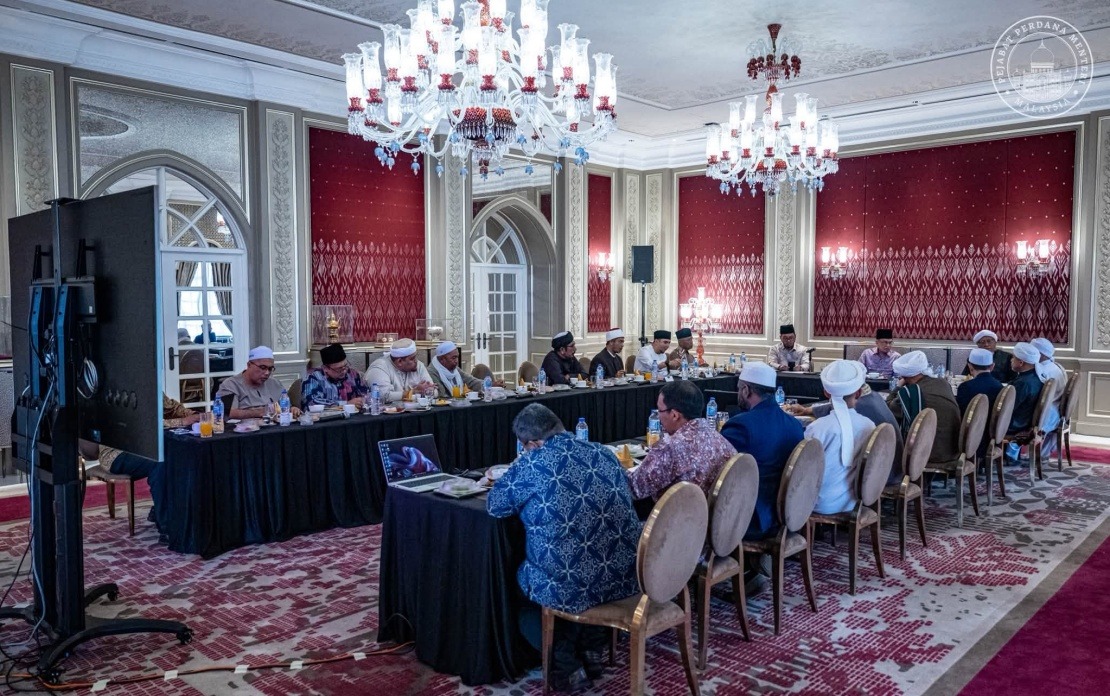
Prime Minister Datuk Seri Anwar Ibrahim has signalled that meaningful engagement with Malaysia's Islamic scholarly community remains central to his administration's governance approach, framing such consultations not as ceremonial protocol but as essential mechanisms for policy refinement. Speaking following a series of muzakarah held in conjunction with Maulidur Rasul observances, Anwar characterised these encounters as opportunities for substantive reflection rather than mere formal meetings, suggesting they serve a deliberate function in ensuring government initiatives are anchored in theological knowledge and remain responsive to contemporary Muslim community needs.
The Prime Minister's emphasis on scholarship-informed governance reflects a broader pattern within his administration of seeking legitimacy and direction from established religious institutions and thought leaders. By positioning these dialogues as forums where advice shapes policy outcomes, Anwar is attempting to bridge the traditional separation between executive decision-making and religious counsel, a particularly sensitive dynamic in Malaysia's plural but Muslim-majority political context. This approach carries significance for understanding how the current government navigates the intersection of secular administration and religious authority—a perennial tension in Malaysian politics.
During the afternoon session, Anwar met with Sheikh Dr Muhyiddin Awwamah, who represents Darul Hadis al-Awwamiyyah, a respected institution within Malaysia's Islamic educational landscape. The choice of interlocutor is not incidental; Sheikh Dr Muhyiddin carries considerable symbolic weight as the son of Al-'Allamah Sheikh Muhammad bin Awwamah, a globally recognised hadith scholar whose intellectual contributions span decades and multiple continents. This generational connection underscores how Malaysian leadership continues to draw upon established scholarly lineages to validate policy directions and maintain continuity with Islamic intellectual tradition.
Anwar's public acknowledgement of Sheikh Muhammad bin Awwamah's literary contributions reveals a deliberate strategy of honouring intellectual legacy as a form of institutional respect. By describing the scholar's published works not merely as compilations of text but as intellectual inheritance binding successive generations, the Prime Minister is articulating a vision of Islamic knowledge as cumulative and transgenerational. This framing resonates particularly with Malaysia's Muslim-majority population, many of whom perceive authentic governance as flowing from grounding in classical Islamic scholarship rather than purely contemporary political calculation.
The series of discussions represents part of a wider consultation strategy the government has adopted regarding Islamic policy matters. These engagements appear designed to solicit guidance on trajectories affecting Islam's institutional development within Malaysia and its positioning in an increasingly complex geopolitical and social environment. For a government navigating competing demands from conservative religious constituencies, modernising urban demographics, and international scrutiny, such consultations serve both practical and symbolic functions—gathering substantive advice while simultaneously demonstrating deference to religious authority structures.
The timing of these muzakarah during Maulidur Rasul celebrations—marking the birth of Prophet Muhammad—carries religious and political significance. This period traditionally occasions reflection on Islamic values and their application to contemporary life. By convening religious scholars during this observance, the government signals that its engagement with Islamic thinking is not opportunistic but woven into the rhythms of Muslim practice and memory. For Malaysian voters and international observers, such timing reinforces narratives about the government's Islamic commitment rather than relegating such consultations to administrative sidelines.
Anwar's statement that "religion continues to flourish when those in power are willing to listen to the voice of knowledge" invokes a classical Islamic political principle—that legitimate authority requires engagement with learned opinion. This rhetorical positioning distinguishes his approach from more confrontational stances toward religious institutions, presenting consultation as both philosophically principled and practically wise. In the Malaysian context, where religious nationalism remains politically potent and institutional Islam wields considerable influence, such language serves to defuse potential tensions between government initiatives and conservative religious constituencies.
The emphasis on knowledge as "a guiding light for the Muslim community" suggests the Prime Minister's framing positions scholars as custodians of guidance essential for community wellbeing. This construction potentially elevates religious scholars' status within national discourse and subtly obligates government to remain attentive to their counsel on matters touching Islam. Whether this represents genuine power-sharing or strategic accommodation of influential constituencies remains an open question, but the rhetorical commitment to scholar-guided governance carries implications for how Islamic policy develops across education, law, and social matters.
For Southeast Asian observers, Malaysia's approach to integrating religious scholarship into governance offers insights into how Muslim-majority democracies navigate institutional relationships. Unlike some regional states that maintain stricter separation between religious and administrative spheres, or others where religious authority dominates state functions, Malaysia's model involves ongoing negotiation and selective consultation. This dynamic shapes not only domestic policy but also Malaysia's positioning within regional religious networks and international discussions of Islam and governance.
The government's consultation strategy also reflects awareness that Malaysia's Muslim community encompasses diverse theological perspectives and socioeconomic interests. By engaging prominent scholars across different institutional contexts, the administration can claim inclusive Islamic consultation while maintaining ultimate policy discretion. This approach acknowledges that no single religious voice speaks for all Muslims, yet seeks legitimacy through demonstrated engagement with respected intellectual figures and established Islamic institutions rather than claiming direct theological authority itself.

