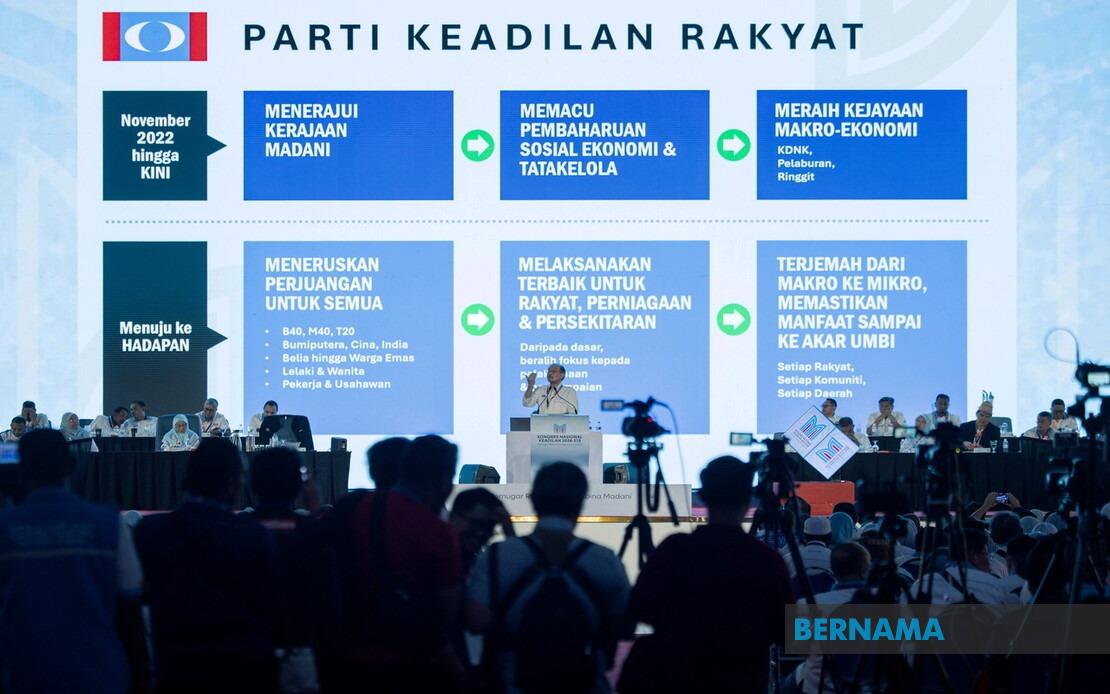
Prime Minister Datuk Seri Anwar Ibrahim has formally delegated the responsibilities of PKR deputy president to Home Minister Datuk Seri Saifuddin Nasution Ismail, filling the gap created by Nurul Izzah Anwar's temporary absence from party duties. The announcement came during Anwar's closing address at the PKR National Congress 2026 held at the Melaka International Trade Centre in Ayer Keroh on August 16, signalling a strategic reshuffling of the party's senior leadership as it navigates political challenges.
The appointment underscores Anwar's confidence in Saifuddin Nasution's capability to manage the party machinery during a crucial period. Despite acknowledging that the interim role represents additional responsibility for the Home Minister, Anwar characterised the decision as a natural choice given their long-standing relationship and Saifuddin Nasution's thorough understanding of the party president's working style. The move reflects the pragmatic approach required to maintain continuity within the party's upper echelons while accommodating Nurul Izzah's temporary withdrawal from active party responsibilities, a decision that the Central Leadership Council had endorsed earlier in August.
This leadership restructuring forms part of a broader organisational recalibration announced at the congress. Alongside Saifuddin Nasution's appointment, another vice-president, Datuk Seri Amirudin Shari, has been tasked with directing the party's electoral operations, a portfolio of considerable weight given the upcoming political calendar and the need to recover from recent electoral setbacks. Separately, Tengku Datuk Seri Zafrul Tengku Abdul Aziz has assumed the role of coordinator within the Prime Minister's Office, positioning him to facilitate better coordination between the party's leadership and the federal administration.
Anwar's remarks to the party membership carried a significant appeal for unified support behind Saifuddin Nasution. The prime minister explicitly called upon the entire PKR machinery to extend their backing, cooperation and loyalty to the interim deputy president, a rhetorical emphasis that suggests awareness of potential internal divisions that must be bridged during this transition. Such explicit calls for solidarity are often deployed when party leadership wishes to preempt any questions about the legitimacy or continuity of delegated authority.
The announcement regarding Datuk Seri Aminuddin Harun, the former Negeri Sembilan Menteri Besar, reflects Anwar's attempt to consolidate the party's cadre development agenda. Rather than removing Aminuddin from a position of influence, Anwar redirected his focus toward training and mentoring new party members, a portfolio that positions experience as an asset rather than a liability. This recalibration came in response to mounting pressure from six Negeri Sembilan PKR division chiefs, who had called for a review of Aminuddin's position as chairman of the state party leadership council.
The context for these leadership moves is the party's poor performance in the Negeri Sembilan state election held on August 1. Rather than attributing the loss to individual shortcomings, Anwar framed the result as a collective responsibility requiring systemic corrections rather than personnel changes. This approach protects Aminuddin from becoming a scapegoat while signalling to the party that setbacks must be addressed through improved organisation and training rather than blame-shifting among senior figures. For Malaysian readers, this reflects how the party seeks to balance internal demands for accountability with the practical need to retain experienced operatives.
Anwar's personal commitment to address the Negeri Sembilan concerns directly—promising to respond himself to the division chiefs' grievances—indicates the significance he attaches to party stability in the state. Negeri Sembilan's electoral importance within PKR's portfolio cannot be overstated, as the state has historically served as a testing ground for the party's grassroots strength. The combined effect of Aminuddin's reorientation toward cadre development and Anwar's personal engagement suggests a recognition that the state chapter requires strategic investment rather than superficial restructuring.
From a broader political perspective, these arrangements reveal how Malaysian parties navigate the tension between hierarchical decision-making and internal democracy. By involving the Central Leadership Council in approving Nurul Izzah's leave and related appointments, PKR has maintained the appearance of collective governance while concentrating executive authority in the prime minister's hands. For observers of Malaysian politics, this pattern illustrates how party constitutions and structures often serve to legitimise decisions already taken by dominant figures rather than meaningfully constraining their power.
The timing of these announcements at the National Congress, PKR's premier annual gathering, serves a strategic function in party communication. Rather than handling leadership transitions through quiet administrative channels, the party has chosen a public platform to reframe them as deliberate strategic moves designed to strengthen organisational capacity. This approach aims to prevent external interpretations of the changes as signs of instability or internal discord, a concern that becomes pressing whenever senior figures step back from active roles.
For regional observers, PKR's internal management holds significance beyond party politics. As Malaysia's ruling coalition partner and a party with substantial parliamentary representation, how PKR handles leadership transitions affects government stability and policy implementation. The appointment of Saifuddin Nasution to interim deputy president duties, combined with his existing role as Home Minister, concentrates considerable power in a single individual, raising questions about governance separation within the government structure itself.
The broader pattern emerging from these congress announcements suggests PKR is preparing for a period of intensified political activity, whether elections or heightened parliamentary scrutiny. The enhanced focus on cadre training through Aminuddin, combined with Amirudin's elevation to election director, indicates the party is investing in organisational readiness. For Malaysian political analysts, these moves reflect a party leadership that, despite recent electoral disappointments, remains committed to rebuilding its grassroots capacity and competitive positioning.
Moving forward, the success of Saifuddin Nasution's interim tenure as deputy president will likely depend on his ability to maintain party cohesion while managing his demanding portfolio as Home Minister. The balancing act between partisan party duties and non-partisan government responsibility represents a persistent challenge in Malaysian politics, where senior figures often navigate multiple constituencies with competing demands. How smoothly this transition proceeds may well determine whether it remains temporary or becomes a permanent reconfiguration of PKR's leadership landscape.

