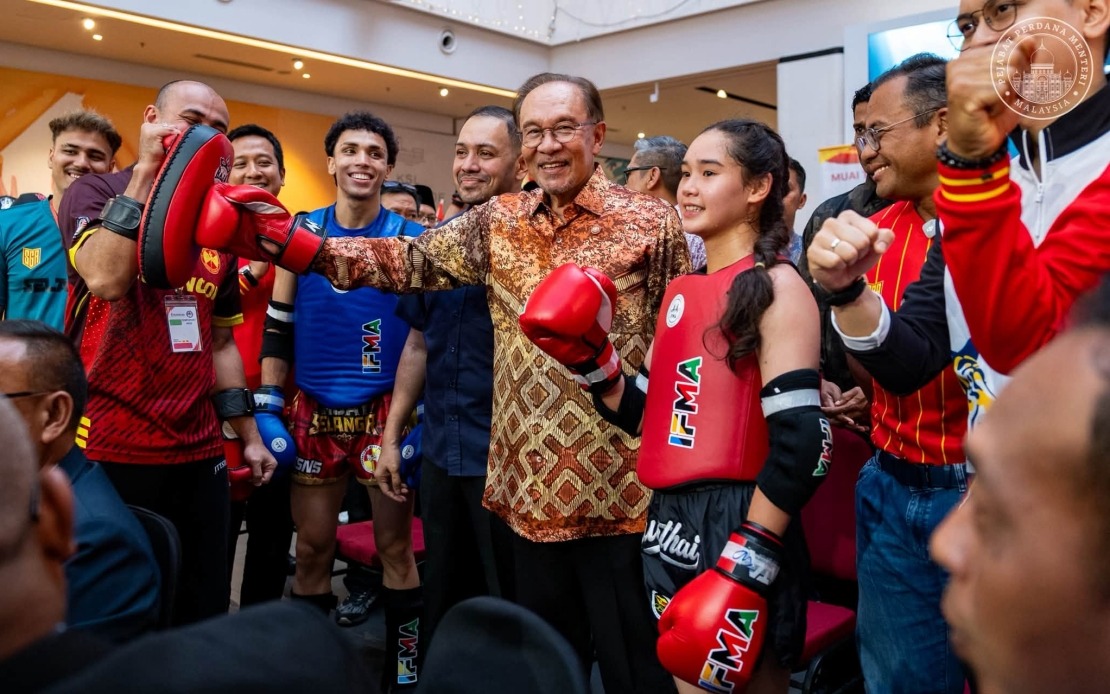
Prime Minister Datuk Seri Anwar Ibrahim has expressed confidence that the emerging generation of athletes currently competing at the 2026 Selangor Malaysia Games will eventually emerge as representatives of Malaysia on the international sporting arena. Speaking through social media, Anwar reflected on his recent engagement with participants, highlighting the qualities he observed that suggest promising futures for these young sportspeople.
Anwar's remarks came following his attendance at the Muay Thai competitions, where he had direct interaction with competitors. During these encounters, the Prime Minister was particularly struck by what he described as the strong spirit, rigorous discipline, and courage evident among the young athletes. Such personal observations from Malaysia's political leadership underscore the significance placed on grassroots sporting development and youth talent nurturing within the country's sporting ecosystem.
The hosting of SUKMA in Selangor represents a momentous occasion for the state, marking only the second time it has been selected as the venue for this prestigious biennial competition in nearly three decades. The previous hosting by Selangor occurred 28 years prior, making the 2026 Games a particularly significant milestone for the state's sports infrastructure and community pride. This extended gap between hosting opportunities highlights the rotating nature of the event and the considerable logistical demands involved in staging such a substantial sporting gathering.
The scale of the current competition reflects the breadth of Malaysia's sporting programme and competitive talent pool. With more than 5,000 young athletes from every corner of the country converging on Selangor, the Games demonstrate the depth of participation across the nation's regions. These participants represent their respective states across 37 different sporting disciplines, competing for a combined total of 468 gold medals across the competition's duration. The diversity of sports included underscores the Games' role as a comprehensive platform for developing talent across multiple athletic domains rather than concentrating solely on traditional Olympic sports.
The timeframe for the 2026 Games, scheduled to conclude on August 24, provides a concentrated but intensive period during which Malaysian youth showcase their abilities and push their athletic boundaries. This condensed schedule creates an environment of heightened competition and exposure for young talent, offering a crucible in which future national sporting heroes may be forged. The intensity and breadth of competition at SUKMA serves as an effective proving ground for identifying athletes with the potential to graduate to senior national teams and represent Malaysia at international competitions.
Anwar's public endorsement of these young athletes carries significance beyond mere ceremonial gesture. The Prime Minister's attendance and documented engagement with competitors signal governmental recognition of the importance of sporting development as a national priority. Such political visibility at grassroots sporting events helps legitimise investment in youth athletics and sends a message to both current and future generations that pursuing excellence in sports is valued at the highest levels of Malaysian leadership and governance.
The emphasis on SUKMA's role in talent identification and development aligns with broader Asian sporting trends, where such games serve as essential stepping stones in athletic careers. The experience, exposure, and competitive crucible provided by SUKMA often prove instrumental in preparing young athletes for the rigorous demands of international competition. Athletes who excel at this level frequently progress to represent Malaysia at regional competitions such as the Southeast Asian Games and ultimately at international tournaments including the Asian Games and Olympic Games.
For Selangor specifically, hosting the Games represents both an opportunity and a responsibility. The state must provide competitive facilities, accommodation, and logistical support to accommodate thousands of young athletes and supporting personnel. Beyond the immediate event, the infrastructure investments required for hosting SUKMA often leave lasting legacies in terms of sporting facilities available for community use and development programmes. This creates a multiplier effect where the Games' benefits extend well beyond the competition period itself.
Anwar's specific mention of Muay Thai reflects growing recognition of combat sports and non-traditional athletic disciplines within Malaysia's sporting repertoire. The inclusion of such sports within SUKMA demonstrates the Games' evolution to encompass disciplines that appeal to contemporary youth and reflect global sporting trends. This expansion helps engage younger generations who might not traditionally be drawn to mainstream Olympic sports, thereby broadening the talent pipeline from which Malaysia can identify future sporting ambassadors.
Looking forward, the trajectory from SUKMA success to international representation remains a critical pathway for developing Malaysian sporting talent. Many athletes who have previously excelled at the Games have indeed progressed to senior national teams and competed internationally, validating Anwar's optimism about these competitors' futures. However, translating promise shown at SUKMA into sustained international success requires sustained investment in coaching, facilities, and support systems beyond the Games themselves. The challenge for Malaysian sporting authorities lies in maintaining momentum and providing pathways that enable talented SUKMA competitors to continue their development toward the international stage.
The Prime Minister's engagement with SUKMA athletes also reflects broader efforts to foster national pride and sporting culture within Malaysia. By highlighting these young competitors' qualities and public expressing belief in their potential, Anwar contributes to a narrative that positions sporting excellence as achievable and valuable. This cultural dimension of sporting development, while often overlooked in discussions focused purely on medals and rankings, proves essential for sustaining long-term interest and participation in competitive athletics across the Malaysian population.

