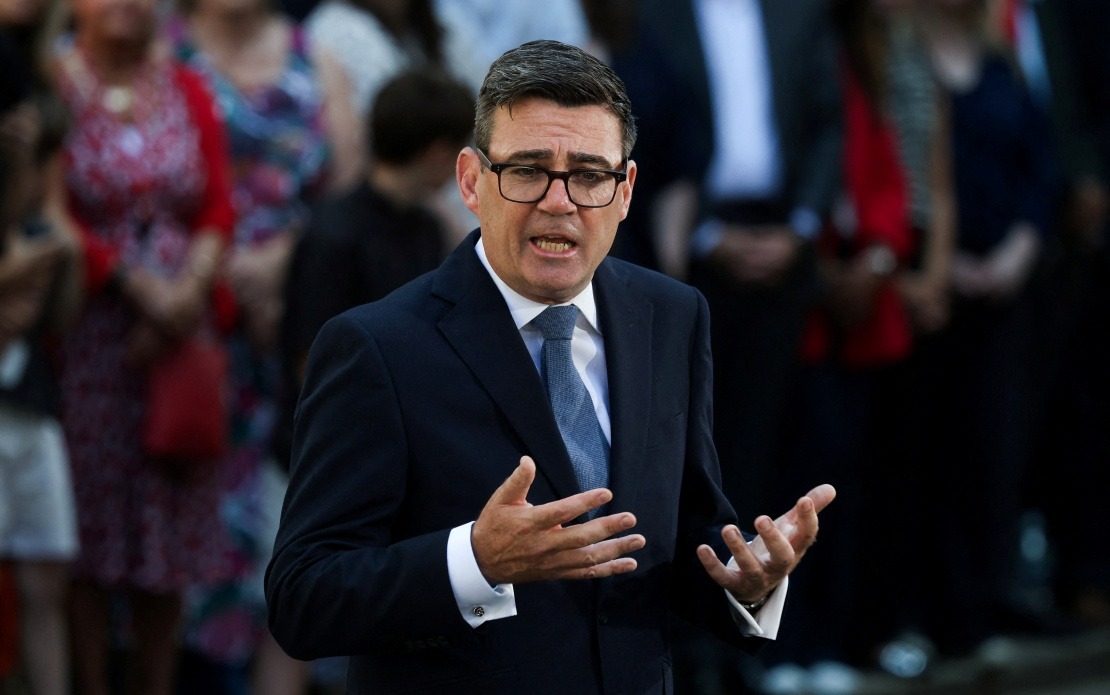
Malaysia's Prime Minister Datuk Seri Anwar Ibrahim has publicly welcomed Andy Burnham's elevation to the office of United Kingdom Prime Minister, framing the leadership transition as an opportunity to reinvigorate bilateral engagement between the two Commonwealth nations. In remarks posted on Facebook, Anwar articulated a vision for deepening Malaysia-UK cooperation across multiple strategic sectors, setting an optimistic tone for the relationship as both countries navigate shifting geopolitical circumstances.
Anwar's statement carries particular significance given the timing of Burnham's appointment, which came after a rapid succession of UK leadership changes in recent years. Burnham assumed control of the Labour Party on Friday before receiving his formal appointment as Britain's seventh prime minister in a decade on Monday, following Keir Starmer's official resignation at Buckingham Palace. This institutional instability in Westminster presents Malaysia with both a testing moment and a fresh opportunity to establish a productive working relationship with new UK leadership.
The Malaysian premier identified several concrete areas for bilateral advancement, reflecting Kuala Lumpur's priorities in the contemporary global economy. Among these, finalising a Digital Trade Agreement emerges as a priority, suggesting Malaysia's determination to integrate digital commerce frameworks within its broader trade architecture. Beyond commerce, Anwar emphasized the potential for expanded collaboration in artificial intelligence and digitalisation—sectors where both nations recognise competitive advantage and mutual benefit. These technology-focused initiatives align with Malaysia's National Digital Economy Blueprint and position the country as a serious participant in the global knowledge economy rather than merely a supplier of commodities.
Clean energy cooperation features prominently in Anwar's agenda, reflecting international momentum toward decarbonisation and Malaysia's own commitment to renewable energy targets. The inclusion of defence collaboration underscores the enduring strategic partnership between the two countries, particularly relevant given regional security dynamics in Southeast Asia and Britain's renewed interest in Indo-Pacific affairs. These pillars collectively suggest a partnership calibrated beyond ceremonial ties, addressing substantive economic and security concerns.
Notably, Anwar seized the opportunity to commend Burnham's public acknowledgement regarding Britain's initial inadequacy in responding to the Gaza crisis. The Malaysian premier described Burnham's candid admission and renewed pressure on the Israeli regime as demonstrating "moral clarity" at a moment when, in Anwar's assessment, much of the Western world has fallen short of ethical standards. This comment reflects Malaysia's consistent positioning as an advocate for Palestinian rights and its critique of Western double standards on human rights and international law—a theme that resonates powerfully within Malaysian domestic politics and across the broader Muslim-majority world.
Anwar's invocation of moral authority on the Gaza question signals that Malaysia intends to engage with Burnham's government not merely as a trading partner but as a nation concerned with global justice and ethical governance. This dimension of the statement may prove consequential in shaping the character of Malaysia-UK engagement, as it establishes expectations that bilateral relations should encompass broader questions of international conduct and principle.
The reference to next year's 70th anniversary of Malaysia-UK diplomatic relations frames the present moment as historically resonant. This milestone provides both nations with a natural occasion to recommit to their partnership and craft a forward-looking agenda. For Malaysia, emphasizing this lengthy relationship history reinforces its standing as a mature, reliable partner in international affairs—a positioning valuable as Malaysia navigates competition between major powers in the region and seeks to maintain strategic autonomy.
Anwar also extended appreciative remarks toward outgoing Prime Minister Keir Starmer, acknowledging his contributions to strengthening Malaysia-UK ties throughout his tenure. This diplomatic courtesy reflects protocol norms while also signalling Malaysia's satisfaction with Starmer's stewardship of the relationship. The contrast between Anwar's explicit praise for Burnham's stance on Gaza and his more measured acknowledgement of Starmer suggests subtle recalibration in Malaysia's diplomatic priorities or perhaps genuine differences in how the two Labour leaders have approached contentious international issues.
The congratulatory message arrives as the UK navigates internal adjustments following significant electoral changes earlier this year. Burnham's appointment represents continuity in Labour governance but also potential shifts in emphasis and approach. Malaysia's swift and substantive response indicates Kuala Lumpur's readiness to engage productively with Britain's new administration while establishing clear benchmarks for the relationship's future trajectory. The emphasis on digital trade, technology innovation, and clean energy reflects Malaysia's own developmental aspirations and suggests a partnership oriented toward future-building rather than nostalgia for colonial-era relationships.
For Malaysian observers and policymakers, Anwar's statement underscores the government's commitment to active foreign policy engagement across traditional Commonwealth networks while maintaining principled positions on international issues. The message balances ceremonial acknowledgement of leadership transitions with substantive agenda-setting, demonstrating how Malaysia leverages diplomatic channels to advance both economic interests and values-based foreign policy objectives.

