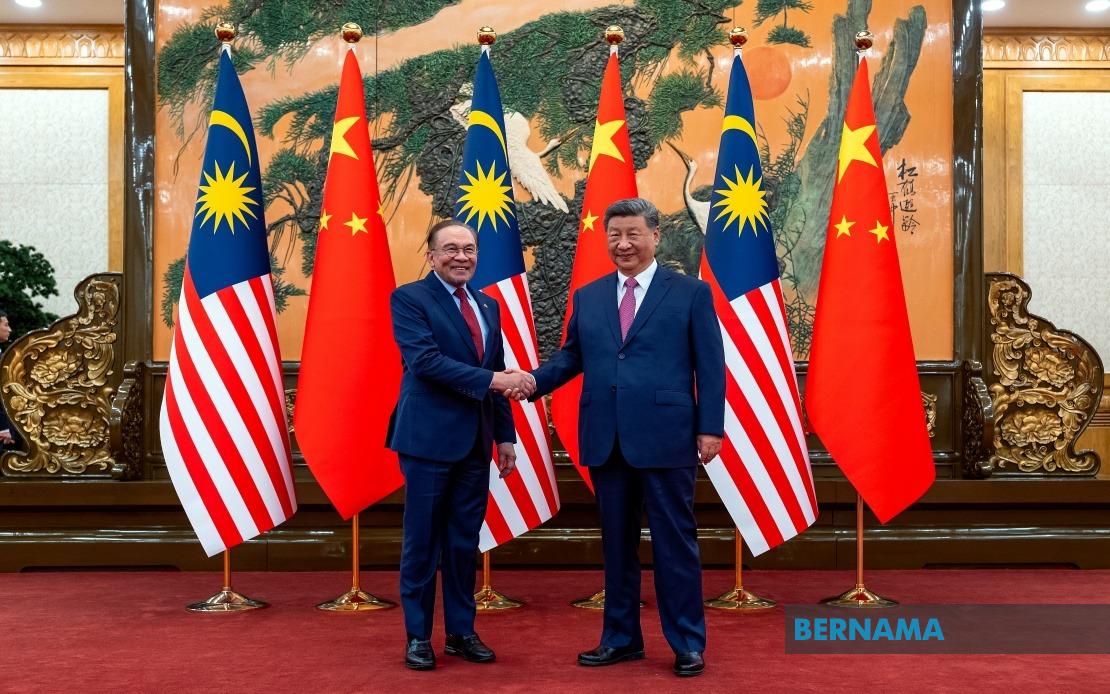
Prime Minister Datuk Seri Anwar Ibrahim has extended official congratulations to the Chinese government on the 105th anniversary of the Chinese Communist Party, underscoring the continued importance Malaysia places on its relationship with Beijing. Through a letter addressed to Chinese President Xi Jinping, Anwar conveyed felicitations from both the Malaysian government and its people, highlighting the significance of this occasion in the context of bilateral ties.
In announcing the gesture via social media, Anwar articulated appreciation for the Communist Party's trajectory over more than a century, noting how its leadership has catalysed China's transformation and development. The Prime Minister specifically acknowledged the party's role in stewarding the nation's progress by drawing upon its deep civilisational heritage, historical continuity, and values that have accumulated across generations. This framing reflects a diplomatic approach that recognises China's internal political narrative while positioning Malaysia as a respectful partner.
A cornerstone of Anwar's message dwelt upon Malaysia's own pivotal historical decision taken on May 31, 1974, when the country became the first non-socialist nation in Southeast Asia to formally recognise the People's Republic of China. This milestone represented a dramatic geopolitical realignment during the Cold War era, when most Western-aligned nations and their regional partners maintained distance from communist Beijing. Malaysia's decision, executed under the administration of the time, demanded considerable political courage and strategic vision given the regional climate and ideological divisions that characterised the 1970s.
According to Anwar, that landmark recognition has proven foundational to the relationship enjoyed today, serving as the bedrock upon which decades of deepening cooperation have been constructed. The intervening five decades have witnessed the transformation of Malaysia-China relations from nascent diplomatic ties into a comprehensive partnership spanning trade, investment, defence, cultural exchange, and people-to-people connections. The bilateral relationship has weathered various regional tensions and global shifts, maintaining its resilience through sustained high-level engagement and mutually beneficial cooperation.
The Prime Minister reiterated Malaysia's commitment to advancing strategic cooperation with China on terms grounded in mutual respect, reciprocal trust, and shared economic and security benefits. This formulation—emphasising equality and reciprocity rather than deference—reflects Malaysia's consistent diplomatic positioning as a medium power seeking to maximise advantages from great power partnerships without compromising autonomy. The language employed suggests Malaysia views China not as a hegemon imposing its will, but as a partner with whom strategic interests can be aligned.
Anwar's emphasis on regional peace, stability, and prosperity as objectives underpinning the relationship carries particular resonance in Southeast Asian context. Malaysia, as a member of the Association of Southeast Asian Nations, maintains its own strategic doctrine centring upon regional centrality and opposition to hegemonic dominance by any single power. By framing Malaysia-China cooperation as contributing to broader regional wellbeing rather than advancing narrow bilateral interests at others' expense, Anwar signals adherence to ASEAN principles whilst deepening ties with its largest neighbour.
The timing of Anwar's gesture reflects standard diplomatic practice whereby leaders exchange messages marking significant anniversaries and national commemorations of major allies and partners. Such ceremonial exchanges, whilst seemingly ritualistic, serve important functions in maintaining warm relations and demonstrating continuity in foreign policy across administrations. For Malaysia, demonstrating consistent engagement with Beijing provides reassurance to a key economic partner and investor whilst also maintaining Malaysia's position as a bridge between China and the Western-aligned developed nations.
Malaysia's relationship with China extends well beyond diplomatic courtesies. China has emerged as Malaysia's largest trading partner in recent years, with bilateral trade volumes exceeding RM200 billion annually. Chinese investment in Malaysia spans manufacturing, infrastructure development, financial services, and technology sectors, making Beijing's economic influence in Malaysian development strategy substantial. The Belt and Road Initiative has particular relevance, with Malaysian projects including the East Coast Rail Link and various port developments benefiting from Chinese capital and expertise.
The broader context of Anwar's message must also account for regional geopolitical dynamics, particularly the complex positioning of Southeast Asian nations amid great power competition between China and the United States. Malaysia has consistently sought to maintain balanced relationships with both powers whilst refusing to adopt exclusively aligned stances. This non-aligned tradition, stretching back to the founding principles of the Malaysian state, continues informing contemporary foreign policy even as China's regional weight grows substantially.
Anwar's cultivation of the Malaysia-China relationship also carries domestic political implications. The Malaysian Chinese community, representing a significant demographic constituency, maintains ancestral connections to China whilst being thoroughly integrated into Malaysian society. Demonstrating government commitment to constructive relations with Beijing can resonate with this community whilst also projecting an image of pragmatic, non-ideological governance that prioritises economic cooperation and regional stability over Cold War–era divisions.
Looking forward, Malaysia's strategic relationship with China is likely to deepen across multiple dimensions. Infrastructure connectivity projects, technological cooperation, and financial integration will probably expand as both nations seek to leverage complementary strengths. However, Malaysia will continue calibrating engagement to preserve its strategic autonomy and ASEAN centrality, ensuring that deepening China ties do not translate into strategic subordination or exclusive alignment that might alienate other important partners.

