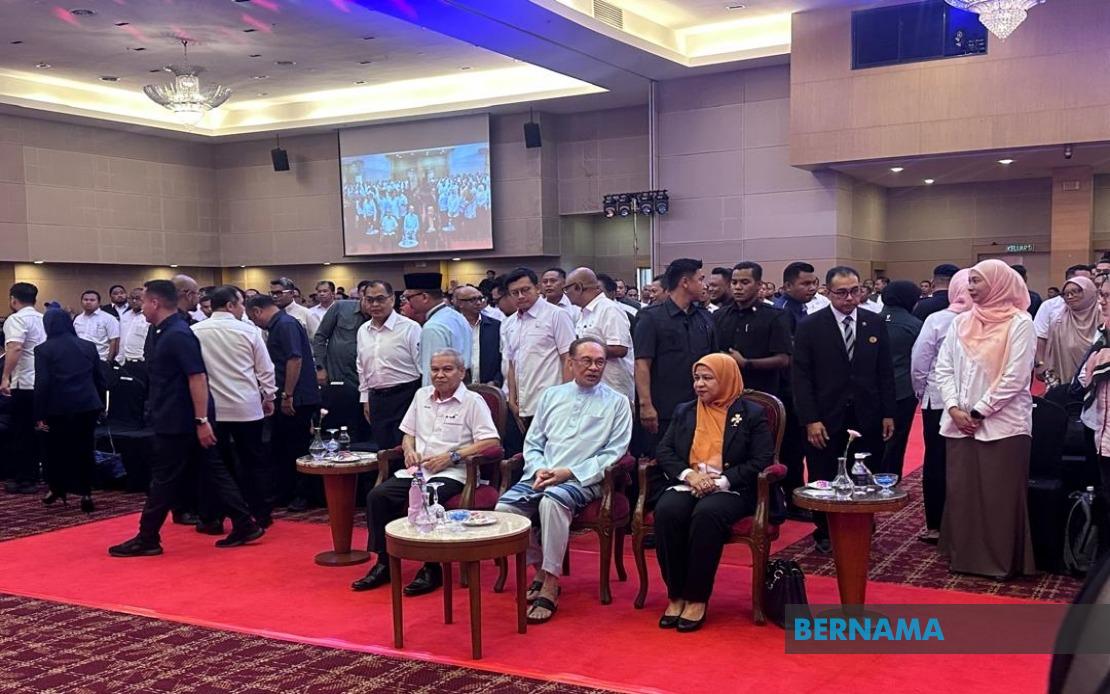
Prime Minister Datuk Seri Anwar Ibrahim has signalled that no official pronouncements regarding the Federal Land Development Authority will be forthcoming until investigators wrap up their work, indicating a measured approach to what promises to be a significant governance review. Speaking at a Friendly Session with FELDA's senior management team at Tenera Hotel in Bangi, Anwar stressed the importance of allowing the Special Task Force dedicated to scrutinising the organisation to complete its mandate without external pressure or premature disclosure.
The task force, which has already commenced its investigative work, is expected to present its full findings within the coming months, according to Anwar. The Prime Minister characterised this timeline as reasonable and necessary, given the complexity of evaluating such a large statutory body. His deliberate stance reflects an understanding that a comprehensive examination of FELDA's affairs demands sufficient time to uncover the facts thoroughly, rather than rushing toward conclusions that might later prove incomplete or inaccurate.
Anwar's comments were notably measured regarding the scope of the investigation. While acknowledging that the task force would naturally identify longstanding problems within the organisation's management structure, he pivoted the conversation toward forward-looking solutions rather than historical accountability alone. This rhetorical shift suggests the government's priority extends beyond assigning blame for past missteps to establishing robust frameworks that ensure FELDA operates more effectively going forward. The emphasis on "current management and way forward" indicates the administration sees this investigation as an opportunity to reset expectations and practices rather than simply catalogue failures.
The presence of FELDA chairman Tan Sri Ahmad Badri Mohd Zahir and director-general Datuk Dr Suzana Idayu Wati Osman at the session underscores the government's commitment to maintaining dialogue with the authority's leadership throughout this process. Rather than conducting the investigation in isolation or with adversarial undertones, Anwar's approach suggests collaborative problem-solving between political leadership and institutional management. This tone may help preserve institutional morale and ensure ongoing cooperation from FELDA personnel during what could otherwise be perceived as a damaging external audit.
Anwar drew an explicit parallel to the Royal Commission of Inquiry report on Tabung Haji, indicating that the FELDA findings will eventually be made public in their entirety. This transparency commitment is significant, as it signals the government's intention to submit to public scrutiny rather than selectively releasing information. By positioning the future FELDA report alongside the TH inquiry outcomes, Anwar frames governance accountability as a consistent principle applying across multiple institutions requiring examination. This consistency helps establish a pattern of openness that should theoretically enhance public confidence in the investigative process itself.
The delay in releasing any formal announcement also reflects broader Malaysian political and administrative practice around major institutional reviews. Rushing to publicise preliminary findings or partial conclusions risks oversimplification of complex governance issues and can invite unnecessary politicisation. By maintaining composure and resisting speculation, Anwar attempts to protect the investigation's credibility and ensure that whatever recommendations eventually emerge rest on solid evidentiary foundations rather than political expediency or media pressure.
FELDA itself remains a sensitive institution within Malaysia's political economy. As a body responsible for rural development and settler welfare across extensive land holdings, its management directly affects hundreds of thousands of Malaysians and their livelihoods. Any governance failures or mismanagement within FELDA carry broader ramifications for rural populations and land development policy across the country. This context explains why Anwar has chosen not to speculate publicly about what the investigation might uncover or what remedial measures might ultimately be implemented.
The timing of this Bangi session appears deliberately chosen to demonstrate engagement with FELDA's operational hierarchy. By meeting directly with top managers rather than issuing statements through intermediaries, Anwar conveys respect for the institution while simultaneously signalling government oversight. This balancing act acknowledges that FELDA's workforce includes dedicated professionals committed to the organisation's mission, even as systemic problems may require correction at higher levels or in broader policy frameworks.
For observers tracking institutional reform across Malaysian government bodies, Anwar's methodical approach to the FELDA investigation provides insight into his administration's philosophy regarding accountability. Rather than dramatic midnight raids or theatrical public disclosures designed to generate headlines, the government appears committed to systematic review followed by comprehensive public communication. This approach carries both advantages and drawbacks—it builds credibility through thoroughness but may test public patience if the investigation timeline extends considerably.
The decision to wait for complete findings before public announcement also protects the Prime Minister from potential criticism should preliminary reports prove incomplete or misleading. By refusing to comment substantively until the task force presents its final conclusions, Anwar avoids the trap of having to revise or clarify earlier statements. This stance prioritises the integrity of eventual recommendations over the short-term political benefits of rapid or incremental disclosure.
Looking ahead, Malaysian stakeholders—including FELDA settlers, rural communities depending on the organisation's services, opposition critics, and members of the general public concerned with governance standards—will be watching for both the investigation's conclusions and the government's response. The credibility of this entire exercise ultimately rests on whether the findings prove substantive and whether the government demonstrates genuine commitment to implementing meaningful reforms based on the task force's recommendations.

