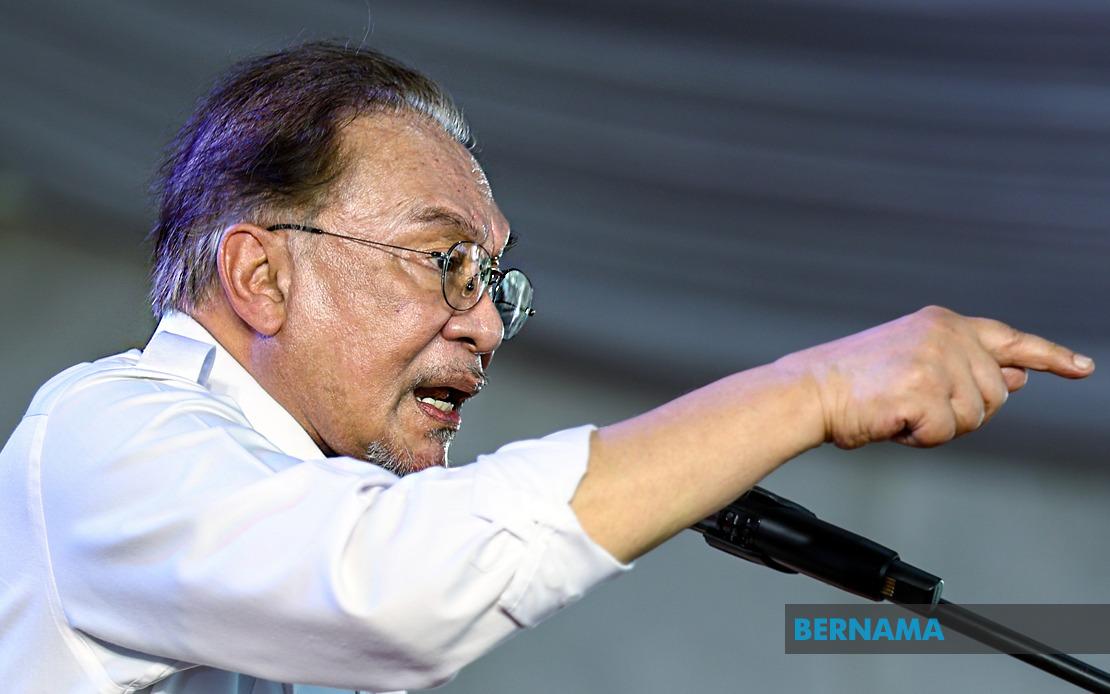
Prime Minister Datuk Seri Anwar Ibrahim is pressing ahead with an intensive campaign schedule across Johor's northern region, executing a strategically coordinated push to energise Pakatan Harapan's grassroots machinery ahead of the state election on July 11. His single-day itinerary encompassing eight constituencies—Layang-Layang, Senggarang, Semerah, Bukit Naning, Pemanis, Gambir, Serom, and Palong Timur, which collectively fall under the Buloh Kasap state assembly division—underscores PH's determination to consolidate voter support in a region traditionally significant for political outcomes in Johor.
The scope of Anwar's schedule reflects the coalition's recognition that momentum in the second week of campaigning is critical to converting undecided voters and reinforcing support among core constituencies. By scheduling engagements from early morning until late evening, the campaign seeks to maximise visibility and direct contact with residents across different demographic segments. The varied nature of these events—ranging from informal breakfast sessions to community feasts and volunteer launch ceremonies—demonstrates a multi-layered approach designed to build personal connections with voters at the grassroots level rather than relying solely on formal rallies.
Anwar's day commences with a breakfast gathering styled as 'PMX Santai Sarapan Bersama Masyarakat' at Warung Pak Din in Kampung Sahri, establishing an accessible, informal setting that invites casual dialogue with residents. This type of engagement, scheduled for 8.55 am, aims to present leadership as approachable and genuinely interested in community concerns rather than distant or aloof. The subsequent meet-and-greet in Senggarang at 10 am continues this pattern of direct voter interaction, allowing the Prime Minister to address specific local issues and listen to constituent grievances.
The afternoon and evening phases of the campaign incorporate community feasts and volunteer mobilisation events, which serve dual purposes within PH's electoral strategy. The 'Kenduri Rakyat' at Vila Kemboja in Semerah and the volunteer launch in Muar simultaneously feed supporters while creating organic social media content and word-of-mouth publicity. These gatherings transform campaign activities into community events, fostering a sense of collective participation that may encourage attendees to become informal campaign ambassadors within their own networks.
This intensive effort represents the second consecutive day of similar campaigning, following Anwar's seven-programme tour the previous day. The sustained level of activity signals that PH views these northern seats as contestable and worthy of senior leadership focus. Such personal involvement by the Prime Minister carries symbolic weight, suggesting that the coalition considers these constituencies strategically important either for securing marginal gains or defending seats perceived as vulnerable to opposition challenges.
Packatan Harapan is contesting all 56 state seats in this election, fielding a coalition slate distributed among its three component parties: PKR is presenting 20 candidates, Amanah 19, and DAP 17. This comprehensive candidate deployment indicates PH's ambition to contest every available seat rather than ceding ground to competitors. The allocation among coalition partners reflects internal power-sharing agreements and suggests efforts to balance representation while maintaining a united front.
The broader electoral context shows 172 candidates competing across all seats, indicating a multi-cornered contest rather than a simple two-way race. Early voting is scheduled for July 7, just four days after Anwar's campaign day, compressing the remaining campaign window and amplifying the importance of momentum-building activities in the final week. Voters registered for advance polling will cast ballots before the general election on July 11, potentially determining a meaningful portion of the overall outcome.
For Malaysian political observers and regional analysts, Anwar's hands-on campaign involvement reflects the importance PH leadership attaches to Johor as a significant electoral prize. The state has consistently influenced the broader Malaysian political narrative, and its outcome could shape the trajectory of the Anwar-led government's mandate and policy flexibility. A strong PH performance in Johor would consolidate his leadership position and potentially provide political capital for pursuing economic and reform agendas at the federal level.
The campaign's emphasis on direct engagement through breakfasts, feasts, and volunteer events contrasts with purely broadcast-oriented strategies, suggesting PH believes that personal connection and community-level organising remain decisive factors in Malaysian electoral politics. This granular approach, replicated across multiple constituencies simultaneously, requires substantial organisational capacity and reflects the coalition's investment in ground-level infrastructure—a critical advantage in state-level campaigns where local factors and personal networks often determine electoral outcomes more decisively than national narratives.
As voting approaches within a week, the intensity of senior leadership campaigning is likely to increase further across both PH and opposition camps. The Johor election carries implications beyond state politics, potentially signalling the trajectory of federal-level dynamics and the Anwar administration's broader standing among voters. The focus on northern constituencies in particular may reflect polling data or strategic assessments identifying these areas as swing regions where targeted campaigning and leadership visibility could shift electoral calculations.

