%22%2F%3E%3C%2Fpattern%3E%3C%2Fdefs%3E%3Crect%20width%3D%22100%25%22%20height%3D%22100%25%22%20fill%3D%22url(%23ph356w2g)%22%2F%3E%3Crect%20width%3D%22100%25%22%20height%3D%22100%25%22%20fill%3D%22url(%23ph356w2p)%22%2F%3E%3Ctext%20x%3D%2250%25%22%20y%3D%2250%25%22%20text-anchor%3D%22middle%22%20dominant-baseline%3D%22central%22%20fill%3D%22rgba(255%2C255%2C255%2C0.95)%22%20font-family%3D%22Georgia%2C%20'Times%20New%20Roman'%2C%20serif%22%20font-weight%3D%22700%22%20font-size%3D%22272%22%20letter-spacing%3D%22-0.02em%22%3EAnwar%3C%2Ftext%3E%3C%2Fsvg%3E)
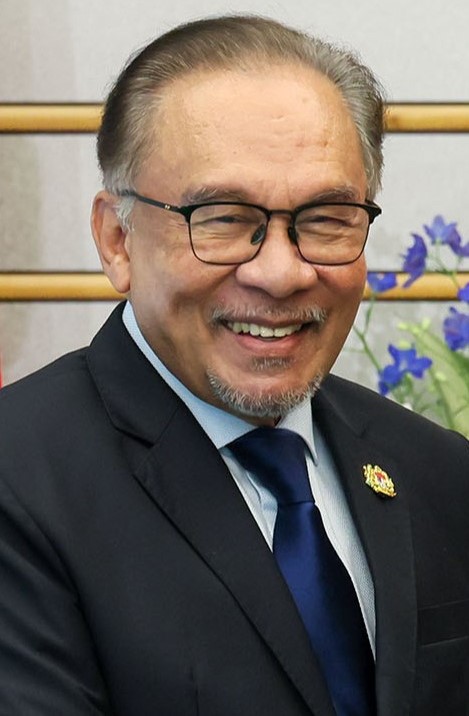
Prime Minister Anwar Ibrahim presided over Pakatan Harapan's candidate announcement ceremony for the 16th Johor State Election on June 22, 2026, at Padang Bukit Gambir Extreme Park, unveiling what the coalition positioned as a slate committed to principled governance and tangible improvements in residents' lives. The evening event, dubbed the "Night of Hope," represented a significant moment for the ruling coalition as it prepared to defend and expand its political foothold in Malaysia's second-largest state, a region where electoral dynamics have historically shifted between competing blocs and where Johor's voting patterns often signal broader trends affecting national politics.
Anwar's messaging at the gathering centred on recalibrating public expectations of what political leadership should deliver. He articulated a vision of politics fundamentally oriented toward solving practical problems—strengthening community infrastructure, creating viable pathways for young Malaysians into meaningful employment and entrepreneurship, bolstering small and medium-sized businesses that form the backbone of Johor's economy, and tangibly raising living standards for ordinary families. This rhetorical positioning sought to distinguish Pakatan Harapan's campaign from transactional or patronage-based political narratives, instead grounding the coalition's appeal in measurable outcomes and systemic reform.
The announcement of candidates across all Johor state seats represented the culmination of internal deliberations within the coalition's component parties—primarily the Democratic Action Party, Amanah, and the People's Justice Party—regarding how best to balance factional interests, demographic representation, and electoral viability. Such candidate selection processes in Malaysian politics frequently generate internal tensions, as different party wings and regional branches advocate for preferred aspirants. The public unveiling of the complete roster signalled that consensus had been reached, though the composition of the slate would likely become subject to scrutiny from both rival coalitions and within Pakatan Harapan's own grassroots, each assessing the candidates' track records and perceived capacity to connect with voters.
Central to the campaign's framing was the Malaysia Madani vision, the government's overarching development philosophy introduced under Anwar's leadership. This concept emphasises prosperity tempered by social consciousness, cultural sensitivity, environmental stewardship, and the strengthening of institutional integrity. By anchoring the Johor campaign explicitly within this broader national narrative, Pakatan Harapan attempted to present state-level electoral competition not as parochial or localistic but as integral to Malaysia's larger democratic and developmental trajectory. For Johor voters, this meant that decisions at the ballot box would carry implications extending beyond state-level policies to the kind of Malaysia being constructed nationally.
The theme of integrity recurred throughout Anwar's remarks, a deliberate emphasis given the context of contemporary Malaysian politics, where corruption and governance failures have episodically eroded public trust. By centring integrity as a campaign pillar, Pakatan Harapan signalled both continuity with anti-corruption rhetoric that helped propel it to power federally in 2018 and a differentiation strategy against opponents who might be vulnerable on such grounds. This messaging carried particular weight in Johor, where voters have witnessed various governance lapses and where anti-corruption sentiment runs deep among urban and middle-class constituencies.
The coalition's emphasis on unity reflected both internal and external strategic calculations. Internally, Pakatan Harapan has navigated tensions between its component parties over resource allocation, candidate selection, and policy direction. Publicly projecting unity—particularly through a high-profile event anchored by the Prime Minister—aimed to project strength and coherence to voters and to forestall defections or third-party challenges from within the coalition's own supporters. Externally, the unity messaging positioned the bloc as a stabilising, centrist force capable of managing Malaysia's competing interests and regional sensitivities, in contrast to narratives of fragmentation or narrow sectarian appeal that opponents might attempt to construct.
Compassion as a campaign value signalled attention to welfare, healthcare, education, and social safety nets—portfolios where state governments exercise significant influence. For Johor, where income inequality coexists with industrial dynamism and where urban-rural disparities shape political consciousness, explicit commitment to compassionate governance suggested responsiveness to residents outside the wealthy enclaves and business districts. This framing also implicitly critiqued governance approaches perceived as indifferent to vulnerable populations, a subtle but meaningful distinction in Malaysian electoral contexts where voters increasingly factor social justice considerations into voting decisions.
The emphasis on progress as a campaign theme tied together economic development, institutional modernisation, and social advancement. For Johor—Malaysia's industrial heartland, home to major petrochemical complexes, manufacturing zones, and increasingly, digital and logistics hubs—progress carried specific resonance. Voters in such economically dynamic settings often prioritise candidates and parties perceived as capable of attracting investment, upgrading skills and education, and ensuring that Johor remains competitive within Malaysia and across Southeast Asia. By anchoring the campaign in progress, Pakatan Harapan positioned itself as the vehicle for Johor's continued economic trajectory and regional significance.
The June 22 event also served a structural function within campaign architecture, providing a rallying point for party machinery, volunteers, and supporters at a critical moment when momentum-building becomes crucial. The presence of the Prime Minister himself underscored the federal government's stakes in the Johor election outcome and signalled that resources and high-level political attention would flow toward the campaign. For candidates selected, the public backing from Anwar Ibrahim provided both legitimacy and a platform to introduce themselves to voters who might not yet be familiar with their backgrounds or policy commitments.
Looking toward the election itself, Pakatan Harapan's campaign positioning in Johor will likely face sustained scrutiny regarding implementation capacity and delivery record. Opposition coalitions will almost certainly contest the integrity and compassion narratives by pointing to governance shortcomings or unmet promises, while arguing that their own candidates and approaches better serve Johor's interests. The state election thus assumes significance beyond Johor's borders—as a test of whether Pakatan Harapan's federal governance model is yielding tangible results that voters can perceive and credit, and whether the coalition retains sufficient political capital and public support to maintain its trajectory through what remains a fluid and competitive electoral environment.
The Malaysia Madani framework, while conceptually coherent, will require translation into specific policies and resource commitments visible to ordinary Johor residents. How effectively candidates selected at the June 22 announcement can bridge the gap between thematic campaign messaging and concrete governance will significantly influence both the state election outcome and broader implications for Pakatan Harapan's political positioning as Malaysia approaches subsequent electoral cycles. The Night of Hope thus represents not a campaign conclusion but a beginning—one where aspirational framing meets the harder work of electoral persuasion and eventual governance delivery.