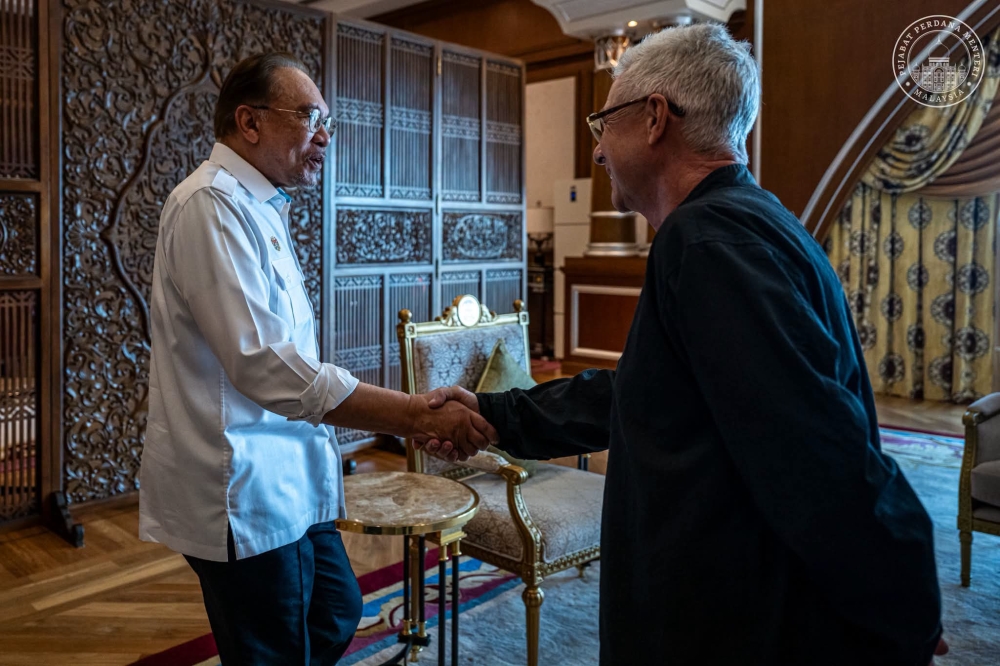
Prime Minister Datuk Seri Anwar Ibrahim met with officials overseeing the Singapore Grand Prix on August 6, a deliberate engagement aimed at exploring Malaysia's pathway back into the Formula 1 racing calendar. The meeting represents a strategic pivot in the government's approach to major sporting events, particularly as Malaysia seeks to reclaim prominence in international motorsport after years of absence from the F1 circuit.
Sepang International Circuit, located on the outskirts of Kuala Lumpur, hosted Formula 1 races for nearly two decades before the country's participation in the championship concluded. The venue became synonymous with Malaysian motorsport excellence and attracted tens of thousands of spectators annually, transforming the event into a significant draw for international tourism and global media attention. However, mounting financial pressures and shifting priorities saw Malaysia gradually fade from F1's racing schedule, with the circuit pivoting toward other motorsport events and activities.
The timing of Anwar's diplomatic engagement with Singapore's Grand Prix leadership carries particular weight within the broader context of Southeast Asian sports diplomacy. Singapore, as a stable host with world-class infrastructure and a proven track record of hosting the F1 night race, has become a regional benchmark for international sporting events. By consulting directly with those managing Singapore's successful F1 operations, Malaysia signals its intention to learn from established models while positioning itself as a serious contender for championship recognition.
Formula 1's expansion strategy across Asia has accelerated considerably over the past five years, with the sport pursuing growth opportunities beyond traditional European strongholds. The region presents attractive demographics, rapidly expanding middle-class audiences, and governments willing to invest substantially in infrastructure and event hosting. For Malaysia, re-entry into this competitive landscape requires not merely refurbishing existing facilities but demonstrating sustained political commitment and viable financial backing—both aspects that Anwar's high-level engagement underscores.
The Sepang circuit itself possesses inherent competitive advantages that remain relevant to contemporary F1 standards. The venue has continuously undergone technological upgrades and safety modifications to align with international requirements. Its geographic position within Southeast Asia's commercial hub provides accessibility for international teams, media personnel, and spectators. Additionally, the circuit's capacity for hosting ancillary events—from fan zones to corporate hospitality—enables revenue diversification beyond the race weekend itself.
From an economic perspective, Malaysia's motorsport industry has historically benefited substantially from F1 participation. The event generated direct revenue through ticket sales, hospitality packages, and associated services, while simultaneously creating indirect benefits through hotel occupancy, restaurant spending, and retail commerce concentrated during race weekends. Tourism authorities estimate that international visitor expenditure during previous F1 seasons contributed measurably to Malaysia's overall tourism receipts, particularly during September-October periods when weather conditions remain favourable.
Anwar's administration has simultaneously pursued broader strategies to position Malaysia as a destination for international events spanning sports, technology, and cultural spheres. This motorsport initiative fits within that wider framework of destination marketing and economic diversification. The government recognises that hosting premium global events enhances national prestige, creates employment opportunities, and generates positive international media coverage—currency that becomes increasingly valuable for developing economies seeking to attract foreign investment and talent.
Singapore's successful night race model offers Malaysia instructive lessons regarding event operations, spectator management, and television production standards. The Singapore Grand Prix has achieved distinction through meticulous planning, seamless execution, and careful curation of the fan experience alongside broadcast requirements. These operational sophistication levels represent the contemporary baseline for F1 hosts; Malaysia's re-entry would necessarily demand equivalent standards across all operational dimensions.
However, Malaysia faces tangible obstacles beyond administrative considerations. The global F1 calendar operates under rigid constraints, with slots for approximately twenty races distributed among existing and aspiring host nations competing intensely for positions. Established venues in Europe maintain entrenched positions, while newer markets in the Middle East and Asia have commanded substantial investments from their respective governments. Malaysia must therefore articulate compelling arguments regarding financial commitment, fan engagement, and television audience potential to justify F1's allocation of a calendar slot.
The conversation between Anwar and Singapore's Grand Prix leadership likely explored practical dimensions including infrastructure capabilities, governance arrangements, financial sustainability models, and timeline feasibility. Such discussions typically involve detailed examination of licensing requirements, safety certifications, broadcast agreements, and the comprehensive regulatory framework that Formula 1 demands from host nations. The proximity of Singapore and Malaysia, both economically developed neighbouring states, creates natural opportunities for regional cooperation and knowledge exchange regarding event management best practices.
Local motorsport enthusiasts and the automotive industry within Malaysia have maintained consistent advocacy for F1's return, arguing that the circuit's closure eliminated a significant platform for showcasing Malaysian technological capability and sporting ambition. Business chambers and tourism operators similarly acknowledge the event's capacity to generate concentrated economic activity and media visibility. Anwar's engagement signals responsiveness to these constituencies while simultaneously demonstrating governmental seriousness about pursuing infrastructure investments that might attract comparable international events.
Looking forward, Malaysia's trajectory toward F1 reinstatement will depend substantially on demonstrating sustainable financial frameworks, securing necessary governmental approvals from F1's administration, and maintaining political continuity regarding the project's strategic importance. The meeting between Anwar and Singapore's Grand Prix chief represents an initial yet significant step in that direction, positioning Malaysia within ongoing regional conversations about motorsport's future within Southeast Asia while beginning to reconstruct the nation's presence within one of the world's most prestigious sporting calendars.

