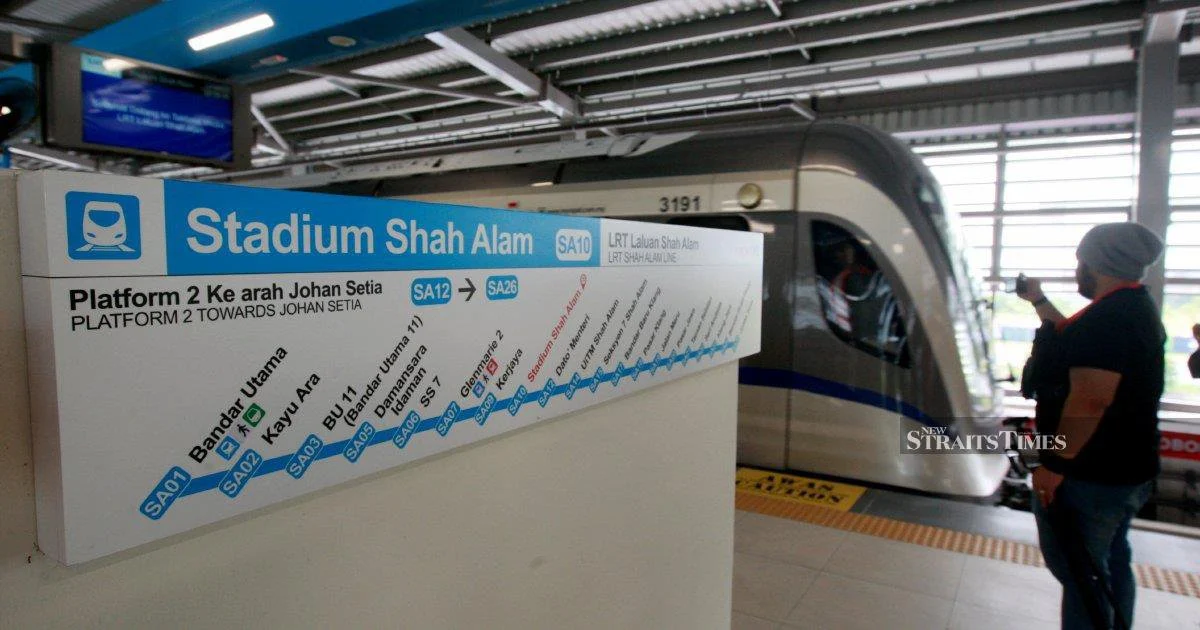
Prime Minister Datuk Seri Anwar Ibrahim is set to officially open the Light Rail Transit Line 3 (LRT3) Shah Alam extension this Sunday, marking a significant milestone in Malaysia's expanding public transportation infrastructure. The ceremonial inauguration will precede the commencement of regular passenger operations scheduled for Monday, allowing the newly constructed rail corridor to enter service and serve commuters in the Selangor region.
The LRT3 Shah Alam line represents a substantial addition to the Klang Valley's rapid transit network, addressing long-standing connectivity gaps between the state capital and surrounding metropolitan areas. The extension has been developed as part of the broader strategic initiative to enhance urban mobility and reduce traffic congestion across the greater Kuala Lumpur region, which continues to experience exponential population growth and increasingly severe transport challenges.
This project reflects the government's commitment to modernising Malaysia's public transportation ecosystem, a priority that has gained considerable political and budgetary emphasis under the current administration. The expansion of the LRT system aligns with the broader urban development agenda aimed at making public transit more accessible and appealing to everyday commuters, potentially shifting transportation patterns away from private vehicle dependency.
The Shah Alam extension holds particular significance for residents across multiple municipalities within the Selangor corridor who have previously faced limited rapid transit options. The line will facilitate improved inter-district connectivity and reduce travel times for thousands of daily commuters navigating between residential areas and commercial hubs in the Klang Valley. For working professionals and students commuting across the region, the new route offers a more efficient alternative to congested road networks.
The timing of the launch during a period of heightened focus on infrastructure development demonstrates the administration's determination to deliver on transportation modernisation commitments. Such flagship infrastructure projects serve both practical transportation functions and symbolic value, showcasing governmental capacity to execute large-scale development initiatives within specified timeframes. The Sunday inauguration by the Prime Minister underscores the political importance attached to this transit expansion.
From a regional perspective, Malaysia's continuing investment in modern rail infrastructure positions it competitively alongside other Southeast Asian economies pursuing similar urban modernisation strategies. Cities across the region are racing to expand metropolitan rail networks to accommodate burgeoning urban populations and mitigate traffic-related economic losses. Malaysia's LRT expansion programme contributes to establishing the country as a regional leader in public transportation infrastructure development.
The economic implications of the LRT3 Shah Alam extension extend beyond immediate commuting convenience. Enhanced public transit connectivity typically catalyses property development, stimulates commercial activity along transit corridors, and potentially increases land values in proximity to stations. The new line may therefore trigger secondary rounds of urban development and economic activity across the affected municipalities, generating employment opportunities and expanding the regional tax base.
Operational success of the Shah Alam extension will depend significantly on passenger adoption rates and integration with existing transport networks. The effectiveness of connecting bus routes, last-mile solutions, and fare structures will determine whether the infrastructure achieves its intended mobility objectives. Early passenger response and operational performance metrics will provide critical indicators of whether the extension meets projections and warrants further expansion of similar services.
For Malaysian urban planners and transport policymakers, the Shah Alam launch offers valuable data regarding construction quality, project delivery timelines, and demand forecasting accuracy that inform future rapid transit initiatives. The experiences gained during this extension's development and initial operational phase will inform strategic decisions regarding additional LRT expansions and complementary transportation investments planned for coming years.
The Prime Minister's participation in the inauguration ceremony reflects the political stature assigned to public infrastructure achievements within Malaysia's governance framework. Such ceremonial launches serve to connect elected leadership directly with tangible development outcomes, reinforcing public perception of governmental competence and responsiveness to constituent transportation needs. The visible association between political leadership and infrastructure delivery strengthens the narrative of progress and developmental momentum.
Looking forward, the successful integration of the Shah Alam line into the broader LRT network will be closely monitored by stakeholders including property developers, transport operators, municipal authorities, and commuting populations across the Klang Valley. The project's performance metrics—passenger volumes, punctuality records, safety outcomes, and revenue generation—will establish benchmarks against which future rapid transit expansions are evaluated and justified to both governmental decision-makers and investing institutions.