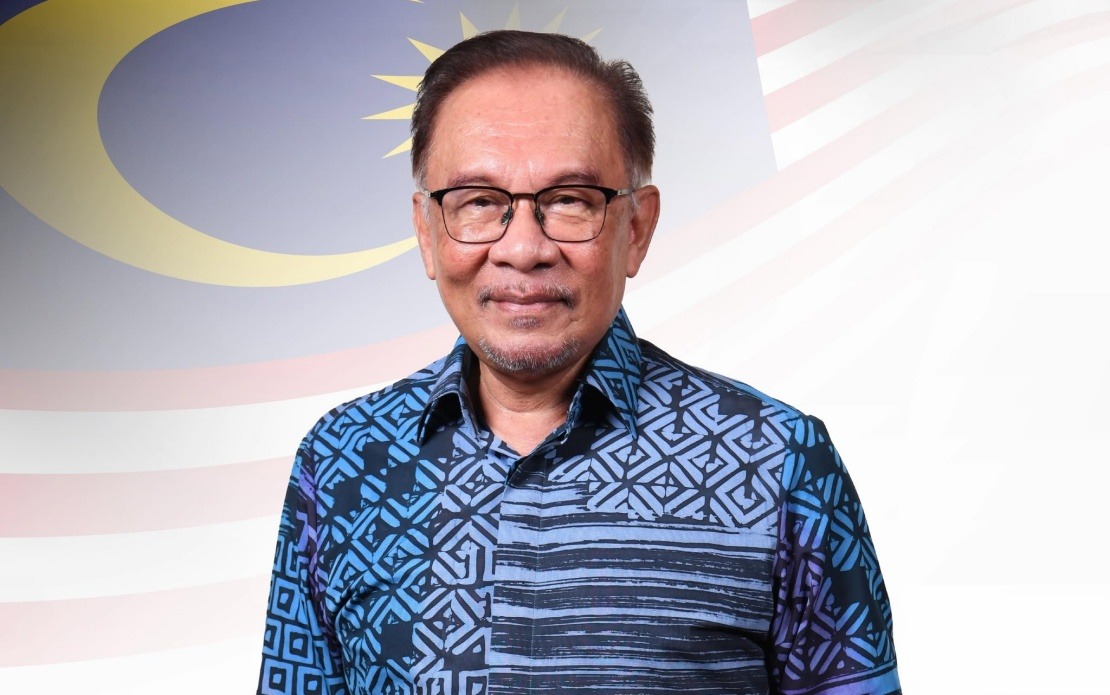
Prime Minister Datuk Seri Anwar Ibrahim launched a comprehensive two-day engagement programme across Penang on Wednesday, signalling continued governmental focus on the state through high-level direct interactions with diverse constituencies ranging from student populations to religious organisations and youth movements. The visit underscores the administration's strategy of maintaining active presence in key regional states whilst simultaneously advancing flagship community programmes under the MADANI framework.
Anwar opened his Penang itinerary by observing Friday prayers at Masjid Sembilang in Butterworth at 1.30 pm, a symbolic gesture acknowledging the Muslim-majority state's religious identity. This spiritual observance set the tone for a schedule deliberately constructed to balance official governmental duties with grassroots community engagement, reflecting broader Cabinet priorities around inclusive policymaking and democratic accessibility.
Immediately following afternoon prayers, the Prime Minister proceeded to the Tuanku Bainun Teacher Education Institute in Bukit Mertajam, where he participated in "Temu Anwar Bersama Pelajar", a student-facing initiative organised under the Ambang Merdeka Sahabat MADANI Programme. This gathering, attended by Education Minister Datuk Seri Fadhlina Sidek, creates structured platforms enabling university cohorts to pose questions and concerns directly to Malaysia's chief executive, facilitating dialogue between generational leadership and emerging professionals who will shape the nation's future trajectory. Such face-to-face encounters carry particular resonance in Southeast Asian political contexts, where personal accessibility remains a valued dimension of democratic legitimacy.
The evening agenda featured a Maulid Akbar celebration at Masjid Jamek Tengah Berapit in Bukit Mertajam, merging Islamic observance with Independence Day commemorations. This programming choice reflects intentional efforts to weave together religious and civic calendars, reinforcing narratives of national unity that transcend denominational boundaries—a strategic consideration for any Malaysian government navigating the country's plural society.
Thursday's agenda commenced with ceremonial responsibilities tied to economic empowerment initiatives. At the Dewan Yayasan Aman Penanti in Kubang Semang, Anwar will officiate the Permatang Pauh Skim Usahawan Bangkit programme, designed to foster entrepreneurial capacity within the constituency. Such interventions reflect governmental commitment to distributing economic opportunities beyond urban centres, addressing regional development disparities that have long characterised Malaysian political economy.
Mid-morning activities transition to spiritual and women-focused programming through the National-Level Tadabbur Perdana Programme and the Permatang Pauh Maidah Wanita MADANI initiative at Masjid Muhajirin in Seberang Jaya. These parallel sessions underscore deliberate efforts to integrate Islamic intellectual discourse with gender-inclusive development frameworks, positioning religious community spaces as venues for substantive policy dialogue rather than ceremonial appearances alone.
The afternoon highlight involves Anwar's participation in the 15th Malaysian Scout Jamboree at Penang State Stadium in Batu Kawan, where over 5,450 scouts from eleven nations—including South Korea, Indonesia, Singapore, and Sri Lanka—converge for this triennial gathering. The Finance Minister's attendance at this international youth assembly carries diplomatic undertones, signalling Malaysia's commitment to regional cooperation and cross-cultural youth development within Southeast Asia's broader community.
Particularly significant is the historical dimension: this jamboree represents Penang's return as host state after a sixty-year interval since 1966, when Teluk Bahang previously accommodated the national event. This restoration carries symbolic weight regarding Penang's renewed role within the Malaysian federation and its capacity to host major national gatherings, potentially strengthening state pride and federal integration narratives.
The visit culminates with Anwar's attendance at the 2026 Ambang Merdeka Sahabat MADANI Programme finale at Universiti Teknologi MARA (UiTM) Permatang Pauh at 4 pm, bringing his two-day sojourn to conclusion. This closing engagement at a premier technical university reinforces thematic emphasis on youthful participation and skills development, linking student communities with broader governmental transformation agendas.
The comprehensiveness of Anwar's Penang itinerary reflects contemporary governance expectations within Malaysia's mature democratic context, wherein prime ministerial authority derives not merely from constitutional position but sustained engagement with constituent communities across educational, religious, entrepreneurial, and youth sectors. Regional leaders throughout Southeast Asia increasingly recognise that political legitimacy depends upon demonstrable presence and responsiveness, particularly within state governments where federal executive visibility can either strengthen or undermine intergovernmental relations.
For Malaysian observers, particularly Penang's diverse population encompassing Malay-Muslim, Chinese, and Indian communities, such multipurposed visits signal administrative awareness of the state's heterogeneous composition and its particular historical significance within Malaysia's political evolution. Penang's role as an early modernised economy and cosmopolitan urban centre means that prime ministerial attention carries particular resonance for residents assessing whether their state receives proportionate federal consideration and resource allocation.
The strategic timing and content of this engagement also merit consideration within broader political cycles and intergovernmental dynamics. By maintaining active involvement in states across Malaysia's federation, the federal executive cultivates networks of support and demonstrates capacity to deliver tangible programmes—whether entrepreneurial schemes, infrastructure developments through scout facilities, or educational interventions—that translate electoral mandates into concrete community benefits.

