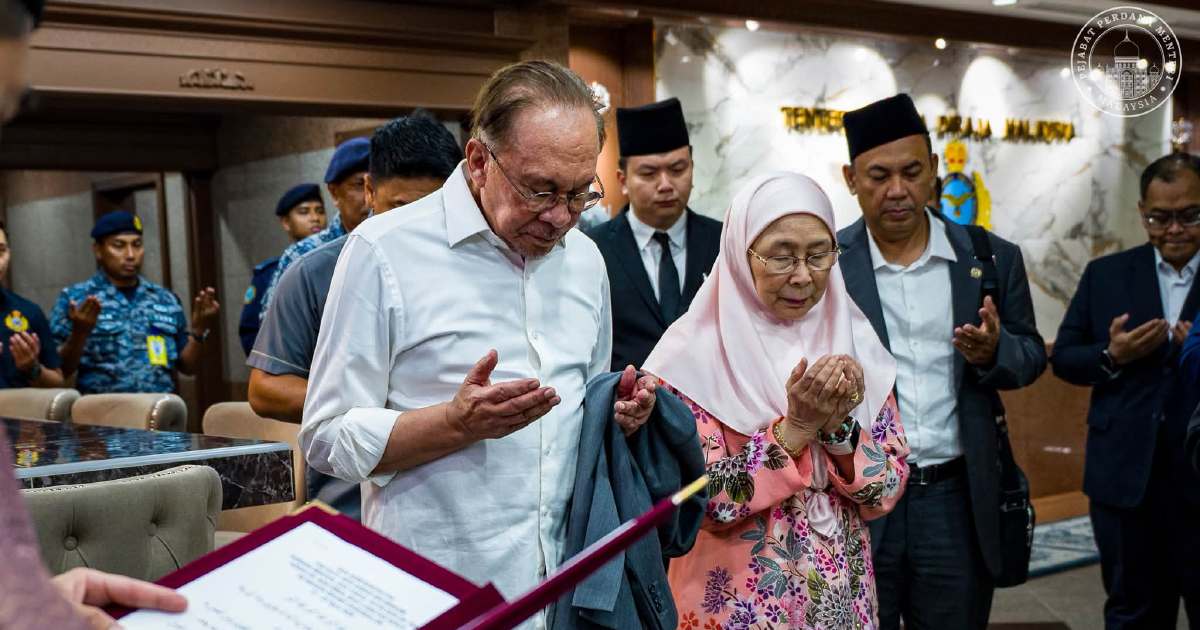
Prime Minister Datuk Seri Anwar Ibrahim touched down in Bandar Seri Begawan today to begin a two-day diplomatic visit centred on the 27th Annual Leaders' Consultation, a longstanding bilateral mechanism between Malaysia and Brunei that serves as a cornerstone for regional engagement in Southeast Asia. The consultation represents one of the most significant high-level dialogues within the Association of Southeast Asian Nations, underscoring the deep ties binding the two neighbouring nations.
The Annual Leaders' Consultation format has evolved into a vital platform for Malaysia and Brunei to chart the course of their bilateral relationship across multiple fronts, from economic cooperation and trade facilitation to security concerns and cultural exchange. These structured dialogues typically bring together senior government officials, policy advisers, and strategic thinkers from both nations to address pressing regional challenges and identify new avenues for mutual benefit.
The timing of this 27th iteration comes amid a period of renewed focus on intra-ASEAN cooperation. Malaysia, as a major economic player in the region and a non-permanent member of the UN Security Council, has been instrumental in shaping discussions around maritime security, trade architecture, and sustainable development across Southeast Asia. Brunei, despite its smaller population, wields considerable influence through its energy resources and strategic location along major shipping lanes.
Bilateral engagement between the two nations has traditionally centred on practical cooperation in areas that directly impact both populations. Trade volumes, though dominated by energy exports from Brunei to Malaysia, represent only part of the picture. Cross-border movement of goods, services, and people remains subject to ongoing discussion, with logistics and customs procedures representing perennial points of refinement in the relationship.
The consultation agenda typically encompasses discussions on regional security architecture, particularly in light of tensions in the South China Sea. Both Malaysia and Brunei maintain territorial claims in waters that are increasingly crucial to global trade, with Chinese military expansion creating new complexities for smaller ASEAN states seeking to maintain freedom of navigation and protect their exclusive economic zones. Joint responses through ASEAN mechanisms have become increasingly important to both governments.
Economic integration remains another pillar of these annual discussions. The ASEAN Free Trade Area framework, of which both nations are founding members, continues to evolve, and bilateral consultations often precede or complement broader regional trade negotiations. Given Malaysia's more diversified economy and Brunei's oil and gas dependency, discussions on how to deepen trade ties while managing economic complementarities typically feature prominently.
Cultural and educational exchanges have also grown in significance. Both nations share historical ties rooted in the maritime Sultanates of the region, and contemporary cooperation extends to student exchange programmes, academic partnerships, and joint cultural initiatives. These people-to-people connections strengthen the informal foundations upon which formal diplomatic ties rest.
For Malaysia, the consultation offers an opportunity to reinforce its role as a bridge-builder within ASEAN while managing its own strategic interests in a region increasingly contested by major powers. The nation's efforts to maintain balanced relationships with both traditional partners in the West and rising powers such as China make bilateral engagement within ASEAN particularly valuable as a stabilising force.
Brunei's perspective on the consultation reflects its own challenge of punching above its weight diplomatically whilst maintaining internal stability and managing resource dependency. The sultanate has invested heavily in promoting itself as a voice for consensus within ASEAN, and bilateral dialogues with larger neighbours like Malaysia allow it to shape broader regional narratives around prosperity, stability, and sovereignty.
The consultation also provides a setting for addressing ad-hoc bilateral issues that may not rise to the level of formal complaints or international arbitration but nonetheless require high-level attention. Border matters, shared environmental concerns, and coordinated responses to transnational challenges such as human trafficking or illegal fishing in disputed waters benefit from the regular, structured dialogue format these annual consultations provide.
Observers of the bilateral relationship note that while Malaysia and Brunei generally maintain cordial ties, they operate within the constraints of competing national interests and limited complementarity in key economic sectors. The Annual Leaders' Consultation serves as a mechanism to ensure that routine disagreements do not calcify into larger grievances, whilst simultaneously creating pathways to identify genuine opportunities for collaboration that serve both populations.
For the broader region, these consultations matter because they set precedent and tone for how ASEAN states conduct business with one another. Malaysia and Brunei, as experienced diplomatic actors within the regional framework, demonstrate through their commitment to regular, substantive dialogue that Southeast Asia remains committed to rules-based, multilateral problem-solving in an era of rising geopolitical tensions and competing narratives about the regional order.

