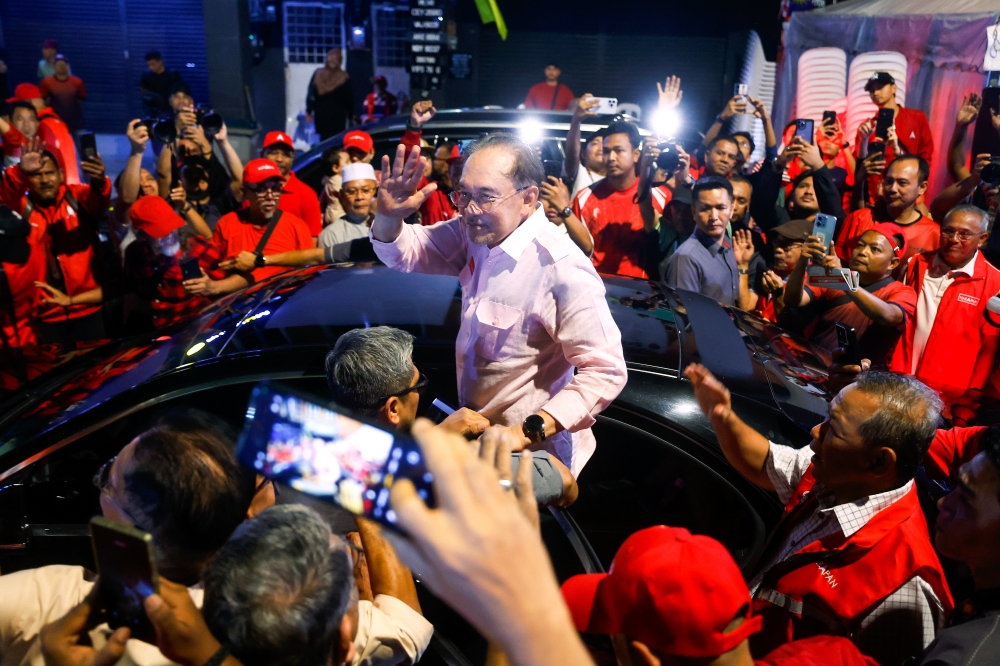
Prime Minister Datuk Seri Anwar Ibrahim has sought to reassure Malaysians about the strength of the federal unity government coalition, declaring that the administration retains its capacity to deliver on economic and governance fronts. Speaking in Seremban on July 23, Anwar presented an optimistic assessment of both the political arrangement that underpins his administration and the broader state of the national economy, signalling to observers that internal tensions and external pressures have not destabilised the governing structure.
The timing of these remarks reflects an ongoing necessity for political leaders to project confidence in Malaysia's coalitional arrangement. The unity government, which brings together previously opposing parties to form a parliamentary majority, has been scrutinised for potential fractures since its formation. Anwar's insistence on cohesion serves multiple purposes: it reassures investors concerned about policy continuity, demonstrates resolve to coalition partners who might harbour doubts, and projects an image of governmental stability to the electorate. In the context of Southeast Asian politics, where coalition governments face particular vulnerabilities, such statements carry weight beyond mere rhetoric.
Economic performance has become the principal metric by which the unity government measures its legitimacy. Anwar's characterisation of the economy as being on a solid foundation addresses widespread concerns about inflation, employment, and growth prospects that have affected Malaysian households. The assertion that economic fundamentals remain robust contradicts some external assessments and suggests that policy interventions undertaken by his administration are yielding tangible results. For ordinary Malaysians contending with rising living costs, this claim requires substantiation through visible improvements in purchasing power and job creation.
The federal unity government structure itself represents a significant departure from Malaysian political tradition. Bringing together the Pakatan Harapan coalition with the Barisan Nasional and other partners created an unprecedented governing arrangement designed to transcend partisan divisions. Yet coalitions of this type inherently carry risks, as divergent interests among coalition members can generate friction over resource allocation, policy priorities, and leadership roles. Anwar's reaffirmations of unity suggest that internal negotiation continues to maintain cohesion, though the need for repeated assurances may hint at underlying tensions requiring management.
Investor confidence constitutes another critical factor in Anwar's messaging strategy. International and domestic capital markets closely monitor political stability in emerging economies, particularly in Southeast Asia where investment decisions depend heavily on perceived governance quality. By presenting the government as unified and economically competent, Anwar aims to maintain Malaysia's attractiveness as an investment destination. Capital flows, foreign direct investment, and currency stability all respond to such perceptions of political reliability.
The opposition's response to such claims typically emphasises alternative policy prescriptions and questions about implementation capacity. Whether critics accept Anwar's assessment of unity and economic strength becomes secondary to the political narrative battle for public perception. This dynamic reflects broader patterns in Malaysian politics where different stakeholders interpret identical economic data and political developments through competing lenses shaped by partisan interest and ideological orientation.
Regional implications also merit consideration. Malaysia's political stability influences not merely its domestic economy but also its role as a significant trading partner and financial centre within Southeast Asia. The ASEAN region depends on major economies like Malaysia functioning predictably; political instability generates ripple effects across supply chains, investment corridors, and diplomatic relationships. Anwar's explicit emphasis on government strength addresses anxieties among neighbouring countries and regional economic partners.
Demographic factors add another layer to the unity government narrative. Younger Malaysian voters who did not experience the stability of previous single-party dominance may view coalitional arrangements with greater skepticism, particularly if they perceive governance becoming paralysed by competing interests. Conversely, others welcome the checks that coalition politics impose on executive power. Anwar must balance these competing perspectives whilst maintaining sufficient coalition discipline to pass legislation and implement policy.
The sustainability of the unity government depends substantially on whether coalition partners perceive equitable distribution of cabinet positions, policy influence, and electoral advantages. As the 2025 electoral cycle approaches, calculations about political advantage become sharper. Coalition members will assess whether remaining part of the arrangement benefits their long-term electoral prospects or whether breaking away offers better prospects. Anwar's periodic affirmations of unity serve partly to remind partners of the mutual benefits of cohesion.
Looking forward, the unity government faces tests beyond Anwar's control. Global economic headwinds, commodity price fluctuations, and regional geopolitical uncertainties could undermine the economic performance narrative regardless of government policy competence. Similarly, unforeseen political developments within coalition parties could trigger crises requiring renegotiation of the governing arrangement. Anwar's capacity to sustain both political cohesion and economic momentum will ultimately determine whether such affirmations reflect durable reality or aspirational positioning.
The Prime Minister's insistence on stability and economic solidity represents standard political communication in uncertain times. Whether the unity government maintains sufficient internal discipline and policy consensus to justify such claims over the medium term remains an open question that events will answer.

