%22%2F%3E%3C%2Fpattern%3E%3C%2Fdefs%3E%3Crect%20width%3D%22100%25%22%20height%3D%22100%25%22%20fill%3D%22url(%23ph2ole2g)%22%2F%3E%3Crect%20width%3D%22100%25%22%20height%3D%22100%25%22%20fill%3D%22url(%23ph2ole2p)%22%2F%3E%3Ctext%20x%3D%2250%25%22%20y%3D%2250%25%22%20text-anchor%3D%22middle%22%20dominant-baseline%3D%22central%22%20fill%3D%22rgba(255%2C255%2C255%2C0.95)%22%20font-family%3D%22Georgia%2C%20'Times%20New%20Roman'%2C%20serif%22%20font-weight%3D%22700%22%20font-size%3D%22272%22%20letter-spacing%3D%22-0.02em%22%3EAnwar%3C%2Ftext%3E%3C%2Fsvg%3E)
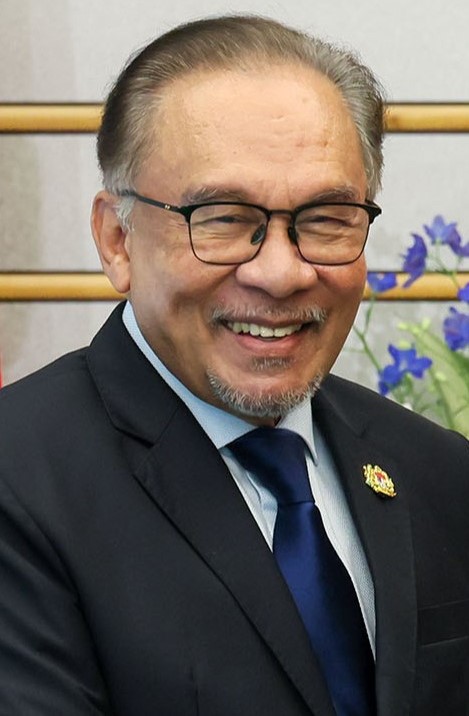
Prime Minister Datuk Seri Anwar Ibrahim's return to Johor for a second visit within three days signals the escalating intensity of campaigning in Malaysia's largest southern state, where electoral calculations are growing increasingly complex. The frequency of his appearances reflects the strategic weight that the federal government places on maintaining political influence in Johor, a state that has historically served as a bellwether for broader national political trends.
Anwar's repeated visits to the state demonstrate the coalition's recognition that Johor represents crucial electoral territory. The state has emerged as a focal point in Malaysia's broader political landscape, with control of its institutions and electoral support carrying implications that extend well beyond regional governance. The Prime Minister's schedule indicates a calculated effort to maintain high visibility among voters and party machinery during the intensifying campaign season.
The timing of consecutive visits reflects broader coalition strategy ahead of what is expected to be a closely contested election. Political analysts have noted that campaigns in Johor often serve as testing grounds for national messaging, with results providing early indicators of voter sentiment that may influence dynamics at the federal level. Anwar's personal engagement signals that central leadership is treating the outcome as consequential rather than peripheral.
Johor's political landscape has undergone significant transformation in recent years, with demographic shifts and changing voter preferences reshaping traditional electoral alignments. The state's large urban population in Johor Bahru and surrounding areas contrasts with its more rural constituencies, creating diverse political interests that any winning coalition must successfully navigate. This complexity explains why senior leadership believes direct engagement is necessary rather than delegating campaign activities to lower-ranking officials.
The coalition's investment of Prime Ministerial time during the campaign period also reflects competition for political space from opposition parties, which have been similarly active in the state. Johor has proven fertile ground for multiple political movements, and maintaining the initiative requires sustained presence and engagement with party members, community leaders, and voters across different demographic segments.
Regional implications extend beyond Malaysia's borders, as Johor's political trajectory influences Malaysia's role within Southeast Asian geopolitics. A state with strong governance and political stability attracts investment and economic activity that affects the broader region's economic networks and trade relationships. Foreign observers, particularly those from neighbouring Singapore and other ASEAN nations, pay close attention to Malaysian state elections as indicators of political stability and governance capacity.
Anwar's campaign activities in Johor also serve to consolidate support within his own political coalition, which comprises multiple parties with sometimes divergent interests. Frequent high-level visits demonstrate to coalition partners that the federal leadership remains committed to their joint electoral prospects and that their partnership carries tangible benefits in terms of resource allocation and political backing during critical moments.
The campaign schedule reflects preparation for what election observers expect will be a significant test of the coalition's ability to maintain electoral momentum following previous contests. Johor, with its substantial electoral representation, can either strengthen or weaken the coalition's overall parliamentary position, making the stakes sufficiently high to justify intensive campaign deployment of the Prime Minister himself.
Voter engagement in Johor during this campaign period demonstrates the sophisticated nature of contemporary Malaysian electoral politics, where traditional ground operations must be supplemented by high-profile appearances and messaging from senior leadership. The state's voters, particularly younger and urban-based populations, expect direct access to information and visibility of senior policymakers, making Anwar's repeated appearances strategically necessary rather than purely symbolic.
The coalition's focus on Johor also reflects recognition that electoral success requires winning back or maintaining support in states where the outcome remains genuinely uncertain. Investment of Prime Ministerial time in such competitive terrain is a calculated decision aimed at shifting marginal voters whose decisions will ultimately determine whether the coalition expands or contracts its electoral footprint in the state.
Looking forward, the intensity of campaign activity in Johor is likely to increase further as polling day approaches, with multiple senior figures from various coalition partners expected to maintain presence throughout the state. The frequency of Anwar's visits may serve as a template for how the coalition plans to deploy its leadership resources across other crucial battleground states or constituencies.