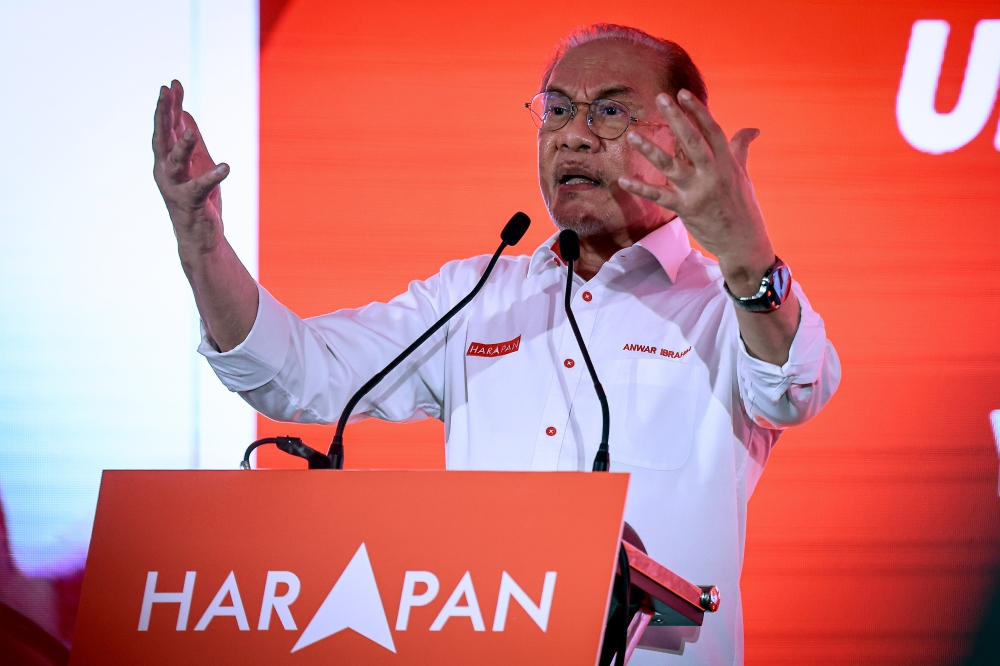
Prime Minister Datuk Seri Anwar Ibrahim is bringing the Pakatan Harapan campaign machinery to Negeri Sembilan, signalling the coalition's determination to reclaim political momentum in a state where opposition forces remain entrenched. The high-profile tour represents a critical juncture in the government's pre-election push, with Anwar's personal intervention designed to reinvigorate grassroots support and demonstrate federal commitment to constituencies that have historically leaned towards Barisan Nasional and Perikatan Nasional control.
Negeri Sembilan has emerged as a battleground state in Malaysia's electoral calculus, where traditional demographic patterns have begun shifting in response to national political currents. The state's nine parliamentary constituencies present both opportunities and vulnerabilities for Pakatan, with several seats remaining highly competitive. By deploying the Prime Minister himself, the coalition aims to project confidence and resource allocation toward regions where margin of victory could prove decisive in the overall national outcome. This strategic choice reflects understanding that electoral success hinges not merely on retaining urban strongholds but on making inroads into traditionally conservative areas.
The timing of Anwar's Negeri Sembilan foray coincides with broader coalition efforts to consolidate support ahead of elections. Pakatan strategists recognise that momentum operates as both tangible and psychological force in electoral contests. When voters perceive a political formation as ascending, donation patterns shift, volunteer engagement intensifies, and undecided constituencies lean toward the perceived winning side. Conversely, perception of decline can become self-fulfilling prophecy. By orchestrating high-visibility campaign appearances in regions where victory remains uncertain, Pakatan attempts to reshape such perceptions and redirect narrative momentum away from opposition messaging.
The state presents particular challenges for Pakatan due to its demographic composition and historical voting patterns. Negeri Sembilan has traditionally favoured established parties with deep roots in local administration. However, the state has not been impervious to broader national shifts in voter sentiment. Previous election cycles demonstrated that no state remains permanently locked into opposition control, particularly when federal governments enjoy strong public approval ratings or opposition forces face internal fracturing. Anwar's personal intervention suggests coalition leadership believes conditions are sufficiently favourable to justify premium deployment of the Prime Minister's limited campaign bandwidth.
Local constituencies benefit immeasurably from prime ministerial attention. Candidates in targeted seats gain enhanced media coverage, voter name recognition increases substantially, and federal patronage implications become unmistakable. Businesses and civil society leaders take note when the nation's chief executive prioritises particular regions, often translating campaign visits into subsequent development allocations and policy attention. This dynamic creates mutual reinforcement where electoral support translates into tangible governance benefits, though such calculations must remain implicit rather than explicit in democratic discourse.
Pakatan's campaign architecture in Negeri Sembilan will likely emphasise developmental achievements since 2018 and 2022, alongside projections of future progress under continued coalition governance. Messaging typically focuses on economic management credentials, social policy advancement, and institutional reforms undertaken by the federal government. Opposition forces conversely highlight concerns about cost of living, perceived governance inefficiencies, and allegations of patronage favouritism. The contest therefore becomes fundamentally about voter assessment of which coalition can deliver superior future economic and social outcomes.
The opposition in Negeri Sembilan remains organised and resourced, necessitating that Pakatan campaigns must offer compelling alternatives rather than simply relying on incumbency advantage. Perikatan Nasional has cultivated particular appeal in certain Negeri Sembilan constituencies, while Barisan Nasional retains organisational infrastructure from decades of continuous presence. For Anwar and Pakatan to succeed, campaigns must resonate with voter concerns about security, religious sentiment, and traditional governance values that maintain electoral salience in suburban and semi-rural constituencies.
The campaign visit also serves internal coalition management functions. Smaller component parties within Pakatan require reassurance that the alliance remains cohesive and committed to fair seat allocation and resource distribution. By appearing alongside state and local leadership, Anwar reinforces party unity while simultaneously reinforcing his personal standing as coalition leader. Such appearances prevent disaffection among Pakatan components that might otherwise defect to opposition or contest seats as independents, scenarios that would fragment the coalition vote.
Forecast accuracy remains inherently limited in electoral politics, but sophisticated campaign organisations conduct continuous survey research to identify optimal constituencies for premium investment. The fact that Anwar's campaign focus includes Negeri Sembilan suggests coalition data indicates competitive positioning in several seats, combined with identification of persuadable voter segments responsive to prime ministerial messaging. Campaign resource allocation reflects such empirical assessment, with focus concentrating on seats where victory remains genuinely contested rather than those considered safe.
The Negeri Sembilan campaign initiative reflects broader understanding that modern elections require targeted precision rather than uniform national messaging. Different constituencies respond to distinct policy priorities and political narratives. Urban professionals may prioritise economic competence and institutional independence, while suburban middle classes emphasise security and service delivery, and rural communities focus on agricultural support and infrastructure connectivity. Effective campaigns calibrate messaging while maintaining overall coalition narrative coherence.
For Malaysian voters observing these developments, the campaign signals genuine electoral competition ahead, with multiple coalitions competing seriously for public support. The Prime Minister's willingness to campaign in uncertain territory demonstrates that elections remain contested rather than predetermined. Negeri Sembilan voters therefore occupy consequential position in national electoral outcomes, making their engagement particularly valuable to competing political formations and warranting serious attention to campaign messaging across all contending coalitions.

