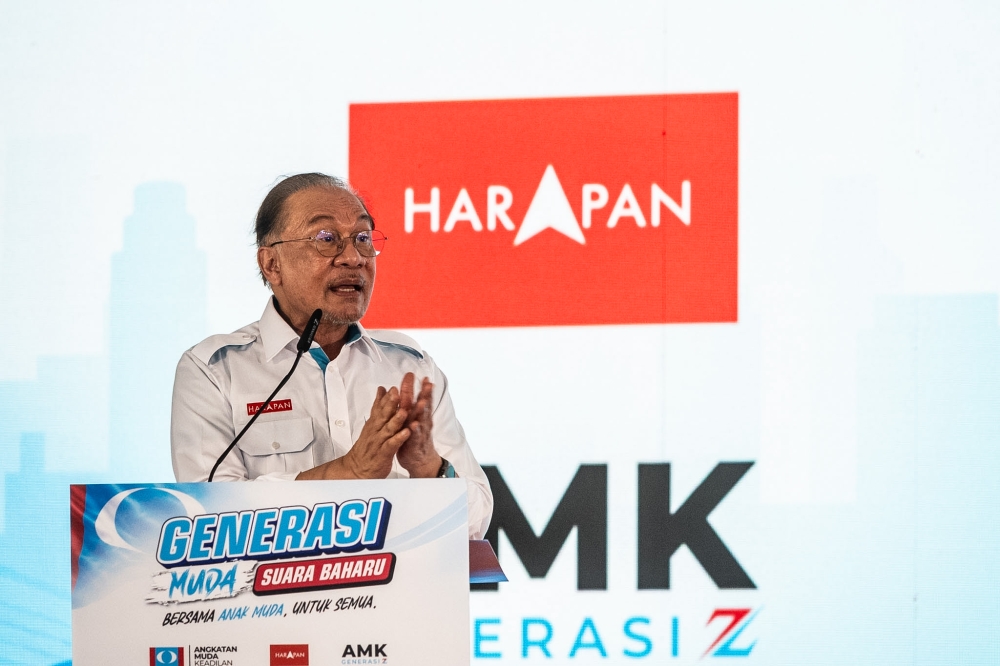
Prime Minister Datuk Seri Anwar Ibrahim confirmed on July 24 that federal development allocations designated for Petaling Jaya and Subang have not been withdrawn, pushing back against suggestions the government has cut resources to these constituencies. However, his statement carried a significant caveat: the funds will not pass through parliamentary representatives who actively oppose administration policies, effectively conditioning access to development money on political alignment.
The remark underscores ongoing tensions between Kuala Lumpur's federal authorities and certain opposition-aligned MPs whose constituencies remain economically vibrant but politically contested. Petaling Jaya and Subang, both located in Selangor's densely populated urban core, have historically been bellwethers for national electoral sentiment, and competition for their development resources carries symbolic weight beyond the allocations themselves.
Anwar's formulation reflects a long-standing debate about fund distribution mechanisms across Malaysia's federal system. When development money is channelled through individual MPs rather than administered directly by state governments or federal agencies, political considerations inevitably influence execution. Opposition MPs have repeatedly complained that their constituencies receive disproportionately smaller shares of federal infrastructure investment, a grievance the PM appeared to acknowledge while simultaneously reframing as a consequence of parliamentary dynamics.
The government's approach raises questions about how development priorities are determined and whether federal resources should be distributed according to electoral geography or allocated based on need and population density. In theory, infrastructure spending serves the constituents regardless of their MPs' partisan leanings. In practice, directing funds through elected representatives empowers them to shape project selection, timeline, and visibility within their districts—advantages typically reserved for those supporting the administration.
For Malaysian readers across Klang Valley constituencies, this arrangement has tangible implications. Residents in Petaling Jaya and Subang depend on federal assistance for traffic management, public transportation upgrades, school facilities, and community infrastructure. When development corridors shift or funding channels reconfigure around political loyalty, ordinary residents often experience extended delays or project cancellations regardless of their personal voting preferences.
Anwar's statement indirectly confirms what multiple analysts have observed: Malaysia's current political environment increasingly ties resource allocation to parliamentary arithmetic. With federal government dependent on maintaining razor-thin majorities, each MP's support becomes strategically valuable, incentivizing both coalition unity and pressure on marginal constituencies represented by dissenting voices. The PM did not elaborate on alternative mechanisms for ensuring these constituencies receive their allocated shares, suggesting the political conditionality remains structural rather than circumstantial.
For Southeast Asian observers, Malaysia's experience illustrates broader challenges facing developmental states navigating competitive democracy. Regional governments frequently face pressure to reward political allies through patronage systems, risking inefficiency and resentment from excluded constituencies. Malaysia's constitutional federalism provides legal frameworks for equitable resource distribution, yet political practice often diverges from written procedure, creating friction between stated policy and implementation.
The timing of Anwar's clarification matters strategically. With parliament fragmented and multiple policy initiatives requiring legislative support, reassuring wavering MPs about resource availability serves both substantive governance and coalition management purposes. Simultaneously, signalling that opposition MPs will not benefit from federal development spending sends a deterrent message designed to discourage defection or obstruction.
Petaling Jaya and Subang exemplify urban constituencies facing genuine infrastructure pressures—congestion, aging facilities, rapid demographic change—that neither federal government nor state administration can indefinitely defer. Whether development proceeds through the PM's preferred political channels or through alternative mechanisms will determine whether these areas receive timely improvements or experience extended gridlock. For residents, the distinction between abstract principles of equitable distribution and concrete project implementation determines whether schools upgrade, roads expand, and public transit improves.
Looking forward, Anwar's position establishes a marker for how future administrations might approach federal-parliamentary resource relationships. If the precedent holds—that support for government policies unlocks development funding while opposition triggers exclusion—opposition-controlled constituencies may face persistent infrastructure disadvantages regardless of electoral legitimacy or demographic need. Conversely, if practical pressures force governments to implement development regardless of political posture, parliamentary opposition becomes merely symbolic rather than consequential.
The statement also reflects Malaysia's evolving political maturity regarding explicit acknowledgement of patronage-based governance. Rather than maintaining traditional pretences of purely technical allocation criteria, Anwar forthrightly linked political support to resource access, indicating confidence that such framing resonates with target audiences or at least carries acceptable political cost. This directness represents a departure from earlier Malaysian practice emphasising technocratic distance from electoral calculations, suggesting the contemporary political environment permits more transparent articulation of patronage logic.
For Selangor voters and administrators, these dynamics create complex incentives regarding which level of government—state or federal—best serves constituent interests when they diverge. State authorities, increasingly opposition-aligned, must advocate for constituencies against federal authorities while managing relationships necessary for accessing federal resources. This structural tension will likely shape Klang Valley politics for the foreseeable future, with development outcomes depending substantially on how effectively different political actors negotiate these intersecting pressures.

