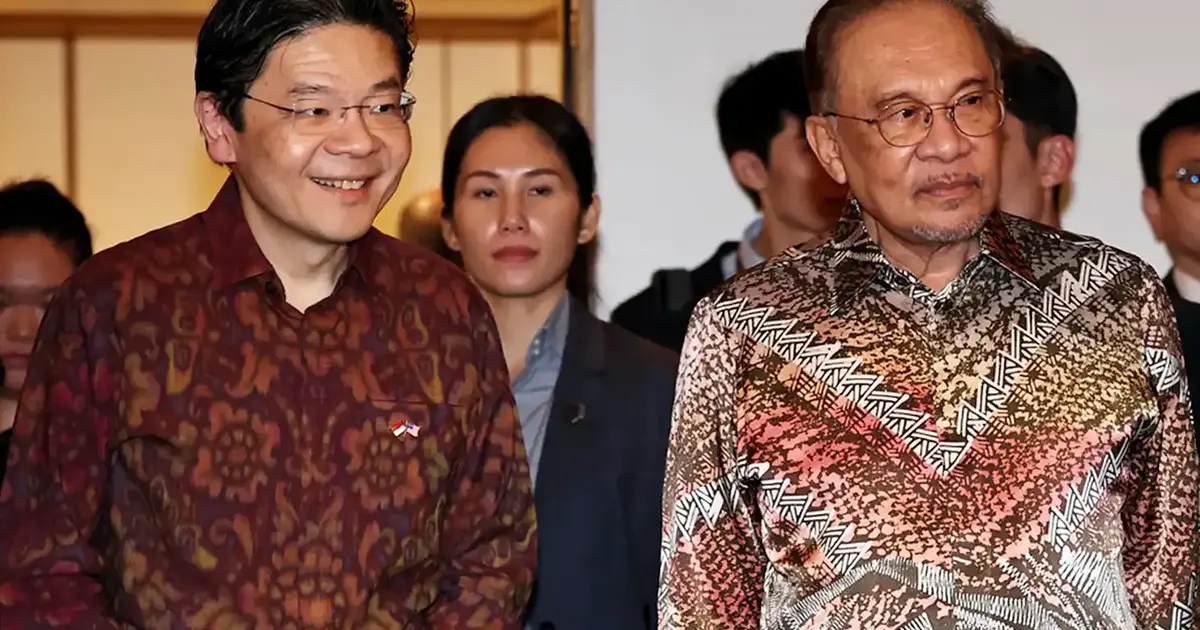
Prime Minister Anwar Ibrahim has moved to quell speculation about cross-border coordination regarding the upcoming Johor state elections, confirming that he has made no formal request to his Singaporean counterpart to permit Malaysian nationals working or residing in Singapore to return home for voting purposes. The clarification came in response to questions about whether such diplomatic channels had been activated ahead of the polls, a matter of potential sensitivity given the historically complex nature of bilateral relations and the practical challenges that frequent border crossings present during elections.
The matter touches on a recurring logistical challenge for Malaysia during election periods: the substantial population of Malaysian workers and their families based in Singapore who are entitled to vote in their home constituencies. Singapore, as a highly developed and geographically proximate nation, hosts a significant expatriate Malaysian community comprising professionals, skilled workers, and business personnel who maintain voting rights despite living abroad. The question of how such voters exercise their franchise has long been a subject of discussion among election observers and political analysts across both nations.
Anwar's response underscores a pragmatic approach to Malaysia's electoral administration, which typically relies on individual voters to arrange their own travel back to Malaysia during designated voting periods. Unlike some nations with specific protocols for diaspora voting or extended overseas ballot access, Malaysia's electoral framework generally requires voters to physically return to their home constituencies to cast their votes. This requirement, while straightforward in principle, creates genuine difficulties for those whose employment arrangements or family commitments in Singapore make quick returns logistically challenging or financially burdensome.
The Prime Minister's statement also reflects awareness of the potential diplomatic delicacy involved in such requests. While relations between Malaysia and Singapore are generally pragmatic and cooperative on most matters, both nations are sensitive to suggestions that might imply interference in each other's internal affairs or preferential treatment of one group over another. A formal government-to-government request regarding voting access could be interpreted as unusually high-level attention to what is nominally a matter of individual electoral participation.
From a practical standpoint, Anwar's clarification suggests that the government has not deemed it necessary to establish special mechanisms or seek special accommodation from Singapore for this election cycle. The responsibility for returning to vote therefore rests, as it typically does, with individual Malaysian voters themselves to manage their travel schedules and arrangements during the designated polling period. This approach maintains the principle that voting is a civic duty that requires personal commitment and effort from citizens.
The Johor state elections themselves represent a significant electoral moment for Malaysia's southern-most peninsula state, which has historically been a stronghold of the Barisan Nasional coalition and more recently has seen competitive contests between multiple political blocs. The outcome carries implications not merely for state-level governance but also for national political momentum and coalition stability, making turn-out and voting patterns matters of genuine political interest.
Malaysian expatriate communities in Singapore have occasionally been subjects of policy discussions within Malaysia regarding how they can better exercise their voting rights. Some observers have advocated for postal voting systems or designated overseas polling centres to reduce barriers, though such proposals have not been systematically implemented. The relatively small number of overseas voters compared to the domestic electorate, combined with the administrative complexity of managing distributed polling infrastructure, has meant that such alternatives remain limited in scope.
Anwar's response also carries implicit reassurance to the Malaysian public that the electoral process will proceed according to established procedures without extraordinary diplomatic manoeuvres or special arrangements that might be perceived as advantaging particular groups. This consistency in approach to electoral administration is important for maintaining public confidence in the fairness and integrity of voting processes across different election cycles.
The situation illustrates broader realities facing modern democracies with mobile populations and significant numbers of citizens living or working abroad. Malaysia, like many regional peers, continues to grapple with how to balance inclusive electoral participation with practical administrative constraints and the preservation of normal electoral procedures. The approach maintained by Anwar's government reflects a preference for maintaining standard processes rather than creating bespoke arrangements on an election-by-election basis.
Looking ahead, the question of how Malaysia manages expatriate voting rights, particularly in the context of Singapore's geographic and economic proximity, may continue to merit discussion within policy circles. For now, however, the Prime Minister's clarification signals that Johor voters based across the causeway will need to arrange their own return to Malaysia if they wish to participate in the upcoming elections, consistent with established electoral norms and procedures.

