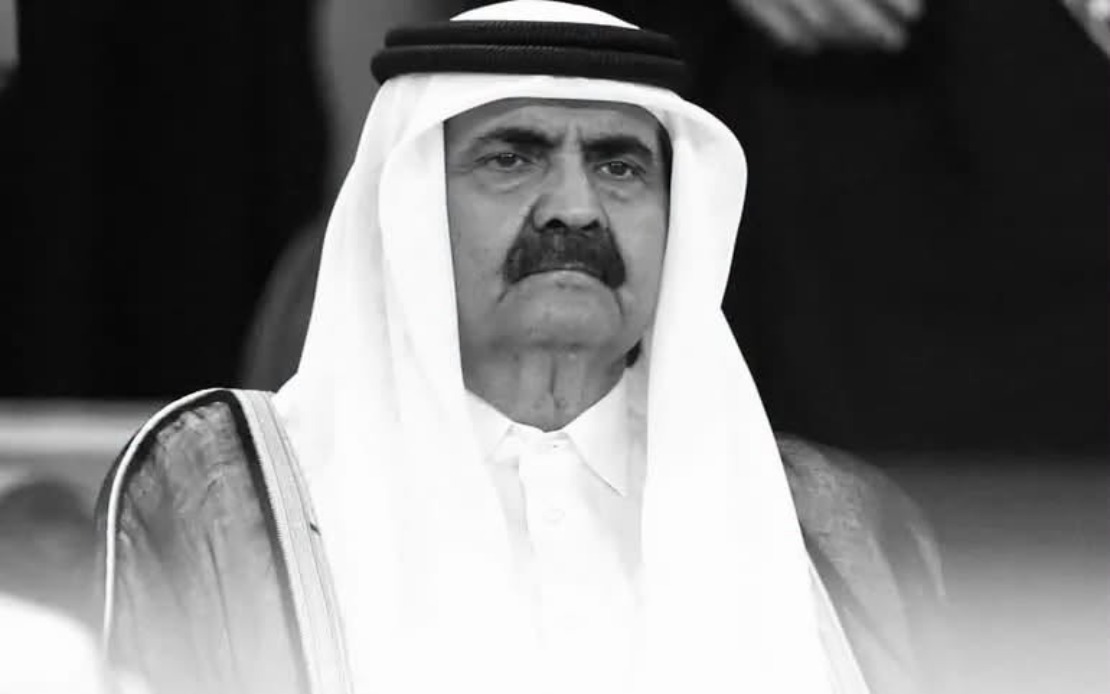
Prime Minister Datuk Seri Anwar Ibrahim has conveyed Malaysia's deepest sympathies to Qatar's current Amir Sheikh Tamim bin Hamad Al Thani, the ruling family, and the Qatari people following the passing of Sheikh Hamad bin Khalifa Al Thani, the former Amir. The elder statesman died on Sunday morning at the age of 74, marking the end of a significant era in Middle Eastern politics and Gulf diplomacy. Anwar's tribute, shared via social media on July 12, underscored the departed leader's lasting imprint on Qatar's trajectory and his importance to bilateral ties between Malaysia and the Gulf state.
Sheikh Hamad's tenure as Amir spanned from 1995 to 2013, a period that fundamentally reshaped Qatar's position in global affairs. During his 18 years of leadership, the nation experienced unprecedented economic expansion, capitalised on vast liquefied natural gas reserves, and established itself as a strategic power broker in Middle Eastern geopolitics. Anwar acknowledged these transformative achievements, recognising how Sheikh Hamad's vision had elevated Qatar from a smaller Gulf principality to a nation commanding respect on the world stage. The economic diversification and infrastructural development initiated under his watch laid groundwork that would define Qatar's international standing for decades to come.
A defining moment in Sheikh Hamad's political legacy was his voluntary transfer of power to his eldest son in 2013. In his statement, Anwar characterised this succession as "a rare act of statesmanship," highlighting the significance of a leader choosing to pass governance to the next generation within the Gulf's monarchical framework. Such transitions, even within ruling families, often require deliberate choice and political courage. Sheikh Hamad's decision to step aside at the height of his influence, rather than consolidate power indefinitely, demonstrated a considered approach to dynastic succession that prioritised the nation's institutional continuity over personal entrenchment.
Beyond economic metrics and regional diplomacy, Anwar identified Sheikh Hamad as a steadfast ally to Malaysia and a revered personality throughout the Islamic world. This characterisation reflects the broader diplomatic networks that bind Muslim-majority nations, particularly those with shared interests in regional stability and international commerce. Malaysia and Qatar, both energy-rich nations with significant sovereign wealth investments, have maintained substantive economic and cultural partnerships. Sheikh Hamad's role in nurturing these connections helped establish frameworks for cooperation that extend beyond government-to-government relations into educational exchanges, business ventures, and cultural initiatives.
Anwar's tribute also carries symbolic weight for Malaysia's foreign policy positioning. By emphasising Sheikh Hamad's influence across Muslim societies and his statesmanlike qualities, the Prime Minister situates Malaysia within a broader community of Islamic nations that regard Sheikh Hamad as a respected elder. This public acknowledgment reinforces Malaysia's commitment to maintaining strong ties with key Gulf players and signals continuity in bilateral relations under the new generation of Qatari leadership led by Sheikh Tamim. For Malaysian interests—particularly in trade, investment, and regional security architecture—maintaining warm relations with Qatar remains strategically important.
The passing of influential figures in the Gulf inevitably prompts reflection on leadership legacies and succession planning in monarchical systems. Sheikh Hamad's reign coincided with Qatar's emergence as a host for major international sporting events, a centre for Islamic finance, and an increasingly influential actor in mediation efforts across the Middle East. Whether through the eventual hosting of the FIFA World Cup or through diplomatic initiatives addressing regional conflicts, the frameworks and capacities developed during his leadership remain operational under his successor. The continuity of policy direction, despite the change in leadership, suggests that Sheikh Hamad's foundational contributions remain embedded in Qatar's institutional structures.
For regional observers and policymakers in Southeast Asia, Sheikh Hamad's death marks the passing of a transitional figure who bridged traditional Gulf monarchy with modern statecraft. His willingness to engage with technology, finance innovation, and international diplomacy set Qatar on a distinct trajectory within the Arabian Peninsula. The model of pragmatic leadership he embodied—balancing Islamic values, dynastic governance, and contemporary geopolitical realities—has influenced how other Gulf states approach modernisation and global engagement. Malaysia, similarly positioned as a Muslim-majority nation navigating globalisation and regional influence, has benefited from observing Qatar's calculated approach to international relations.
Anwar's expression of condolences reflects Malaysia's diplomatic courtesy and its recognition of Qatar's importance to Southeast Asian interests. The Gulf state remains a significant source of investment capital flowing into the region, with Qatari sovereign wealth funds holding stakes in Malaysian infrastructure, real estate, and financial institutions. Beyond commercial ties, Qatar's geopolitical weight in Middle Eastern affairs affects global oil and gas markets, which in turn influence energy prices and economic conditions across Asia. Acknowledging Sheikh Hamad's contributions to Qatar's rise implicitly recognises the flow-on effects for Malaysia and its partners.
The transition of leadership from Sheikh Hamad to Sheikh Tamim has proven relatively smooth, suggesting that succession planning and institutional preparedness were priorities during the former Amir's later years. This contrasts with succession challenges elsewhere in the region and underscores Sheikh Hamad's foresight in ensuring stable governance beyond his tenure. For Malaysia, the stability of Qatar's political system remains advantageous, as predictable governance in major trading partners facilitates long-term investment and policy coordination. Anwar's condolences, while honouring the departed leader, also extend implicitly to Sheikh Tamim, affirming Malaysia's commitment to working with Qatar's current administration.
Looking ahead, Sheikh Hamad's departure closes a chapter in Gulf history but does not substantially alter the strategic landscape he helped create. Qatar's institutions, its economic foundations, and its diplomatic networks persist. The mourning period provides an opportunity for reassessment of bilateral relationships and for renewed engagement with Qatar's leadership. Anwar's public tribute ensures that Malaysia's recognition of Sheikh Hamad's legacy is on record, potentially strengthening the emotional and diplomatic bonds between Kuala Lumpur and Doha as both nations navigate the evolving regional and global environment.

