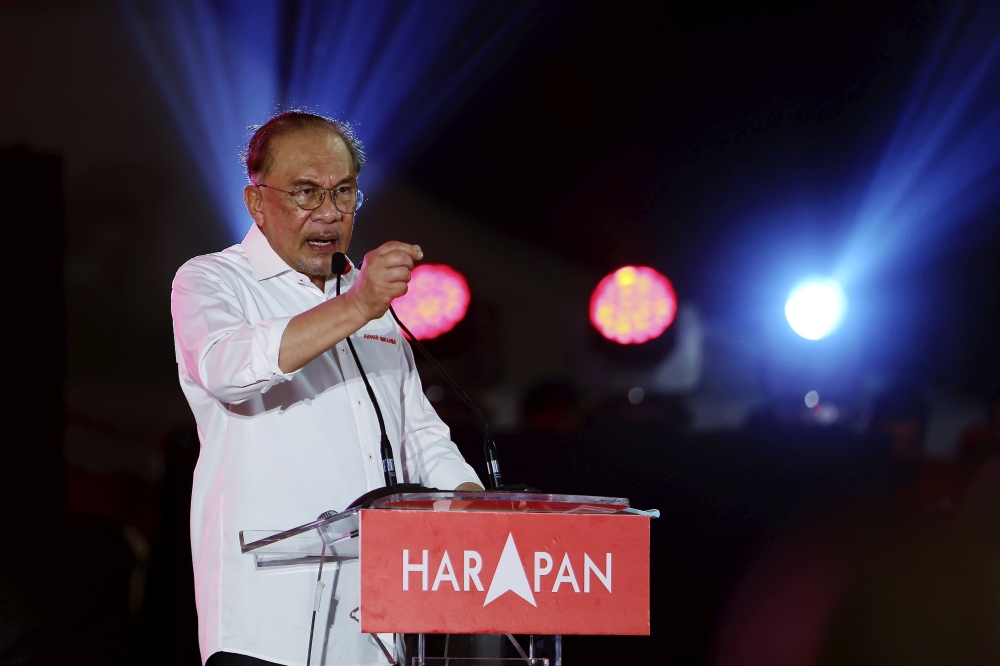
Prime Minister Datuk Seri Anwar Ibrahim embarked on his inaugural campaign tour across Negeri Sembilan this week, punctuating the day with four separate engagements designed to amplify the ruling coalition's electoral message in the state. The sequenced appearances underscore the government's strategic focus on securing ground-level momentum in a constituency that has traditionally played a pivotal role in shaping Malaysia's political balance at critical junctures.
The decision to begin systematic campaign operations in Negeri Sembilan reflects calculated political arithmetic. The state, with its mixed urban-rural demographics and swing constituencies, remains contested territory where voter sentiment can shift decisively based on grassroots engagement and perceived government performance. By deploying the Prime Minister personally across multiple venues, the administration signalled that no ground was being ceded without active mobilisation. This approach contrasts with previous election cycles and demonstrates evolving campaign discipline within the governing coalition.
Anwar's presence across four separate events in a single day carries symbolic weight beyond routine political theatre. Each engagement offered opportunities to address distinct voter segments—potentially touching on bread-and-butter economic concerns affecting urban constituencies, agricultural and rural development priorities, and community-specific grievances that have accumulated over months of governance. The concentrated format also generates cumulative media coverage, amplifying the message far beyond immediate audiences. For coalition partners and party members in Negeri Sembilan, the Prime Minister's visible commitment provides psychological reinforcement that the administration remains serious about retaining the state.
Negeri Sembilan occupies strategic importance within Malaysia's electoral geography that extends beyond raw seat count. The state serves as a barometer of broader sentiment, particularly among the Malay-Muslim majority and established middle-class urban voters. Its voting patterns frequently correlate with results in neighbouring Selangor and Perak, making it a bellwether for regional outcomes. A strong performance in Negeri Sembilan would provide psychological momentum that reverberates across the coalition's entire campaign machinery, while underperformance there could signal deeper electoral currents working against the government's interests.
The timing of Anwar's campaign initiation also deserves scrutiny within the broader political calendar. Launching intensive ground operations signals confidence that the coalition possesses sufficient organisational readiness and public support to sustain momentum through the campaign period. It also preempts opposition movements by establishing early narrative control in what typically becomes a competitive information space as elections approach. By moving first and visibly, the Prime Minister attempted to frame the electoral conversation on government terms rather than allowing opposition parties to set initial messaging parameters.
Economic messaging likely featured prominently across the four events. With inflation concerns and cost-of-living pressures affecting households across income levels, Anwar's team would emphasise government programmes targeting affordability, employment generation, and wage support. Negeri Sembilan's mixed economy—encompassing manufacturing hubs, agricultural sectors, and growing service industries—requires tailored messaging that acknowledges these distinct economic realities. The Prime Minister's direct engagement provides platforms to defend government economic stewardship against opposition critiques while promoting achievements that voters may not have fully absorbed through conventional media channels.
The coalition's campaign architecture in Negeri Sembilan operates within broader competitive dynamics shaping Malaysian politics. The opposition retains significant organisational capacity and accumulated goodwill in certain constituencies, necessitating sustained and resourced counter-campaigns rather than assuming incumbent advantages automatically translate into votes. Anwar's visible presence across multiple events demonstrates recognition that electoral contests in contemporary Malaysia remain genuinely competitive and demand serious resource commitment. The intensity of effort signalled through the four-event structure implicitly acknowledges that complacency remains electorally dangerous regardless of incumbent status.
For Southeast Asian observers monitoring Malaysian political trends, Anwar's campaign approach reflects broader patterns seen across the region's democracies. Prime ministerial campaign involvement concentrates state resources and symbolic authority behind electoral efforts, a practice that raises questions about governance continuity during election periods. In Malaysia's context, however, the integration of governmental and campaign functions remains more fluid than in some comparable democracies, though recent political reforms have attempted establishing clearer boundaries around use of state machinery for partisan purposes.
The four-event structure also accommodates coalition partner engagement, allowing component parties within the Barisan Nasional and Pakatan Harapan frameworks to participate alongside the Prime Minister. This collaborative approach reinforces coalition unity symbolism while distributing speaking opportunities across alliance partners who need local credibility reinforcement. For Negeri Sembilan-based politicians and party officials, the Prime Minister's visit provides opportunities to access higher-level decision-making forums and demonstrate local influence at the national level, important currencies within party hierarchies and constituent relationships.
Anwar's engagement strategy in Negeri Sembilan during this campaign phase establishes templates that likely shape his presence across other target states. The intensity of effort, the focus on multiple stakeholder groups within single-day cycles, and the emphasis on direct Prime Ministerial visibility collectively signal campaign methodology that the administration intends deploying systematically rather than selectively. For opposition parties, this necessitates matching deployment levels and messaging sophistication to remain competitive in constituencies they contest, particularly as voters increasingly expect direct access to and engagement from senior political leadership.

